Interior Design Styles for Modern US Kitchens – Functional Modern Kitchen Interior Styling Made Simple
Modern kitchens in the United States have evolved far beyond purely practical cooking spaces. Today, they are statement rooms, social hubs, and lifestyle centers where design, technology, and everyday living seamlessly intersect. Homeowners are no longer choosing between beauty and usability they expect both. That’s exactly why Interior Design Styles for Modern US Kitchens are shifting toward solutions that balance aesthetics with real-life functionality.
From open-concept layouts that connect living areas to kitchens, to smart appliances and intentional storage, stylish modern kitchen design ideas now reflects how people truly live. Families gather around islands, professionals work from breakfast bars, and hosts entertain guests without ever leaving the kitchen. As a result, functional modern kitchen interior styling has become the foundation of great design rather than an afterthought.
What makes this shift especially exciting is the diversity of styles available. Minimalist kitchens focus on clean lines and clutter-free surfaces, while transitional designs blend classic warmth with contemporary finishes. Scandinavian influences introduce light woods and soft palettes, industrial styles add texture and edge, and luxury modern kitchens emphasize high-end materials and dramatic lighting. Despite these differences, one theme connects them all: intentional functionality.
Designers now think about workflow, storage zones, lighting layers, and material durability at the earliest planning stage. Instead of decorating after the fact, styling is integrated into the architecture of the space. Cabinet interiors are designed as carefully as exteriors. Islands serve multiple purposes. Lighting enhances both mood and task efficiency. Even decor choices support usability.
This article explores how best modern kitchen interior ideas are being redefined through functional modern kitchen interior styling. You’ll discover why this movement is gaining momentum, which styles showcase it best, how colors and materials shape performance, and the storage, lighting, and personalization strategies that make modern kitchens feel effortless yet stunning.
Whether you’re planning a renovation, designing a new home, or simply looking for inspiration, understanding this design philosophy will help you create a kitchen that looks incredible, works beautifully, and adapts to your everyday life.
Table of Contents
1- The Rise of Interior Design Styles for Modern US Kitchens and Why Functional Modern Kitchen Interior Styling Is Taking Over
The transformation of kitchens across the United States has been driven by lifestyle changes, technological advances, and a growing appreciation for intentional design. Historically, kitchens were hidden workspaces focused on efficiency alone. Today, they are among the most visible and valued areas of a home. This cultural shift has fueled the rise of Interior Design Styles for Modern US Kitchens that prioritize both visual impact and everyday usability.
One major driver behind this evolution is the open-concept living trend. When kitchens became visible from living and dining areas, design expectations changed instantly. Clutter could no longer be hidden, and finishes needed to feel cohesive with the rest of the home. This pushed designers toward functional modern kitchen interior styling, where storage solutions, integrated appliances, and thoughtful layouts maintain a clean aesthetic while supporting heavy use.
Another factor is the way people use their kitchens today. Cooking remains important, but kitchens also serve as offices, homework stations, entertainment spaces, and gathering zones. This multi-purpose role requires flexible design. Islands are larger and often include seating, outlets, and storage. Walkways are planned for movement. Lighting adapts to different activities. Function now shapes form in powerful ways.
Technology has also accelerated this movement. Smart appliances, touchless faucets, charging stations, and hidden tech integration demand intentional planning. Instead of disrupting design, these features are seamlessly incorporated into Interior Design Styles for Modern US Kitchens, reinforcing the idea that styling should support performance.
Homeowners are also becoming more design-aware thanks to social media and renovation content. They notice details like drawer organizers, pantry systems, layered lighting, and durable surfaces. This awareness has increased demand for kitchens that remain beautiful over time while simplifying daily routines the essence of functional modern kitchen interior styling.
Sustainability plays a role as well. Durable materials, energy-efficient appliances, and timeless design choices reduce waste and long-term costs. Functional styling encourages investing in elements that last rather than purely decorative trends that quickly feel outdated.
Design professionals now approach kitchens as systems rather than rooms. They consider workflow zones such as prep, cooking, cleaning, and storage. They plan vertical storage to maximize space. They ensure materials handle wear. This systems thinking is reshaping Interior Design Styles for Modern US Kitchens across price points, from compact apartments to luxury homes.
Ultimately, the rise of functional styling reflects a broader design philosophy: homes should support life rather than complicate it. Kitchens that feel effortless, organized, and visually calm create better daily experiences. That emotional benefit is a major reason this approach continues to dominate modern kitchen design conversations.
2- Top Interior Design Styles for Modern US Kitchens That Showcase best modern kitchen interior ideas Brilliance
Modern kitchen design isn’t defined by a single aesthetic. Instead, several distinct styles demonstrate how best modern kitchen interior ideas can be expressed in different visual languages. Understanding these styles helps homeowners choose a direction that aligns with both taste and lifestyle.
Minimalist modern kitchens are perhaps the clearest example. These spaces rely on clean cabinetry, handleless fronts, integrated appliances, and limited color palettes. The simplicity is not just visual it’s operational. Hidden storage reduces clutter, continuous surfaces simplify cleaning, and thoughtful layouts improve workflow. Minimalism shows how Interior Design Styles for Modern US Kitchens can feel calm while remaining highly practical.
Scandinavian-inspired kitchens highlight warmth and usability. Light woods, soft whites, and natural textures create inviting environments that encourage daily living. Open shelving is used intentionally rather than decoratively, often for frequently used items. Lighting is layered for comfort and function. This style proves that functional styling does not need to feel clinical; it can feel cozy and human.
Transitional modern kitchens blend traditional elements with contemporary efficiency. Shaker cabinets meet sleek hardware, classic layouts integrate modern storage systems, and timeless materials are paired with innovative features. This style appeals to homeowners who want longevity. By combining familiarity with performance, transitional design embodies functional modern kitchen interior styling in a balanced way.
Industrial modern kitchens introduce texture and durability. Materials like metal, concrete, and darker woods are inherently resilient, supporting heavy use. Open storage, strong lighting, and bold hardware emphasize practicality while creating visual character. Industrial kitchens demonstrate that function can be expressive rather than hidden.
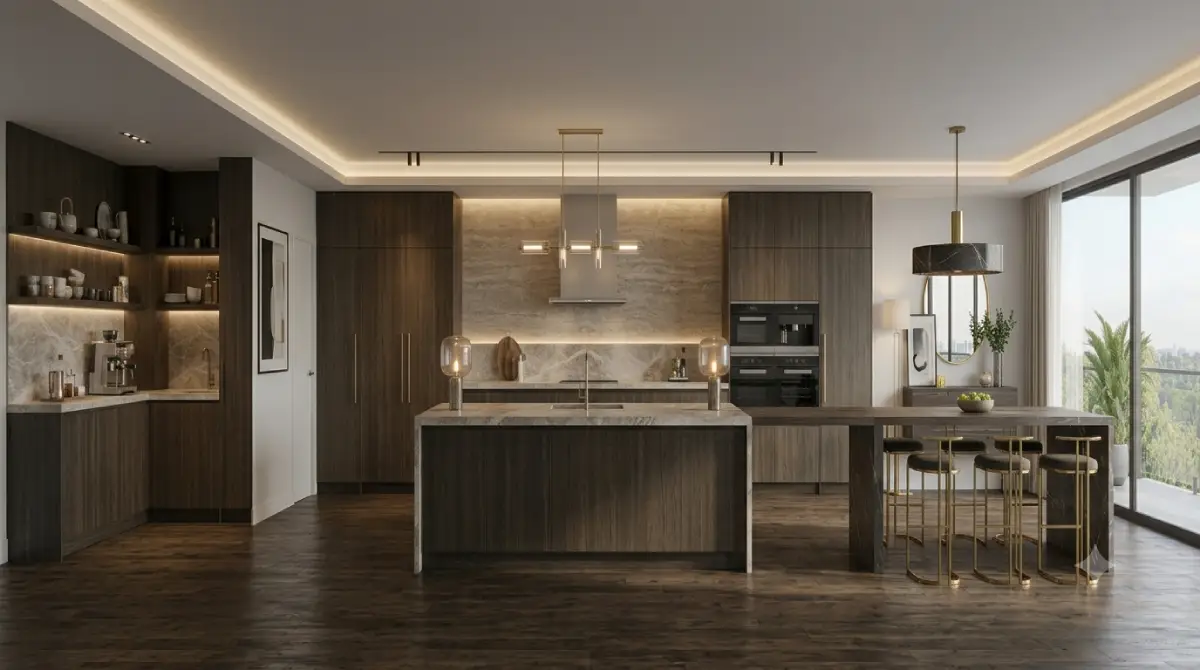
Luxury modern kitchens elevate functionality through craftsmanship and technology. Large islands, custom cabinetry interiors, hidden pantries, and premium materials enhance efficiency while delivering dramatic aesthetics. In this style, functionality becomes a form of luxury. The ability to move effortlessly through a space, find items quickly, and maintain visual order is as valuable as high-end finishes.
Japandi and soft contemporary styles are also gaining popularity. These approaches focus on intentional living, reduced clutter, natural materials, and flexible layouts. They align perfectly with Interior Design Styles for Modern US Kitchens that prioritize wellness, simplicity, and thoughtful organization.
Across all these styles, common functional principles appear: zoning, integrated storage, layered lighting, durable surfaces, and intentional decor. This consistency shows that functional styling is not a trend tied to one look it is a foundational design mindset shaping the future of kitchens.
3- Color Palettes, Materials, and Layout Secrets Behind Functional Modern Kitchen Interior Styling in stylish modern kitchen design ideas
Color, material selection, and layout planning are the hidden engines behind successful functional modern kitchen interior styling. While aesthetics draw attention first, these decisions determine how a kitchen performs over time.
Modern US kitchens are moving toward layered neutral palettes. Whites, warm beiges, soft grays, and muted greens create calm backdrops that reduce visual noise. This makes spaces feel larger and easier to maintain. Accent tones darker cabinetry, wood islands, or stone backsplashes add depth without overwhelming functionality. These palettes support stylish modern kitchen design ideas that remain timeless.
Material selection is increasingly driven by durability and maintenance. Quartz countertops resist staining and scratching, engineered woods provide stability, and matte finishes hide fingerprints. Designers prioritize surfaces that support daily life while maintaining visual appeal. This reflects the core philosophy of functional styling: beauty should withstand real use.
Texture is another important layer. Mixing smooth cabinetry with natural stone, wood grain, or subtle tile prevents kitchens from feeling flat while preserving practicality. Textures help define zones without requiring excessive decor. This approach keeps surfaces clear and efficient.
Layout planning is where functional styling becomes transformative. The traditional work triangle has evolved into activity zones. Prep areas include cutting surfaces and utensil storage. Cooking zones integrate spices and cookware. Cleaning zones group dishware and waste systems. Pantry zones support bulk storage and organization. These layout strategies shape Interior Design Styles for Modern US Kitchens at a structural level.
Island design is especially important. Modern islands often combine seating, storage, prep space, and technology. Their size and placement influence movement and social interaction. A well-planned island embodies functional modern kitchen interior styling because it solves multiple needs simultaneously.
Backsplashes and cabinetry interiors are also becoming functional design elements. Easy-clean materials, built-in lighting, pull-outs, and dividers enhance usability without altering the visual language of the kitchen.
Color psychology plays a role too. Calming palettes reduce stress, while natural materials increase comfort. These emotional effects reinforce why functional styling is not only practical but experiential. Kitchens that feel organized and visually balanced encourage more cooking, gathering, and enjoyment.
Ultimately, the secret behind successful modern kitchen design lies in aligning visual choices with performance goals. When color, materials, and layout work together, kitchens become intuitive spaces that support everyday life effortlessly.
4- Smart Storage, Lighting, and Decor Ideas Elevating Interior Design Styles for Modern US Kitchens With contemporary kitchen interior ideas
Storage, lighting, and decor are where functional modern kitchen interior styling becomes visible in daily use. These elements determine whether a kitchen feels effortless or frustrating.
Smart storage solutions have revolutionized Interior Design Styles for Modern US Kitchens. Deep drawers replace traditional cabinets for easier access. Pull-out pantry systems maximize vertical space. Corner solutions eliminate wasted areas. Drawer dividers keep tools organized. Appliance garages hide small devices while keeping them accessible. These strategies reduce clutter and improve workflow dramatically.
Vertical storage is particularly impactful in smaller kitchens. Tall cabinetry, stacked shelves, and integrated organizers create capacity without expanding footprint. This reflects the modern design principle of doing more with the same space.
Lighting has evolved into a layered system rather than a single overhead fixture. Task lighting supports cooking and prep. Ambient lighting shapes atmosphere. Accent lighting highlights materials and architecture. Under-cabinet lighting improves visibility while contributing to aesthetics. This layered approach enhances both performance and mood a hallmark of functional styling.
Smart lighting controls add flexibility. Adjustable brightness, color temperature shifts, and automation allow kitchens to transition from workspaces to entertainment areas seamlessly. This adaptability reinforces why functional design feels luxurious.
Decor choices in contemporary kitchen interior ideas are becoming more intentional. Instead of filling surfaces with decorative items, designers select pieces that add character without creating clutter. Sculptural lighting, statement hardware, and curated open shelving serve both visual and practical roles.
Textiles, plants, and small accents soften modern kitchens while maintaining functionality. Washable rugs, durable bar stools, and low-maintenance greenery contribute warmth without compromising usability.
Technology integration is another key element. Charging drawers, smart displays, and integrated speakers support modern lifestyles while remaining visually discreet. These features demonstrate how Interior Design Styles for Modern US Kitchens blend innovation with everyday comfort.
The combination of smart storage, thoughtful lighting, and purposeful decor creates kitchens that feel polished yet easy to live in. Rather than decorating around problems, functional styling eliminates problems through design.
5- How to Personalize Interior Design Styles for Modern US Kitchens Using Functional Modern Kitchen Interior Styling That Feels Effortless and Exciting
Personalization is where modern kitchen design becomes truly meaningful. While principles of functional modern kitchen interior styling provide structure, individual preferences bring personality and emotional connection.
One of the most effective ways to personalize is through material contrast. Mixing warm woods with sleek finishes, or natural stone with painted cabinetry, allows homeowners to express taste while maintaining functionality. These choices keep Interior Design Styles for Modern US Kitchens unique rather than generic.
Color accents are another powerful tool. Even within neutral palettes, introducing subtle hues through islands, backsplashes, or decor can transform the space. Because functional styling keeps layouts efficient, these visual moments stand out more.
Hardware and lighting fixtures act like jewelry for the kitchen. Choosing distinctive shapes or finishes adds character without affecting usability. This is personalization that supports rather than disrupts performance.
Lifestyle-driven customization is especially important. Coffee stations, baking zones, beverage centers, and hidden bars reflect how homeowners actually use their kitchens. Functional styling encourages designing around habits, making spaces feel intuitive and exciting.
Open shelving offers opportunities for storytelling. Displaying everyday ceramics, cookbooks, or meaningful objects adds warmth while remaining practical. The key is balance curated rather than crowded.
Technology personalization is growing as well. Smart appliances, custom lighting scenes, and integrated organization systems allow kitchens to adapt to routines. This flexibility is central to modern design.
Spatial personalization also matters. Seating arrangements, island orientation, and traffic flow should reflect social patterns. Some kitchens prioritize entertaining, others focus on family meals or efficient cooking. Functional styling ensures these priorities shape the design.
Texture layering adds emotional depth. Soft stools, natural materials, and subtle patterns make kitchens feel lived-in without sacrificing modern clarity. This balance is what makes functional kitchens feel exciting rather than purely utilitarian.
Ultimately, personalization within Interior Design Styles for Modern US Kitchens is about aligning design with identity. When functionality supports individual habits and aesthetic preferences, kitchens become spaces people genuinely enjoy using every day.
Conclusion
The evolution of modern kitchens reflects a broader shift in how people think about home design. Instead of separating beauty from practicality, homeowners now expect spaces that deliver both effortlessly. This is why Interior Design Styles for Modern US Kitchens are increasingly defined by best modern kitchen interior ideas.
Across minimalist, Scandinavian, transitional, industrial, and luxury styles, one principle remains consistent: design should simplify life. From thoughtful layouts and durable materials to layered lighting and smart storage, functionality shapes every decision. Rather than limiting creativity, this approach enhances it by ensuring that aesthetic choices support real use.
Color palettes create calm, materials ensure longevity, and storage systems maintain visual clarity. Lighting transforms mood while improving efficiency. Personalization makes kitchens emotionally meaningful. Together, these elements form a design philosophy that is both practical and inspiring.
Perhaps the most exciting aspect of this movement is its accessibility. Functional styling is not reserved for high-end projects. Small upgrades better organization, layered lighting, intentional decor can dramatically improve everyday experiences. This makes the principles of contemporary kitchen interior ideas relevant to a wide range of homes.
As lifestyles continue to evolve, kitchens will remain central to daily living. Spaces that adapt, support routines, and feel visually balanced will stand the test of time. Embracing stylish modern kitchen design ideas ensures that kitchens are not just beautiful rooms but environments that enhance how people live, gather, and create memories.
The future of kitchen design is not about choosing between style and function. It’s about designing spaces where both thrive effortlessly, intentionally, and excitingly.
FAQs about FAQs about Interior Design Styles for Modern US Kitchens – Functional Modern Kitchen Interior Styling Made Simple
What defines a modern kitchen interior?
A modern kitchen interior features clean lines, functional layouts, minimal clutter, sleek cabinetry, and a combination of stylish and practical design elements.
Which colors are best for a best modern kitchen interior ideas?
Popular choices include white, gray, beige, black, sage green, navy blue, and warm wood tones.
How can I make my kitchen look more modern?
Upgrade lighting, use minimalist décor, incorporate smart storage solutions, and choose contemporary materials such as quartz countertops and matte finishes.
Are modern kitchen interiors suitable for small spaces?
Yes. Modern designs often emphasize efficient layouts, multifunctional furniture, and space-saving storage, making them ideal for smaller kitchens.
What materials are commonly used in stylish modern kitchen design ideas?
Wood, quartz, marble, stainless steel, glass, and matte-finish cabinetry are popular materials in modern kitchen interiors.
What is the latest trend in contemporary kitchen interior ideas?
Current trends include two-tone cabinets, integrated appliances, natural textures, hidden storage, and sustainable materials.