DIY Decoupage Furniture for Stunning Home Decor
Looking for a creative and affordable way to transform your home? DIY decoupage furniture is one of the most exciting trends in home decorating, allowing homeowners to breathe new life into old furniture while creating personalized pieces that reflect their unique style. Whether you’re updating a tired dresser, revamping a side table, or giving a vintage cabinet a fresh new look, decoupage decor offers endless possibilities for creativity.
Decoupage is the art of decorating surfaces with paper, fabric, napkins, photographs, or printed designs and sealing them with layers of adhesive and protective finish. The technique has been used for centuries, but modern DIY enthusiasts have embraced it as a simple and budget-friendly way to create custom home decor.
One of the reasons decoupage decor has become so popular is its versatility. It works with almost every decorating style, including farmhouse, vintage, bohemian, modern, coastal, and minimalist interiors. With the right materials and a little imagination, ordinary furniture can become extraordinary statement pieces.
DIY decoupage furniture is also an environmentally friendly decorating solution. Instead of throwing away outdated furniture, you can upcycle it into something beautiful and functional. This not only saves money but also reduces waste, making it an excellent choice for eco-conscious homeowners.
In this comprehensive guide, you’ll discover inspiring DIY decoupage furniture ideas, learn how to choose the best materials, master essential techniques, explore current design trends, and find budget-friendly projects that deliver stunning results. Whether you’re a beginner or an experienced crafter, these ideas will help you create beautiful decoupage decor that instantly enhances your home.
Table of Contents
1- Creative DIY Decoupage Furniture Ideas That Instantly Elevate Your Decoupage Decor
The beauty of DIY decoupage furniture lies in its ability to transform ordinary pieces into personalized works of art. Every room in your home can benefit from creative decoupage decor, and the possibilities are virtually endless.
A vintage dresser is one of the most popular furniture pieces for decoupage projects. Instead of simply repainting an old dresser, consider applying floral paper designs to the drawer fronts. Soft botanical prints can create a romantic cottage-inspired look, while bold floral patterns can make a dramatic statement. This approach instantly turns a basic storage piece into a decorative focal point.
Side tables are another excellent canvas for DIY decoupage furniture. Their compact size makes them perfect for beginners, and they can be customized to match virtually any interior style. Travel enthusiasts often decorate tabletops with vintage maps, while book lovers may use pages from old novels to create unique designs. The result is furniture that tells a story and adds personality to a room.
Coffee tables offer even more creative potential. Large tabletop surfaces provide plenty of space for artistic expression. Nature-inspired imagery, abstract patterns, geometric designs, and vintage illustrations all work beautifully. A carefully designed coffee table can become the centerpiece of an entire living room.
Cabinet doors are also ideal for decoupage decor. Applying decorative paper to only the front panels creates visual interest without overwhelming the piece. This technique works especially well in dining rooms, kitchens, and home offices where cabinets often dominate the space.
Children’s furniture provides another exciting opportunity. Toy boxes, bookshelves, desks, and small chairs can be decorated with colorful themes, educational graphics, or favorite characters. These personalized pieces make children’s spaces feel unique and engaging.
For homeowners who love farmhouse decor, decoupage furniture can incorporate vintage labels, antique advertisements, botanical sketches, and rustic textures. These details add charm and authenticity while preserving the cozy appeal associated with farmhouse design.
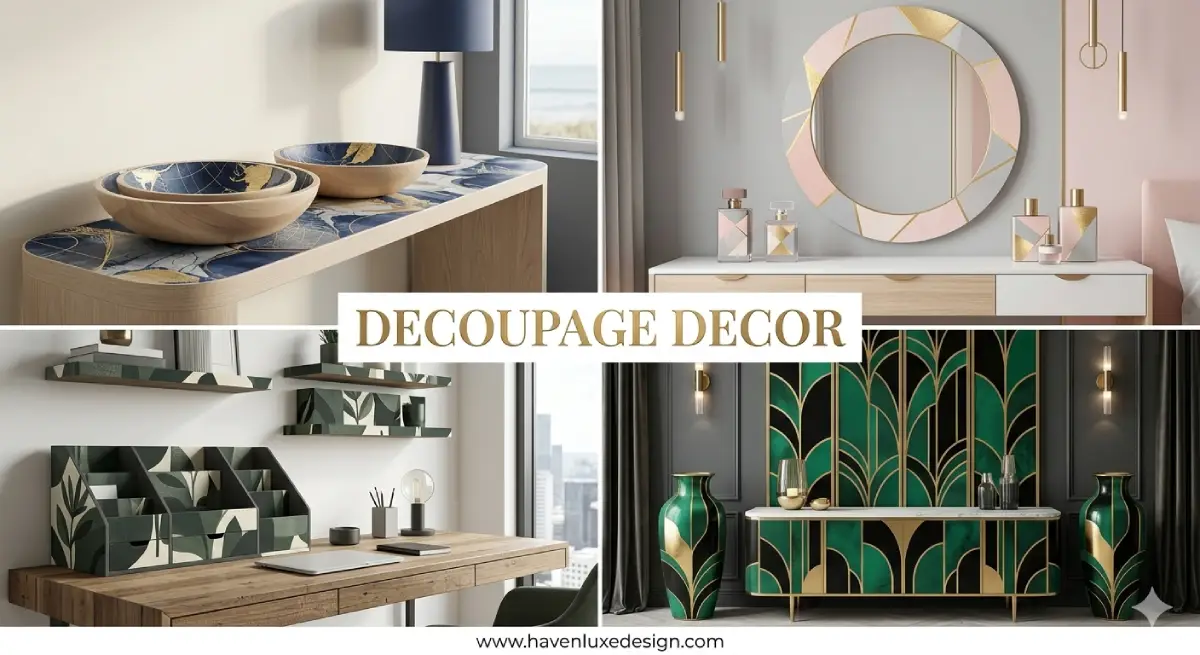
Modern interiors can also benefit from decoupage decor. Minimalist patterns, monochromatic color palettes, and geometric designs create contemporary furniture pieces that feel sophisticated rather than overly decorative. This proves that decoupage isn’t limited to traditional or vintage aesthetics.
Even bedroom furniture can be transformed through decoupage techniques. Nightstands decorated with elegant floral motifs, abstract artwork, or textured patterns create stylish accents that elevate the overall room design.
The key to successful DIY decoupage furniture is selecting designs that complement your home’s existing decor while allowing your personality to shine through. Whether your style is bold and colorful or subtle and refined, decoupage provides endless opportunities for creative expression.
2- Choosing the Perfect Materials for decoupage furniture ideas and Beautiful Decoupage Decor
The success of any DIY decoupage furniture project begins with choosing the right materials. While the process itself is relatively simple, selecting quality supplies can make a significant difference in both appearance and durability.
The foundation of every decoupage project is the furniture piece itself. Wood furniture is generally considered the best option because it provides a stable, easy-to-prepare surface. However, decoupage can also be applied to metal, glass, laminate, and certain plastic surfaces with proper preparation.
Decorative paper is one of the most important materials in decoupage decor. Scrapbook paper remains a popular choice due to its wide variety of colors, patterns, and themes. Specialty decoupage paper is specifically designed for the technique and often provides smoother application and better durability.
Decorative napkins have become increasingly popular among DIY enthusiasts. Their thin texture allows them to blend seamlessly into furniture surfaces, creating a painted-on appearance. Floral napkins, vintage designs, and botanical themes are especially popular for home decor projects.
Rice paper is another favorite among experienced crafters. It is lightweight, durable, and easy to work with, making it ideal for detailed designs. Many professional-looking DIY decoupage furniture projects use rice paper because it produces a smooth, elegant finish.
The adhesive you choose is equally important. Decoupage medium serves as both glue and sealer, simplifying the process and ensuring strong adhesion. Many crafters prefer all-in-one products that bond paper securely while providing protective finishing layers.
Paint often plays a supporting role in decoupage decor. A painted base coat can enhance decorative paper and create a more polished final result. Neutral colors such as white, cream, gray, and beige remain popular because they allow decoupage designs to stand out.
Brushes are essential tools for achieving smooth results. Soft-bristle brushes help distribute adhesive evenly while minimizing wrinkles and air bubbles. Foam brushes are also useful for applying thin, consistent coats.
Protective topcoats are crucial for durability. Furniture experiences daily wear and tear, so sealing your project properly helps preserve its beauty. Matte finishes create a subtle appearance, while satin and gloss finishes add shine and enhance color vibrancy.
Sandpaper is another valuable supply. Proper surface preparation ensures better adhesion and a smoother finish. Light sanding before and between coats often produces more professional results.
By investing in quality materials and taking time to prepare surfaces properly, you can create DIY decoupage furniture that looks beautiful and remains durable for years to come.
3- Step-by-Step DIY furniture makeover Techniques for Unique Home Decor Transformations
Creating beautiful DIY furniture makeover may look complicated at first glance, but the process is surprisingly simple when broken down into manageable steps. With proper preparation and attention to detail, even beginners can achieve professional-looking results that enhance their overall decoupage decor.
The first step is choosing the furniture piece you want to transform. Old dressers, nightstands, coffee tables, cabinets, side tables, and bookshelves all work exceptionally well for decoupage projects. Before starting, inspect the furniture carefully for damage. Tighten loose hardware, repair cracks, and ensure the structure is stable.
Next comes surface preparation, which is one of the most important stages in any DIY decoupage furniture project. Remove dirt, grease, dust, and residue using a gentle cleaner. If the furniture has a glossy finish, lightly sand the surface to help paint and adhesive bond properly. Many beginners skip this step and later experience peeling or lifting designs.
After cleaning and sanding, apply a primer if necessary. Priming helps create a smooth foundation and improves paint adhesion. Once the primer dries completely, apply your chosen paint color. Many decoupage decor enthusiasts select neutral shades such as white, cream, beige, gray, or soft pastel colors because they complement a wide range of decorative papers.
While the paint dries, prepare your decorative elements. Whether you’re using rice paper, scrapbook paper, decorative napkins, fabric, or printed designs, carefully cut or tear them into the desired shapes. Tearing edges often helps create a more seamless blend into the furniture surface.
Before applying adhesive, arrange the paper pieces on the furniture to test your design. This allows you to experiment with placement and make adjustments before committing. Taking a few extra minutes during this stage can dramatically improve the final appearance of your DIY decoupage furniture.
Once you’re satisfied with the layout, begin applying adhesive. Work in small sections to prevent the glue from drying too quickly. Carefully place each paper piece onto the surface and smooth it gently using a soft brush or plastic scraper. This helps eliminate wrinkles and air bubbles.
One common challenge in decoupage decor is preventing creases. The key is patience. Apply paper gradually rather than rushing the process. Thin decorative napkins require especially gentle handling because they can tear easily when wet.
After all decorative elements are attached, allow the piece to dry completely. Drying times vary depending on humidity levels, adhesive type, and material thickness. Many experienced crafters prefer leaving projects overnight before proceeding.
The next step involves sealing the design. Apply a thin layer of decoupage medium or protective topcoat over the entire decorated surface. Once dry, lightly sand if necessary and apply additional coats. Most DIY decoupage furniture projects benefit from three to five protective layers.
The final stage focuses on finishing details. Reattach hardware, add decorative knobs if desired, and inspect the piece for any areas requiring touch-ups. Small improvements can significantly enhance the overall professional appearance.
By following these simple techniques, anyone can transform outdated furniture into stunning decoupage decor. The process combines creativity, craftsmanship, and personalization, resulting in furniture that reflects your unique style while enhancing your home’s interior design.
4- Trending Decoupage Decor Styles to Inspire Your Next furniture restoration DIY Project
Like all areas of interior design, decoupage decor continues to evolve with changing tastes and decorating trends. Today’s homeowners are embracing a wide variety of styles that allow furniture restoration DIYto fit seamlessly into virtually any home aesthetic.
One of the most popular trends is botanical-inspired decor. Nature-themed designs featuring leaves, flowers, herbs, and garden illustrations continue to dominate social media and home design magazines. Botanical decoupage decor creates a fresh, calming atmosphere while introducing organic beauty into indoor spaces.
Vintage and cottagecore aesthetics remain incredibly popular as well. Many homeowners use antique-inspired papers featuring old postcards, handwritten letters, faded florals, and vintage advertisements. These nostalgic designs add warmth and character to DIY decoupage furniture while creating a sense of timeless charm.
Farmhouse decor continues to influence furniture makeovers. Rustic wood finishes combined with vintage labels, grain sack patterns, and distressed paint techniques create furniture pieces that feel both cozy and authentic. Farmhouse-inspired decoupage decor works particularly well in kitchens, dining rooms, and entryways.
Modern minimalist styles have also embraced decoupage techniques. Clean lines, geometric patterns, monochromatic color schemes, and abstract artwork provide a contemporary twist on traditional decoupage. This trend demonstrates the remarkable versatility of DIY decoupage furniture.
Bohemian-inspired interiors remain a favorite among creative homeowners. Rich colors, global patterns, artistic motifs, and eclectic designs make boho decoupage decor both expressive and visually captivating. Furniture decorated in this style often becomes an artistic focal point within the room.
Coastal themes continue to gain popularity, especially in homes seeking a relaxed, vacation-inspired atmosphere. Soft blues, sandy neutrals, seashell imagery, coral patterns, and nautical designs help create refreshing DIY decoupage furniture projects that evoke feelings of tranquility.
Another emerging trend is maximalism. Unlike minimalist design, maximalism embraces bold colors, layered patterns, and abundant visual interest. Decoupage decor naturally complements this style because it allows for creative combinations of textures, images, and decorative elements.
Art-inspired furniture is also becoming increasingly common. Homeowners are incorporating famous artwork reproductions, watercolor designs, abstract paintings, and hand-drawn illustrations into their furniture transformations. This approach elevates DIY decoupage furniture from simple decoration to functional art.
Sustainability has influenced current trends as well. More people are repurposing thrift-store finds and inherited furniture rather than purchasing new items. Decoupage offers an affordable and environmentally conscious way to update existing pieces while reducing waste.
Personalized decor represents another growing movement. Custom family photos, meaningful quotes, travel memories, and personal artwork allow homeowners to create truly one-of-a-kind furniture pieces. This trend reflects a broader desire for homes that feel authentic and unique.
The beauty of modern decoupage decor trends is their flexibility. Whether you prefer rustic farmhouse charm, contemporary elegance, coastal serenity, or artistic expression, there is a DIY decoupage furniture style perfectly suited to your personal taste and home design goals.
5- Budget-Friendly furniture restoration DIY Projects for Stunning Decoupage Decor on Any Budget
One of the biggest reasons homeowners love DIY decoupage furniture is its affordability. Unlike major home renovations or expensive furniture replacements, decoupage decor allows you to achieve dramatic transformations with a relatively small investment. Whether you’re decorating your first apartment, refreshing a family home, or simply looking for a creative weekend project, decoupage offers countless opportunities to enhance your interior design without straining your budget.
Thrift stores are one of the best places to find furniture for decoupage projects. Many secondhand shops offer dressers, side tables, cabinets, shelves, and chairs at a fraction of the cost of new furniture. While these pieces may look outdated or worn initially, they often have excellent structural quality and can be completely transformed with a little creativity and effort.
Garage sales and flea markets are equally valuable resources. Homeowners frequently sell furniture they no longer need, creating opportunities for DIY enthusiasts to find hidden gems at bargain prices. A simple table purchased for a few dollars can become a stunning focal point through carefully selected decoupage decor and fresh paint.
Repurposing furniture you already own is another excellent money-saving strategy. Instead of discarding an old nightstand, bookshelf, or cabinet, consider giving it a completely new look. Many homeowners are surprised by how dramatically DIY decoupage furniture can alter the appearance of a piece they have lived with for years.
Decorative napkins are among the most affordable decoupage materials available. A single package often contains multiple designs and enough material for several projects. Because napkins are thin and easy to work with, they create beautiful results while keeping costs low. Floral, botanical, vintage, and geometric patterns remain especially popular choices for budget-friendly decoupage decor.
Printable designs offer another economical solution. Many websites provide affordable downloadable artwork that can be printed at home. This allows you to customize furniture with virtually unlimited design options while avoiding the cost of specialty papers.
Small furniture projects are ideal for beginners and budget-conscious decorators. A side table, stool, tray, or small shelf requires fewer materials than larger furniture pieces, making it easier to experiment with different techniques without significant financial risk. These projects also provide valuable experience before tackling larger furniture restoration DIY transformations.
Using leftover paint from previous decorating projects can reduce expenses even further. Many homeowners already have partially used paint cans stored in garages or utility rooms. Combining existing paint supplies with affordable decorative paper creates beautiful results while minimizing waste.
Storage boxes, wooden crates, and decorative trays represent additional low-cost opportunities for decoupage decor. Although smaller than traditional furniture, these items can add style and personality throughout the home. They are also excellent practice projects for those new to decoupage techniques.
Updating hardware is another affordable way to maximize visual impact. Replacing outdated knobs, pulls, and handles with stylish alternatives can dramatically enhance the appearance of DIY decoupage furniture. Even inexpensive hardware upgrades often make furniture look significantly more expensive and professionally designed.
Seasonal projects provide exciting opportunities for budget-friendly decorating throughout the year. Holiday-themed decoupage decor can refresh furniture and accessories without requiring major investments. Seasonal patterns, colors, and motifs allow homeowners to update their spaces regularly while maintaining affordability.
Many DIY enthusiasts discover that decoupage becomes even more economical over time. Basic supplies such as brushes, sandpaper, and tools can be reused across multiple projects. As skills improve, crafters often become more efficient with materials, reducing waste and maximizing value.
Another benefit of DIY decoupage furniture is its ability to create custom pieces that would be difficult or expensive to purchase in stores. Personalized furniture often carries a unique character that mass-produced items simply cannot match. This combination of affordability and individuality makes decoupage one of the most rewarding decorating techniques available.
Ultimately, budget-friendly decoupage decor proves that beautiful home design does not require a large budget. With creativity, patience, and a willingness to experiment, anyone can transform inexpensive furniture into stunning pieces that enhance the beauty and personality of their home.
Conclusion
DIY decoupage furniture offers an exciting and accessible way to transform ordinary furniture into extraordinary home decor. Whether you’re drawn to vintage charm, modern sophistication, farmhouse warmth, coastal relaxation, or bold artistic expression, decoupage decor provides endless opportunities to customize your living space and showcase your creativity.
Throughout this guide, we’ve explored creative furniture makeover ideas, essential materials, step-by-step techniques, trending design styles, and budget-friendly project options. Each of these elements plays an important role in helping homeowners create beautiful and durable furniture restoration DIY that reflects their personal taste and complements their interior design goals.
One of the greatest advantages of decoupage decor is its versatility. It works on a wide variety of furniture types, accommodates countless design styles, and can be adapted to fit virtually any budget. From transforming thrift-store finds into statement pieces to revitalizing cherished family furniture, decoupage offers a rewarding blend of creativity and practicality.
Beyond aesthetics, decoupage furniture ideas also supports sustainable living by encouraging furniture reuse and reducing waste. Instead of replacing old pieces, homeowners can reimagine and repurpose them, creating beautiful results while making environmentally conscious choices.
The growing popularity of decoupage decor reflects a broader desire for personalized homes filled with meaningful, unique items. In a world increasingly dominated by mass-produced products, handcrafted furniture projects allow individuals to create spaces that feel authentic and distinctive.
Whether you’re just beginning your decoupage journey or looking for fresh inspiration for your next project, the possibilities are virtually endless. With the right materials, thoughtful design choices, and a little patience, you can transform simple furniture into stunning works of art that elevate every room in your home.
Now is the perfect time to gather your supplies, unleash your creativity, and start exploring the wonderful world of DIY furniture makeover. Your next favorite piece of home decor may be waiting to be transformed right in your own home.
FAQs about DIY Decoupage Furniture for Stunning Home Decor
1. What is furniture restoration DIY?
DIY decoupage furniture is the process of decorating furniture by attaching decorative paper, fabric, or napkins with decoupage glue and sealing it for durability.
2. What materials do I need for decoupage furniture ideas?
You’ll need furniture, decorative paper or napkins, Mod Podge or decoupage glue, a paintbrush, scissors, sandpaper, and a protective topcoat.
3. Can beginners try furniture makeover ideas?
Yes. Decoupage is beginner-friendly and requires only basic crafting supplies and simple techniques.
4. Does DIY furniture makeover last?
Yes. When properly sealed with multiple coats of varnish or polyurethane, decoupage furniture can remain beautiful for years.
5. Can I decoupage any type of furniture?
Most wooden furniture works well, but you can also decoupage MDF, laminate, metal, and glass surfaces with proper preparation.