Maximalist Gallery Walls: Bold Art Layout Ideas That Tell a Story
Minimalism may have dominated interior design for years, but homeowners are increasingly embracing something far more expressive, colorful, and personal: maximalism. At the heart of this exciting design movement is the return of the gallery wall only this time, it is bigger, bolder, and far more meaningful.
Maximalist Gallery Walls: Curating a Bold, High-Contrast Art Layout That Tells a Story is all about creating interiors filled with personality, memories, creativity, and visual excitement. Rather than carefully limiting decorative elements, maximalist styling encourages homeowners to celebrate abundance, individuality, and artistic expression.
A gallery wall is no longer simply a collection of framed prints. It has evolved into a carefully curated visual narrative that combines artwork, photographs, vintage finds, sculptural pieces, textiles, and meaningful objects. Every item contributes to the atmosphere and tells part of the homeowner’s story.
One of the reasons this trend has become so popular is its versatility. Whether your home leans modern, traditional, eclectic, bohemian, or contemporary, a maximalist gallery wall can be tailored to complement your style while adding extraordinary visual impact.
The growing interest in eclectic gallery wall inspiration also reflects a broader movement toward personalized interiors. Instead of designing homes that look like showrooms, people are increasingly creating spaces that reflect their experiences, passions, and identities.
From dramatic color palettes and oversized artwork to layered frames and collected treasures, this guide explores everything you need to know about creating a gallery wall that feels dynamic, meaningful, and utterly unforgettable.
Table of Contents
1- Embracing Maximalist Gallery Walls: Curating a Bold, High-Contrast Art Layout That Tells a Story
The beauty of Maximalist Gallery Walls: Curating a Bold, High-Contrast Art Layout That Tells a Story lies in their ability to transform ordinary walls into immersive experiences.
Unlike minimalist interiors that often prioritize simplicity and restraint, maximalist spaces celebrate richness, abundance, and visual storytelling.
A maximalist gallery wall becomes a focal point that immediately captures attention and sparks curiosity.
One of the defining characteristics of this style is layering.
Artwork, photographs, textiles, decorative objects, mirrors, and sculptural elements all work together to create depth and complexity.
Rather than striving for perfect symmetry, maximalist layouts often embrace organic arrangements and collected appearances.
This creates spaces that feel authentic and deeply personal.
High contrast is another essential component.
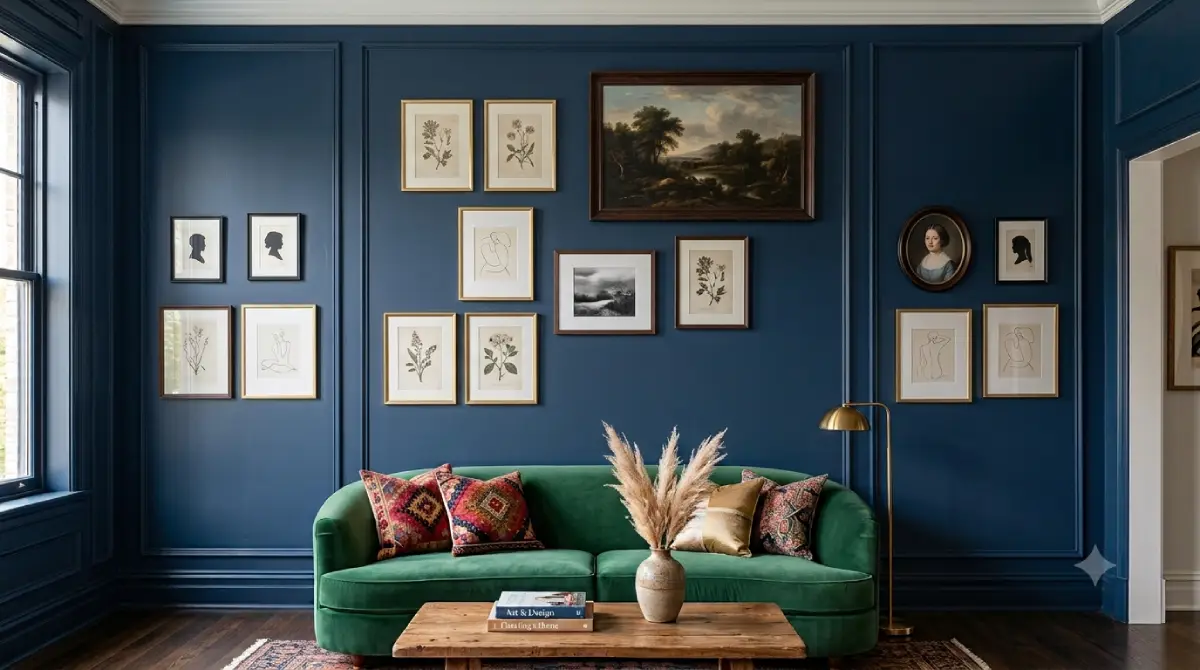
Dark frames paired with light artwork, bold colors against neutral backgrounds, and modern pieces mixed with vintage finds all contribute to the dramatic atmosphere.
Maximalist gallery walls also encourage experimentation.
There are few strict rules.
Mixing artistic styles, periods, and materials often produces the most visually interesting results.
A modern abstract painting may sit beside a vintage botanical print, while family photographs coexist with sculptural wall objects and antique mirrors.
This freedom allows homeowners to create spaces that feel unique rather than formulaic.
Another important aspect of maximalism is emotional connection.
Every piece should carry meaning.
Perhaps it represents travel memories, favorite artists, family history, or personal interests.
This narrative quality transforms walls into visual autobiographies.
The result is an interior that feels layered, dynamic, and full of character.
By embracing abundance and storytelling, homeowners can create gallery walls that become the true heart of their living spaces.
2- Why gallery wall decor inspiration Is Transforming Modern Home Decor Trends
The increasing popularity of gallery wall decor inspiration reflects significant changes within contemporary interior design.
For many years, highly curated and perfectly coordinated interiors dominated social media and design magazines.
However, many homeowners began to crave something more personal and expressive.
Gallery walls provide exactly that.
They encourage individuality and creativity.
Rather than purchasing matching decorative pieces, homeowners can build collections over time and create spaces that evolve naturally.
This collected approach feels authentic and deeply meaningful.
Another reason for the trend’s success is its flexibility.
Gallery walls can adapt to virtually any interior style.
Modern homes benefit from bold contemporary artwork, while traditional spaces may incorporate antique prints and vintage portraits.
Eclectic interiors particularly thrive on visual contrast and layered storytelling.
The rise of remote work has also influenced this trend.
As people spend more time at home, they increasingly desire environments that inspire creativity and reflect personal identities.
Gallery walls introduce visual stimulation and make interiors feel more engaging.
Social media platforms have further accelerated interest in maximalist styling.
Images featuring dramatic art arrangements, colorful interiors, and layered collections continue to inspire homeowners worldwide.
Yet beyond aesthetics, gallery walls also provide emotional value.
They celebrate memories and personal experiences.
Travel photographs, inherited artwork, children’s drawings, and meaningful objects all contribute to a richer and more personal environment.
This shift toward emotional decorating is one of the defining characteristics of modern home design.
People increasingly want homes that tell stories rather than simply follow trends.
As a result, eclectic gallery wall inspiration has become one of the most exciting and influential decorating movements today.
3- Choosing Artwork and Color Palettes for Stunning Maximalist Gallery Walls
Artwork selection plays a critical role in creating impactful gallery walls.
One of the greatest strengths of maximalism is the freedom to combine different artistic styles.
Abstract pieces, portraits, landscapes, photography, vintage illustrations, typography, and textile art can all coexist beautifully.
The key lies in establishing visual relationships between pieces.
Color often serves as the unifying element.
High-contrast palettes remain particularly effective.
Black and white combinations create dramatic sophistication, while jewel tones introduce richness and vibrancy.
Earthy shades such as rust, olive, mustard, and deep burgundy can create warmth and vintage charm.
Bold colors are especially effective within maximalist interiors because they immediately capture attention and create energy.
However, neutral backgrounds can also provide balance.
A gallery wall does not necessarily need to be overwhelmingly colorful to feel maximalist.
Texture, scale, and layering can produce equally dramatic results.
Scale variation is essential.
Combining oversized statement pieces with smaller artworks creates rhythm and visual movement.
Unexpected combinations often generate the most interesting results.
For example, pairing contemporary photography with antique sketches can produce extraordinary visual depth.
Personal preferences should always guide artwork selection.
Choose pieces that evoke emotion and genuinely resonate with your experiences and interests.
After all, the goal of Maximalist Gallery Walls: Curating a Bold, High-Contrast Art Layout That Tells a Story is to create environments that feel meaningful and deeply personal.
4- Mixing Frames, Textures, and Styles With Eclectic Gallery Wall Inspiration
Frame selection can dramatically influence the overall appearance of a gallery wall.
Fortunately, maximalist interiors encourage experimentation.
Matching frames are not required.
In fact, variation often enhances visual interest.
Combining wood, brass, black metal, ornate vintage frames, and colorful finishes creates dynamic and collected compositions.
Texture also plays an important role.
Incorporating woven art, textile pieces, ceramics, and sculptural elements introduces additional depth.
Mirrors can further enhance gallery walls by reflecting light and expanding visual complexity.
Vintage finds are especially valuable within maximalist spaces.
Old paintings, antique maps, botanical prints, and flea market discoveries contribute authenticity and character.
Layering different artistic styles creates richness and unpredictability.
Traditional artwork can coexist beautifully with contemporary pieces when arranged thoughtfully.
Negative space should also be considered.
While maximalist interiors embrace abundance, leaving small areas of breathing room allows individual pieces to stand out.
Lighting further enhances texture and dimension.
Picture lights, sconces, and directional lighting can highlight favorite artworks and create dramatic evening atmospheres.
This layered approach reflects the essence of eclectic gallery wall inspiration, where diversity and individuality become defining strengths.
The result is a gallery wall that feels curated, evolving, and full of personality.
5- Creating a Personal Narrative Through Maximalist Gallery Walls: Curating a Bold, High-Contrast Art Layout That Tells a Story
One of the most compelling aspects of maximalist gallery walls is their narrative potential.
Every object can contribute to a broader story.
Travel photographs may celebrate adventures and experiences.
Inherited artwork can honor family history.
Vintage finds may reflect personal passions and aesthetic preferences.
These layers of meaning transform gallery walls into deeply personal installations.
Begin by identifying themes that resonate with you.
Perhaps you love literature, architecture, nature, fashion, or history.
These interests can guide artwork selection and create cohesive narratives.
Chronological arrangements can also be effective.
Displaying memories and experiences over time creates emotional depth.
Personal collections are equally valuable.
Postcards, concert tickets, sketches, handwritten notes, and meaningful objects can all become part of the display.
The beauty of storytelling through design lies in authenticity.
Perfection is unnecessary.
Gallery walls should evolve naturally as new memories and discoveries emerge.
This ongoing process ensures that interiors remain dynamic and deeply personal.
The most successful maximalist gallery walls feel collected rather than designed all at once.
They celebrate life experiences and encourage conversation.
Ultimately, they become visual expressions of identity and creativity.
6- Styling Dramatic and Collected Spaces With Eclectic Gallery Wall Inspiration and Statement Art Pieces
Gallery walls rarely exist in isolation.
Their surrounding environments should support and enhance their impact.
Furniture selection should complement the overall atmosphere.
Velvet sofas, vintage cabinets, sculptural lighting, and layered textiles work particularly well within maximalist interiors.
Statement lighting can dramatically elevate gallery walls.
Large pendants, dramatic sconces, and artistic floor lamps introduce additional personality.
Textiles further contribute warmth and richness.
Patterned rugs, embroidered cushions, and luxurious fabrics create visual continuity throughout the room.
Bookshelves can also become extensions of gallery walls.
Layering artwork on shelves alongside books and decorative objects reinforces the collected aesthetic.
Plants introduce softness and natural beauty.
Large greenery and trailing plants beautifully contrast with framed artwork and enhance the dynamic composition.
Color coordination remains important.
While maximalist interiors embrace variety, establishing recurring tones throughout the room creates harmony.
Most importantly, trust your instincts.
Maximalist styling celebrates individuality.
There is tremendous freedom to experiment and create spaces that genuinely reflect personal tastes.
The goal is not perfection.
It is expression.
By embracing eclectic gallery wall inspiration, homeowners can create interiors that feel bold, meaningful, and wonderfully unique.
Conclusion
The growing popularity of Maximalist Gallery Walls: Curating a Bold, High-Contrast Art Layout That Tells a Story demonstrates a broader shift toward more personal and expressive interiors.
Rather than striving for perfect coordination, homeowners are increasingly embracing individuality, creativity, and meaningful storytelling.
Through thoughtful artwork selection, dramatic color palettes, layered textures, and carefully curated objects, gallery walls can transform ordinary rooms into unforgettable environments.
The influence of eclectic gallery wall inspiration encourages experimentation and celebrates the beauty of collected interiors.
Most importantly, gallery wall decor inspiration remind us that our homes should reflect who we are.
They should tell stories, preserve memories, and inspire creativity.
Whether you prefer vintage treasures, contemporary art, family photographs, or bold statement pieces, creating a gallery wall allows you to turn your walls into deeply personal works of art.
The result is an interior that feels vibrant, sophisticated, and completely one of a kind.
What are Maximalist Gallery Walls?
Maximalist Gallery Walls are decorative arrangements that feature numerous artworks, photographs, mirrors, and objects displayed together to create a bold, layered, and visually rich focal point.
How do you create gallery wall decor inspiration?
Start by mixing frame styles, combining different art sizes, layering colors and textures, and arranging pieces closely together to achieve an eclectic and curated look.
Which rooms work best for eclectic gallery wall inspiration?
Living rooms, bedrooms, hallways, staircases, home offices, and dining rooms are excellent spaces for Maximalist Gallery Walls because they benefit from added personality and visual interest.
Can Maximalist Gallery Walls include items besides artwork?
Yes. Mirrors, vintage objects, decorative plates, sculptures, textiles, and personal photographs can all be incorporated to enhance the layered maximalist aesthetic.
Are Maximalist Gallery Walls still in style?
Yes. Maximalism continues to trend in interior design because homeowners increasingly seek personalized, expressive spaces filled with character and curated collections.