Modern Farmhouse Living Room Furniture & Decor: The Ultimate Guide
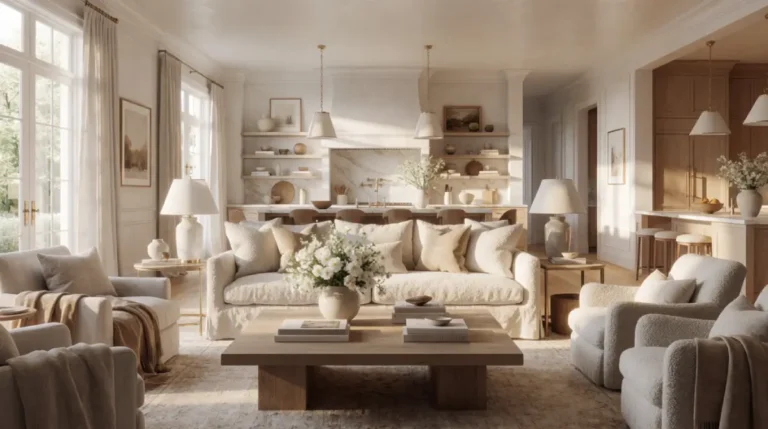
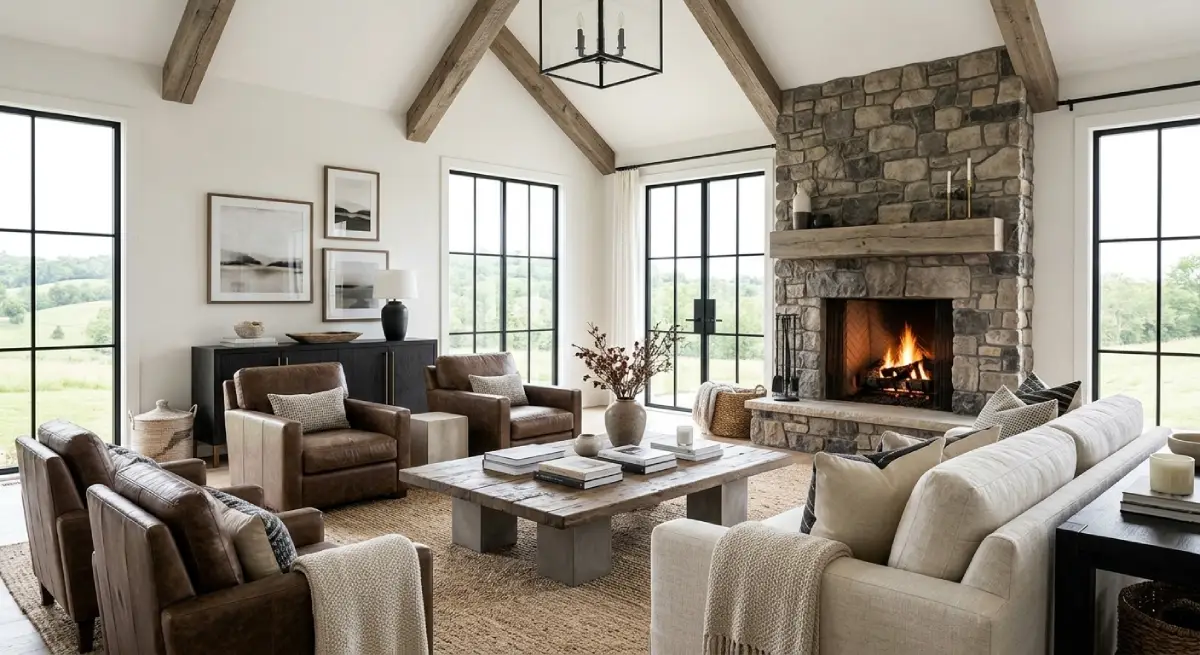
A modern farmhouse living room should feel comfortable before it feels decorated. The best rooms combine natural materials, relaxed upholstery, practical furniture, and a few carefully chosen accents without making everything look deliberately rustic.
If you’re starting with an empty room, the furniture you choose first will determine almost everything that follows. If your existing sofa and tables are staying, you can create the same look by changing the rug, lighting, textiles, and accessories.
The key is finding the right balance between warm farmhouse character and clean modern simplicity.
In this guide, we’ll look at the furniture that creates a strong foundation, how to mix rustic and contemporary pieces, how to choose colors and materials, and how to finish the room with farmhouse living room decor that feels collected rather than overly themed.
Table of Contents
Essential Farmhouse Living Room Furniture Pieces
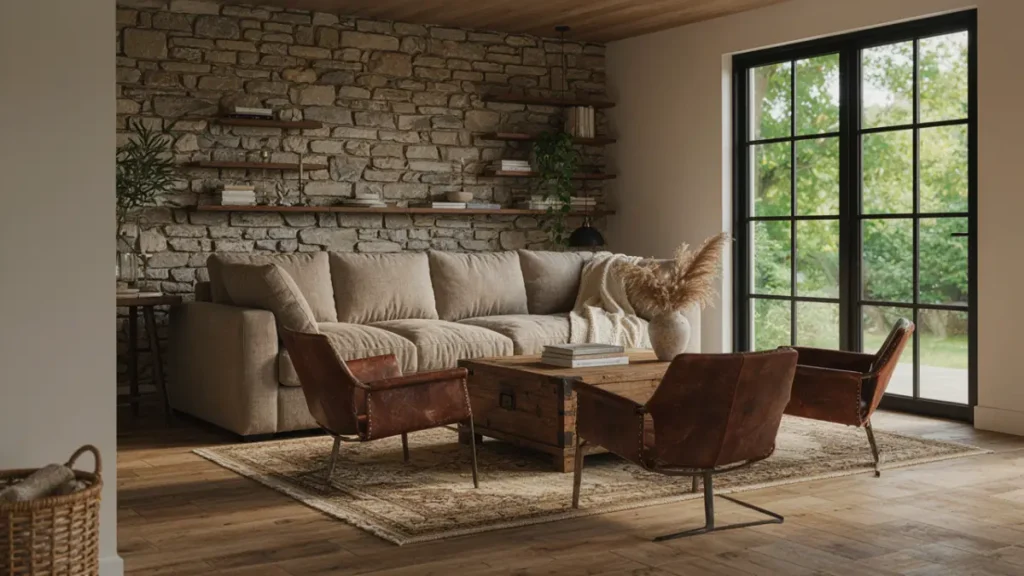
The easiest way to create a cohesive living room is to make the large furniture decisions before shopping for accessories.
Think of your sofa, coffee table, accent seating, and storage pieces as the framework of the room. Everything else should support that framework.
You don’t need a complete matching furniture set. In fact, a room usually feels more natural when the pieces coordinate without looking identical.
Start With the Sofa
For most living rooms, the sofa is the largest and most visually important piece of furniture.
A relaxed linen or cotton sofa is a natural choice for farmhouse interiors. Cream, warm white, oatmeal, beige, and soft taupe are particularly versatile because they work with both rustic wood and contemporary accents.
A slipcovered sofa gives the room a relaxed country-house feeling. If you prefer a more modern interpretation, choose a sofa with a simple silhouette, straight arms, and minimal detailing.
Before choosing the color, consider your actual lifestyle.
If you have children, pets, or a busy household, an upholstery fabric that is easy to clean may be more practical than a delicate light-colored fabric.
Haven Luxe Design Tip: If your sofa is already beige or cream, don’t feel that every other large piece needs to be beige too. Introducing natural wood, muted brown, or a subtle charcoal accent will give the room more depth.
Choose the Coffee Table Around Your Sofa
The coffee table should relate to the sofa in both size and visual weight.
A large sectional generally needs a substantial coffee table. A small sofa can look overwhelmed by a large, heavy table.
Natural oak, reclaimed wood, and medium-toned timber work beautifully in farmhouse interiors. For a more contemporary look, consider a simple wood top combined with a black metal base.
Shape also matters.
A rectangular coffee table works naturally with a traditional sofa arrangement. A round or oval table can soften a room filled with rectangular furniture and is particularly useful when circulation space is limited.
Before buying, measure the distance between the sofa and the table. You want enough space to walk comfortably while keeping the table close enough to be practical.
Add a Sideboard or Console
Storage furniture is one of the easiest ways to introduce farmhouse character without filling the room with decorative objects.
A natural wood sideboard can anchor an empty wall while providing concealed storage.
If you prefer a lighter look, consider a painted cabinet in warm white, greige, or muted gray.
You can also use a console behind the sofa if the room has enough space. Keep the styling simple: one lamp, a ceramic vessel, a small stack of books, or a piece of artwork is often enough.
Consider Accent Chairs
Accent chairs give a living room another seating position and can make the layout feel more complete.
Instead of purchasing two identical chairs, consider using different but compatible pieces.
For example, a linen armchair can be paired with a leather accent chair or a woven chair.
The colors do not have to match exactly. Look for a shared element such as a warm neutral fabric, natural wood, or black metal.
Position the chairs so that the seating encourages conversation rather than making every piece face the television.
Furniture Selection Guide
| Furniture piece | Materials | Colors | What it contributes |
|---|---|---|---|
| Sofa | Linen, cotton, performance fabric | Cream, oatmeal, beige | Soft visual foundation |
| Coffee table | Oak, reclaimed wood, wood + metal | Natural, medium brown | Warmth and structure |
| Sideboard | Wood or painted wood | Natural, white, greige | Storage and character |
| Accent chair | Linen, leather, woven fabric | Tan, ivory, taupe | Contrast and additional seating |
| Ottoman | Linen, cotton, bouclé | Cream, beige, brown | Flexible seating |
| Console | Wood, metal, mixed materials | Natural wood, black | Fills and balances open walls |
The best farmhouse living room furniture does not necessarily come from the same collection.
Instead, choose pieces that share a visual language. Similar wood tones, complementary upholstery colors, and consistent proportions will make different furniture pieces feel intentional.
How to Style Farmhouse Style Living Room Furniture
Once the furniture is in place, the room needs softness and texture.
This is where farmhouse style living room furniture becomes more inviting. The furniture provides structure; textiles and accessories make the space comfortable.
Mix Hard and Soft Materials
A room can quickly feel flat when everything has the same texture.
Pair a solid wood coffee table with a soft sofa. Add a woven basket beside the chair, a textured rug underneath the furniture, and a knitted or cotton throw on the sofa.
This combination creates visual contrast without requiring bright colors.
The trick is to vary the texture rather than adding more objects.
Build a Warm Neutral Palette
A neutral farmhouse palette doesn’t have to mean an entirely white room.
Start with a foundation such as:
- Warm white
- Oatmeal
- Natural wood
Then choose one or two secondary accents:
- Soft black
- Warm brown
- Muted sage
- Dusty blue
- Terracotta
- Charcoal
A limited palette makes it easier to mix furniture from different sources.
If you want to change the room seasonally, keep the large furniture neutral and use pillows, throws, flowers, and small accessories to introduce seasonal colors.
Layer Pillows Instead of Matching Them
Perfectly matching pillows can make a sofa feel like a showroom.
Instead, combine different textures and patterns within the same color family.
For example, on a cream sofa you could combine:
- One larger oatmeal pillow
- One subtle striped pillow
- One textured cream pillow
- One smaller muted brown or sage pillow
Checks, stripes, botanical patterns, and simple geometric designs can all work in a farmhouse living room when they share compatible colors.
Use Throws for Texture
A throw blanket should look like it belongs there, not like it was placed solely for a photograph.
Drape it casually over one arm of the sofa or fold it into a basket beside the seating.
Wool, cotton, linen, and chunky knits are all useful for adding texture.
If your sofa already has a strong pattern, choose a solid throw. If your sofa is plain, a subtle pattern can provide visual interest.
Mix Vintage Character With Contemporary Pieces
One of the easiest ways to prevent a farmhouse living room from looking dated is to mix old and new.
You might pair:
- A modern cream sofa with a vintage-inspired wood cabinet
- A reclaimed coffee table with a contemporary floor lamp
- A traditional woven basket with a clean-lined accent chair
- An antique-style mirror with modern artwork
This contrast is more sophisticated than decorating every surface with distressed finishes.
Check the Furniture Scale Before Adding More
If a living room feels wrong, the problem may not be the color or accessories.
It may simply be scale.
A very small rug under a large sectional will make the furniture appear disconnected. A tiny coffee table between large sofas can look lost. A narrow artwork above a large sideboard may feel undersized.
Before buying another decorative item, step back and look at the proportions of the major pieces.
Sometimes the best design decision is to remove something rather than add something.
Blending Modern & Rustic: modern farmhouse living room ideas
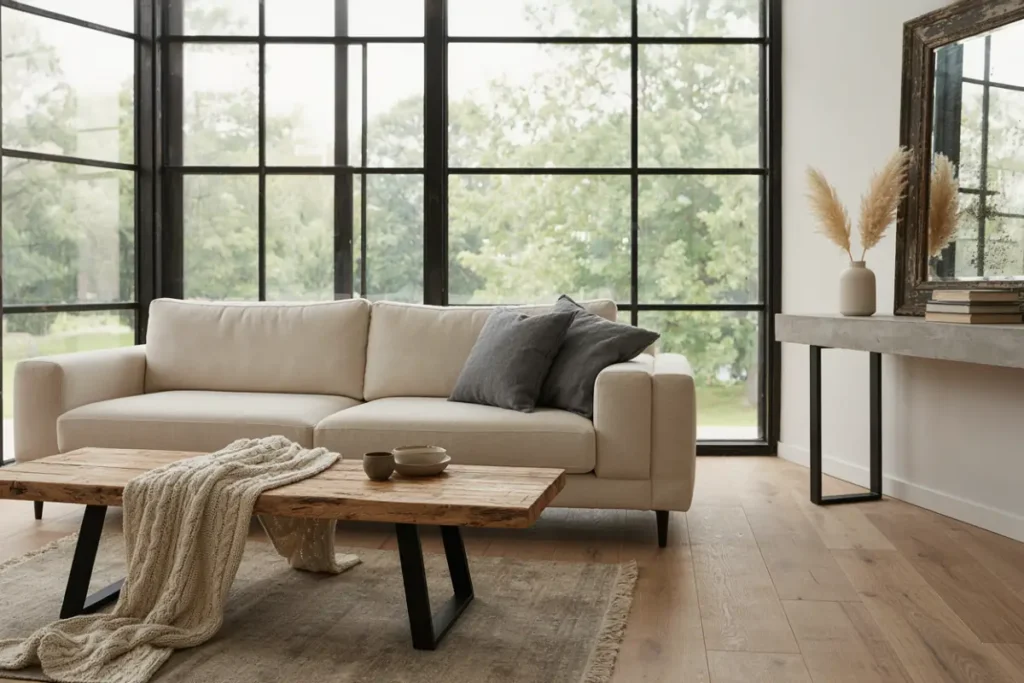
Modern farmhouse living room furniture works best when rustic warmth is balanced by contemporary simplicity.
You don’t have to choose between a traditional farmhouse room and a modern living room. The appeal comes from combining the two.
Choose Clean Silhouettes
If your room already contains reclaimed wood, woven baskets, and textured fabrics, keep the furniture shapes relatively simple.
A sofa with clean arms and a streamlined coffee table can prevent the room from becoming visually busy.
Avoid combining too many heavily distressed or ornate pieces.
One character-rich piece can make a stronger statement than five pieces competing for attention.
Introduce Black Metal Carefully
Black metal is particularly useful in modern farmhouse interiors because it creates definition against lighter wood and neutral upholstery.
Consider using it in:
- Lighting fixtures
- Coffee table bases
- Curtain rods
- Picture frames
- Cabinet hardware
- Small side tables
You don’t need black in every corner.
Repeat the finish two or three times and allow it to visually connect different areas of the room.
Choose Wood According to the Room
Light wood creates a fresh, airy appearance.
Medium wood creates warmth and works well with cream, beige, and brown upholstery.
Dark wood can feel dramatic and traditional, but too much dark furniture may make a small room feel heavier.
If you’re working with existing furniture, don’t worry about making every wood finish identical.
Instead, try to keep the undertones compatible. A mix of natural wood finishes can look intentional when the rest of the room is restrained.
Combine Rustic and Modern Materials
Material combinations are often more important than decorative objects.
Try pairings such as:
Linen + natural wood
The relaxed upholstery balances the hardness of the wood.
Wood + black metal
This combination adds a clean contemporary edge to rustic materials.
Ceramic + glass
The contrast between handmade-looking ceramics and smooth glass creates subtle sophistication.
Woven textures + simple upholstery
A woven basket, jute rug, or rattan accent adds warmth without requiring a rustic furniture collection.
Don’t Overdo the Rustic Look
More rustic furniture does not necessarily make a room feel more farmhouse.
If you already have a distressed coffee table, for example, consider keeping the sofa, lighting, and accent chairs relatively clean.
This creates contrast.
A modern farmhouse room should feel like a real home that happens to use farmhouse-inspired materials—not like a themed room.
Layering Accessories with Farmhouse Living Room Decor
Furniture gives the living room its structure. Accessories provide the finishing layers.
The goal of farmhouse living room decor is not to fill every shelf and tabletop. It is to choose a smaller number of pieces that add texture, scale, function, or personality.
Start With the Walls
Large furniture can make an empty wall look even more noticeable.
Rather than filling the wall with many small decorations, consider one larger piece of artwork or a carefully planned arrangement.
Landscape artwork, botanical prints, vintage-inspired drawings, neutral abstracts, and architectural artwork can all complement farmhouse furniture.
Pay attention to scale.
Artwork above a sofa should relate visually to the width of the sofa. A very small frame can appear lost above a large piece of furniture.
For a gallery wall, vary the frame sizes while keeping the finishes relatively consistent.
Add an Arched Mirror
An arched mirror introduces a curved shape into a room dominated by rectangular furniture.
This can be especially effective above a console or sideboard.
A natural wood frame reinforces the farmhouse character. A thin black frame gives the same idea a more modern feel.
If possible, position the mirror where it can reflect daylight or another attractive part of the room.
Use Ceramic Vases Selectively
Ceramic vases are an easy way to introduce an organic, handcrafted quality.
Choose pieces with different heights or silhouettes instead of buying several identical vases.
A large vase with branches can anchor a sideboard, while a smaller ceramic vessel can sit on a coffee table or shelf.
Leave some empty space around decorative objects.
A little breathing room makes accessories look intentional.
Choose the Right Rug
The rug is one of the most important pieces of farmhouse living room decor because it visually connects the seating area.
Natural-fiber rugs such as jute can emphasize the relaxed farmhouse aesthetic. Wool or woven rugs can provide more softness.
When choosing a rug, think about the furniture arrangement first.
A rug that is too small can make the sofa and chairs appear disconnected. A larger rug can visually bring the entire seating group together.
If you love natural jute but want more color or pattern, consider layering a smaller vintage-style rug on top.
Add Baskets That Actually Serve a Purpose
A decorative basket becomes much more useful when it solves a storage problem.
Use one beside the sofa for throws. Place another near an accent chair for magazines or extra cushions.
In a family room, baskets can also hide toys and everyday clutter.
This is one of the strengths of farmhouse decorating: practical objects can become part of the visual design.
Style the Coffee Table Without Losing Its Function
A coffee table should still be usable after you decorate it.
Try a simple three-part arrangement:
- A stack of books
- A ceramic vessel
- A natural element such as branches or greenery
A tray can keep smaller objects together and make the arrangement easier to move when you need the entire table.
Avoid covering every available inch.
An empty area is not wasted space it is what allows the table to remain practical.
Bring in Greenery
Plants and branches can add life to a neutral living room.
If the room receives enough natural light, a real houseplant can become part of the design.
For a simpler seasonal arrangement, use branches or stems in a large ceramic vase.
Greenery is also an easy way to introduce color without changing your furniture or wall palette.
Think About the Room in Layers
A successful living room can be considered from the floor upward.
Floor: rug, baskets, and furniture legs
Furniture: sofa, chairs, coffee table, and storage
Middle layer: pillows, throws, lamps, and plants
Walls: artwork, mirrors, and shelves
Lighting: ceiling fixture, floor lamp, table lamp, and natural light
When each layer has some visual interest, the room feels finished without requiring a large number of accessories.
Common Modern Farmhouse Living Room Mistakes to Avoid
A few mistakes can make a farmhouse-inspired room feel less sophisticated than intended.
Making Everything Beige
Neutral furniture is useful, but a room with the same beige tone everywhere can feel flat.
Add contrast through natural wood, black accents, muted green, warm brown, or subtle patterns.
Buying a Complete Matching Set
Matching furniture can make the room feel predictable.
Mixing complementary pieces creates more personality and makes it easier to incorporate furniture you already own.
Using Too Many Distressed Finishes
Weathered wood is one element of farmhouse style, not the entire style.
Balance distressed furniture with clean contemporary pieces.
Choosing a Rug That Is Too Small
A small rug can make even expensive furniture look disconnected.
Measure your seating arrangement before purchasing the rug.
Decorating Every Surface
A farmhouse room should feel relaxed.
Leave some shelves, tabletops, and walls relatively open. Negative space gives the eye somewhere to rest.
Forgetting About Lighting
Even a beautifully furnished room can feel unfinished with one ceiling light.
Use multiple light sources at different heights, such as a floor lamp beside the sofa and a table lamp on a console.
Warm, comfortable lighting can make neutral furniture and natural materials feel considerably more inviting in the evening.
A Simple Formula for Creating Your Own Modern Farmhouse Living Room
If you’re not sure where to start, use this sequence.
Step 1: Choose the sofa.
Start with a comfortable neutral foundation.
Step 2: Establish your wood tone.
Choose light, medium, or dark wood depending on the existing finishes in your room.
Step 3: Add the coffee table.
Choose a shape and size that work with the sofa and walking space.
Step 4: Define the seating area.
Use an appropriately sized rug to visually connect the furniture.
Step 5: Add contrast.
Introduce black metal, darker wood, muted color, or leather.
Step 6: Layer textiles.
Add pillows and throws in different textures rather than identical fabrics.
Step 7: Finish the walls.
Use artwork or an arched mirror to balance the larger furniture.
Step 8: Add functional accessories.
Choose baskets, lamps, books, ceramics, and greenery that have a purpose.
Step 9: Edit the room.
Remove anything that feels repetitive or unnecessary.
That final step is often what separates a comfortable room from an overcrowded one.
FAQs – Modern Farmhouse Living Room Furniture & Decor: The Ultimate Guide
What colors work best with modern farmhouse living room furniture?
Warm white, cream, beige, oatmeal, natural wood, soft gray, muted green, dusty blue, and warm brown all work well. You can introduce black as a smaller accent to create contrast.
Does modern farmhouse living room decor have to look distressed?
No. Distressed finishes are common in traditional farmhouse interiors, but modern farmhouse rooms can use smooth, contemporary furniture combined with natural materials and relaxed textiles.
How do I make a farmhouse living room look more modern?
Use clean-lined furniture, lighter wood, simple artwork, restrained accessories, and a few black metal accents. Avoid using too many heavily distressed pieces at the same time.
What type of coffee table works with a farmhouse sofa?
Natural wood is one of the easiest choices. Rectangular tables work well with traditional sofa arrangements, while round or oval tables can soften a room and improve circulation.
How can I create a farmhouse look in a small living room?
Keep the furniture proportional to the room. Choose a sofa with a relatively light visual profile, use one appropriately sized rug, keep the color palette restrained, and rely on vertical elements such as mirrors and floor lamps to add interest without taking up much floor space.
Can modern and traditional farmhouse furniture be mixed?
Absolutely. Mixing a contemporary sofa with a vintage-inspired cabinet or a traditional wood table with modern lighting can create a more layered and personal room.
Conclusion :
Creating a modern farmhouse living room is less about following a strict decorating formula and more about making thoughtful choices.
Start with comfortable furniture, introduce natural materials, and establish a restrained color palette. Then use rugs, textiles, lighting, artwork, ceramics, and greenery to build layers gradually.
You don’t need every piece to look rustic. You also don’t need every piece to be modern.
The most interesting rooms usually sit somewhere in between.
If your living room already contains furniture you love, don’t replace everything simply to achieve a farmhouse look. Start with what you have and identify what the room is missing perhaps warmth from natural wood, softness from textiles, contrast from black metal, or better lighting.
And before buying another accessory, step back and look at the room as a whole.
The goal is a space that feels comfortable enough for everyday life, polished enough to feel intentional, and personal enough that it doesn’t look copied from a catalog.
That balance is what makes modern farmhouse style work.