Biophilic Office Design Ideas for Better Productivity
Imagine stepping into your workspace and immediately feeling calmer, more focused, and energized. Instead of staring at plain walls under harsh artificial lighting, you’re surrounded by lush greenery, sunlight streaming through the windows, and a refreshing atmosphere that inspires creativity. This is the power of Biophilic Office Design: Integrating Houseplants and Natural Light for Better Productivity.
Biophilic design is more than just a popular interior decorating trend. It is a design philosophy that reconnects people with nature by incorporating natural elements into indoor environments. From vibrant houseplants and abundant daylight to natural textures and organic materials, every detail works together to create a healthier, happier, and more productive workspace.
Whether you work from home full-time, run a small business, or simply want a more inviting study area, embracing biophilic office design ideas can dramatically improve the way you work. Studies have shown that employees exposed to natural light and indoor plants experience lower stress levels, increased concentration, greater creativity, and higher job satisfaction. In today’s fast-paced world, creating an environment that supports both mental well-being and productivity has never been more important.
The best part? You don’t need a complete office renovation to enjoy these benefits. Even a few carefully chosen plants, improved access to daylight, and thoughtful furniture placement can transform an ordinary office into an inspiring space where ideas flourish.
In this guide, you’ll discover why biophilic office design has become one of the most effective workplace design strategies, practical ideas you can implement today, the best plants for office environments, and smart ways to maximize natural light for lasting productivity.
Table of Contents
1- Biophilic Office Design Ideas: Why They Boost Productivity
The modern workplace has evolved significantly over the past decade. More professionals now work remotely, spend extended hours at their desks, and rely heavily on digital technology to complete daily tasks. While these advancements have increased efficiency, they have also reduced our daily exposure to nature. This disconnect can contribute to stress, mental fatigue, reduced focus, and even burnout over time.
This is where biophilic office design ideas can make a meaningful impact. By incorporating natural elements such as indoor plants, abundant daylight, and organic materials into your workspace, you can create an environment that supports both your mental well-being and professional performance.
The concept of biophilic design is based on a simple principle: people naturally feel happier and healthier when they are connected to nature. For thousands of years, humans lived in environments surrounded by trees, rivers, fresh air, and sunlight. Modern offices, however, often replace these natural surroundings with artificial lighting, concrete walls, and enclosed spaces. Biophilic design helps restore this important connection without requiring you to work outdoors.
One of the biggest benefits of biophilic office design ideas is their ability to reduce stress. Adding greenery to your workspace creates a calmer, more welcoming atmosphere. Research suggests that even looking at plants for a few minutes can help lower stress levels, improve mood, and increase concentration. A relaxed mind is better equipped to solve problems, make decisions, and stay productive throughout the day.
Natural light is another key component of biophilic office design. Exposure to sunlight supports your body’s natural circadian rhythm, helping regulate sleep patterns and maintain steady energy levels. Employees and remote workers who spend more time near windows often experience better focus, improved alertness, and greater overall job satisfaction than those working solely under artificial lighting.
Creativity also thrives in spaces inspired by nature. Organic shapes, natural textures, and green plants provide subtle visual stimulation without becoming distracting. This balanced environment encourages innovative thinking, supports problem-solving, and helps maintain long periods of concentration.
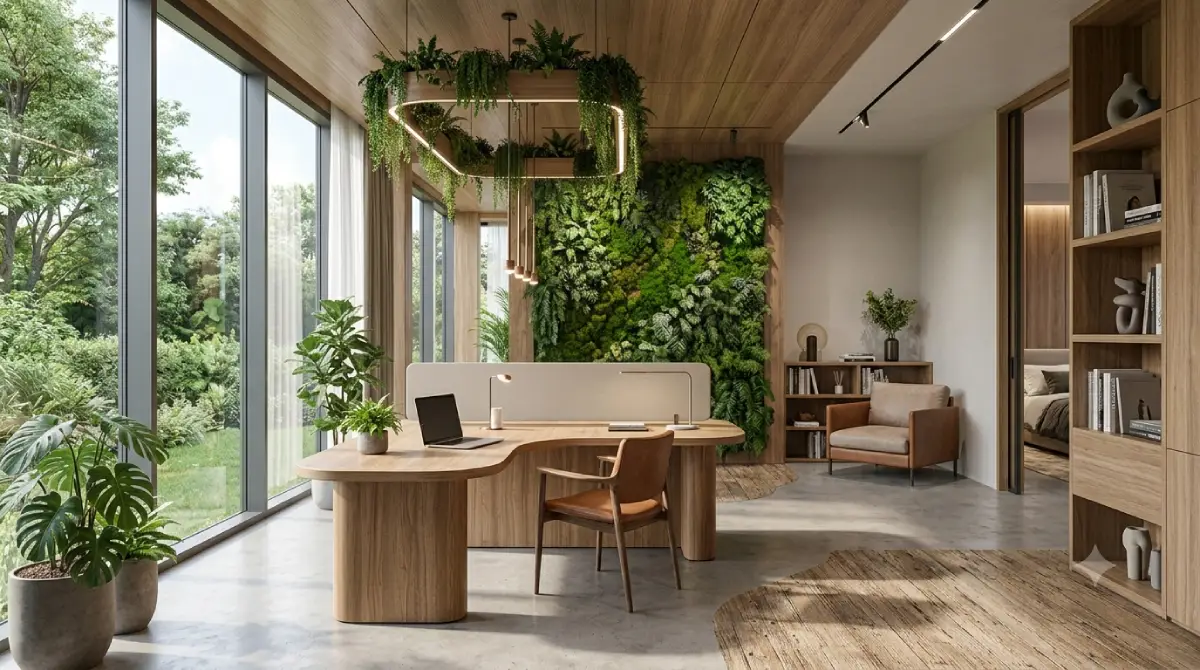
Many successful companies have already embraced biophilic office design ideas by introducing living walls, indoor gardens, large windows, wooden furniture, and open workspaces filled with natural light. These design choices are not only visually appealing but also improve employee engagement, motivation, and workplace satisfaction.
The same principles apply to home offices. Even a few carefully chosen improvements, such as placing a plant beside your laptop, positioning your desk near a window, or choosing furniture made from natural wood, can dramatically enhance your workspace. These simple adjustments make your office feel more comfortable while supporting productivity and mental wellness.
Another often-overlooked advantage is improved indoor comfort. While houseplants alone are not a complete air purification solution, they can contribute to a fresher atmosphere by increasing humidity and making indoor spaces feel more inviting. Combined with proper ventilation, they help create a healthier working environment.
Perhaps the greatest strength of biophilic office design ideas is their flexibility. Whether you have a spacious corporate office or a small desk in a studio apartment, you can easily incorporate natural elements into your workspace. Small changes often deliver surprisingly significant improvements in comfort, focus, and efficiency.
Ultimately, increasing productivity isn’t just about working longer hours it’s about creating an environment that helps you think more clearly, feel less stressed, and perform at your best every day.
2- Simple nature-inspired office design for Any Workspace
One of the greatest advantages of biophilic office design ideasnature-inspired office design is that they don’t require a large budget or a complete office renovation. Even small, thoughtful changes can make your workspace feel brighter, healthier, and more inspiring. The goal is to introduce natural elements that improve both the appearance of your office and your overall work experience.
A simple way to get started is by adding indoor plants. Place one or two low-maintenance plants on your desk, bookshelf, or windowsill to instantly bring life into the room. Popular choices such as snake plants, pothos, spider plants, and ZZ plants are easy to care for and thrive in most indoor environments. Their vibrant greenery softens the look of the workspace while creating a calming atmosphere.
Using natural materials is another effective strategy. Wooden desks, bamboo organizers, woven baskets, linen curtains, and cotton rugs add warmth and texture to your office. These organic materials help balance modern technology and create a more welcoming environment that feels connected to nature.
Color selection also plays a significant role in successful biophilic office design ideas. Instead of relying solely on white or gray walls, consider incorporating earthy shades such as soft green, warm beige, sandy brown, muted blue, or terracotta. These colors evoke a sense of calm while maintaining a professional appearance.
Nature-inspired artwork is another affordable upgrade. Botanical prints, landscape photography, mountain scenes, or ocean artwork can make your workspace feel more connected to the outdoors, especially if your office has limited access to windows or greenery.
The placement of your furniture is equally important. Whenever possible, position your desk near a window to maximize exposure to natural light. Working with a view of the outdoors helps reduce eye strain, improves mood, and provides refreshing visual breaks throughout the day.
Open shelving offers another opportunity to enhance your office naturally. Display small plants, ceramic planters, wooden accessories, books, or decorative stones to create a balanced and organized look without adding unnecessary clutter.
Adding subtle natural scents can further improve the atmosphere. Essential oils such as lavender, eucalyptus, peppermint, or citrus provide a refreshing environment that supports relaxation and concentration. Use them sparingly to avoid overpowering the workspace.
If space allows, create a small relaxation corner with a comfortable chair, a floor plant, and soft natural lighting. Taking short breaks in this peaceful area can help restore focus and reduce stress during busy workdays.
Vertical gardens are another creative solution for maximizing greenery in smaller spaces. Wall-mounted planters and hanging pots allow you to enjoy the benefits of plants without sacrificing valuable desk or floor space.
Decluttering is an essential part of biophilic office design ideas. A clean, organized workspace allows natural elements to stand out while minimizing distractions. Store unnecessary items out of sight and keep only the essentials on your desk to create a calm and productive environment.
Modern technology can also complement biophilic design. Smart lighting systems that mimic daylight, air purifiers, humidifiers, and automated blinds can improve comfort while supporting a healthier indoor environment.
Finally, refresh your workspace throughout the year by incorporating seasonal natural décor. Fresh flowers in spring, leafy branches in autumn, evergreen arrangements in winter, or colorful botanical accents in summer help keep your office feeling vibrant and connected to nature.
The most successful biophilic office design ideas combine beauty with functionality. Rather than filling your office with excessive decorations, focus on carefully selected natural elements that support productivity, creativity, and overall well-being. With just a few thoughtful changes, you can transform any workspace into a healthier, more inspiring place to work every day.
3- Best home office with plantss for Your Office
Choosing the right plants is one of the most exciting parts of creating a biophilic workspace. The ideal office plants are attractive, easy to maintain, and adaptable to indoor conditions. Fortunately, there are plenty of options that thrive with minimal care while adding vibrant greenery to your office.
One of the most popular choices is the snake plant. Known for its upright leaves and striking appearance, it tolerates low light, requires infrequent watering, and fits perfectly into modern office décor. Its clean architectural shape complements almost any workspace.
The pothos plant is another excellent option, especially for beginners. Its trailing vines bring movement and softness to shelves, desks, and hanging baskets. Pothos grows quickly and adapts well to varying light conditions, making it one of the easiest indoor plants to maintain.
ZZ plants have become favorites among busy professionals because they require very little attention. Their glossy dark green leaves create an elegant appearance while surviving occasional neglect. Even offices with limited sunlight can successfully support a healthy ZZ plant.
Peace lilies combine beauty with sophistication. Their rich green foliage and graceful white blooms make them standout decorative pieces. They prefer indirect light and moderate watering, making them suitable for many indoor environments.
For those who love bold tropical aesthetics, the Monstera deliciosa creates an impressive focal point. Its large split leaves instantly give an office a lush, designer-inspired appearance that perfectly aligns with biophilic office design ideas.
4- Best Houseplants for Your Office
Another outstanding choice for an office is the Spider Plant. Its long, arching green leaves with white stripes add movement and texture to your workspace without overwhelming the room. Spider plants are incredibly forgiving, making them ideal for beginners or busy professionals who may occasionally forget to water their plants. They also produce small “baby” plants that can be propagated easily, allowing you to expand your indoor garden over time.
If your office receives plenty of bright, indirect light, consider adding a Rubber Plant. With its broad, glossy leaves and elegant upright growth, this plant creates a sophisticated look while bringing a sense of calm and balance to the room. It works particularly well in minimalist offices where a single statement plant can make a dramatic impact.
The Chinese Evergreen is another excellent option for offices with lower light conditions. Available in several beautiful leaf patterns featuring shades of green, silver, pink, and red, it introduces color without requiring frequent maintenance. This makes it perfect for those looking to enhance their workspace while keeping plant care simple.
For smaller desks, succulents and cacti offer an attractive solution. These compact plants require very little water and come in a variety of fascinating shapes and textures. While they don’t provide the lush greenery of larger plants, they are ideal for adding subtle natural accents to limited spaces.
Ferns also deserve consideration, especially if you’re aiming for a softer, more natural atmosphere. Their delicate fronds create a relaxed environment and pair beautifully with wooden furniture, woven baskets, and earthy décor. Boston ferns, in particular, thrive in bright, indirect light and slightly humid conditions.
When selecting plants for your workspace, think about placement as carefully as the plants themselves. Taller plants such as rubber plants or fiddle leaf figs work beautifully beside desks or in empty corners. Medium-sized plants fit well on filing cabinets or side tables, while smaller varieties can decorate desktops, floating shelves, or windowsills.
Grouping plants together can create an even stronger visual impact. Instead of placing a single plant in isolation, combine different sizes, leaf shapes, and pot styles to mimic the layered appearance of a natural garden. This technique immediately makes the office feel richer and more vibrant.
The containers you choose also contribute to the overall aesthetic. Ceramic pots in neutral colors, woven baskets, concrete planters, or natural terracotta pots complement Biophilic Office Design: Integrating Houseplants and Natural Light for Better Productivity by reinforcing the connection to natural materials.
Maintenance should remain realistic. A thriving plant contributes to productivity far more than one struggling from neglect. Choose varieties that match your schedule, lighting conditions, and experience level. If you’re frequently traveling or working long hours, prioritize low-maintenance plants that require minimal care.
Remember that healthy plants are living design elements. Unlike artificial decorations, they continue to grow, change, and evolve with time, making your workspace feel dynamic and full of life. Watching your indoor garden flourish can even become a rewarding hobby that reduces stress and adds enjoyment to your workday.
Ultimately, incorporating the right houseplants is one of the easiest and most rewarding biophilic office design ideas. Whether you start with a single pothos on your desk or create an entire indoor plant collection, every addition brings you one step closer to a healthier, more productive workspace.
5- Using Natural Light Effectively
While houseplants introduce life into an office, natural light is the element that truly brings the space alive. Sunlight influences nearly every aspect of our well-being, from our mood and energy levels to our sleep quality and cognitive performance. Learning to maximize daylight is one of the most valuable aspects of Biophilic Office Design: Integrating Houseplants and Natural Light for Better Productivity.
The first step is positioning your workspace strategically. Whenever possible, place your desk close to a window rather than against a solid wall. Working near natural light reduces reliance on harsh artificial lighting and creates a more pleasant environment throughout the day.
However, desk placement requires balance. Facing a window directly may cause glare on your computer screen, while sitting with your back to a window can create reflections that strain your eyes. Ideally, position your desk perpendicular to the window so daylight enters from the side, providing even illumination without excessive glare.
Window treatments also play an important role. Heavy blackout curtains may completely block valuable sunlight during working hours. Instead, choose sheer curtains or adjustable blinds that diffuse bright light while allowing plenty of natural illumination into the room. This creates a softer, more comfortable atmosphere without sacrificing brightness.
Mirrors are another effective design trick. Placing a large mirror opposite a window reflects sunlight throughout the room, making smaller offices feel brighter and more spacious. This simple addition increases the amount of natural light reaching darker corners without requiring structural changes.
Color choices influence how effectively light travels through a room. Light-colored walls, white ceilings, and reflective surfaces help distribute daylight evenly, creating a brighter environment. Soft earthy colors such as sage green, warm cream, or sandy beige maintain the natural aesthetic while enhancing brightness.
Keep windows clean and unobstructed whenever possible. Tall furniture positioned directly in front of windows can block sunlight from reaching the rest of the office. Instead, use lower storage units or open shelving to preserve the flow of natural light.
If your office lacks large windows, consider supplementing daylight with full-spectrum LED lighting that closely mimics natural sunlight. Although artificial lighting cannot fully replace genuine daylight, high-quality daylight bulbs help maintain consistent brightness during cloudy weather or evening work sessions.
Seasonal adjustments are equally important. During winter, maximize every available hour of daylight by opening curtains early in the morning and arranging your schedule around brighter periods of the day. In summer, manage excessive heat with light-filtering blinds while still allowing natural illumination inside.
Natural light also supports the health of your office plants. Different species require varying amounts of sunlight, so understanding each plant’s needs ensures they remain healthy while enhancing your workspace. Group sun-loving plants near windows while placing shade-tolerant varieties farther inside the room.
One of the overlooked benefits of daylight is its positive effect on creativity. Sunlit spaces tend to feel more open, optimistic, and inviting, encouraging fresh thinking and sustained concentration. Employees working in naturally lit environments often report feeling more satisfied with their workspaces and more motivated throughout the day.
Combining abundant natural light with carefully selected greenery creates the perfect foundation for biophilic office design ideas. Together, they establish an environment that supports productivity while improving both physical comfort and emotional well-being.
6- Creating a Balanced Biophilic Workspace
The true beauty of biophilic design lies in balance. Simply filling an office with plants isn’t enough. A successful workspace carefully combines greenery, natural light, comfortable furniture, organic materials, and thoughtful organization into one cohesive environment.
Start by identifying a clear focal point. This could be a large statement plant, a beautiful window with abundant daylight, or a wooden desk positioned to capture outdoor views. Building your design around one central feature prevents the space from feeling cluttered.
Layer different natural elements throughout the office. Combine leafy plants with wooden furniture, woven storage baskets, linen curtains, stone accessories, and soft textiles. Each material contributes a unique texture while reinforcing the overall connection to nature.
Color harmony is equally important. Stick to a calming palette inspired by the outdoors. Shades of green, beige, brown, cream, muted blue, and soft gray work together to create a peaceful atmosphere without overwhelming the senses.
Organization also plays a crucial role. Even the most beautiful office loses its calming effect when surrounded by clutter. Keep only essential items on your desk while using attractive storage solutions to maintain a clean, open appearance.
Don’t forget comfort. Ergonomic furniture ensures your workspace supports both physical health and productivity. Pairing a supportive chair with natural design elements creates an office that’s both functional and visually appealing.
Personal touches make the space uniquely yours. Family photographs, travel souvenirs, handmade pottery, or artwork inspired by nature create emotional connections that make your office more enjoyable to spend time in.
Sound contributes to the overall experience as well. Gentle background music, a tabletop water fountain, or simply opening a window to hear birdsong can enhance the natural atmosphere and reduce workplace stress.
The goal isn’t perfection but creating an environment where you genuinely enjoy working every day. Even small improvements made consistently over time can completely transform your office.
When every design decision supports wellness, creativity, and comfort, Biophilic Office Design: Integrating Houseplants and Natural Light for Better Productivity becomes more than a decorating style it becomes a healthier way to work.
Conclusion
Creating an inspiring workspace doesn’t require a complete renovation or an unlimited budget. By embracing Biophilic Office Designnature-inspired office design: Integrating Houseplants and Natural Light for Better Productivity, you can transform an ordinary office into a place that supports creativity, focus, and well-being every single day.
From selecting low-maintenance houseplants and maximizing natural sunlight to choosing organic materials and maintaining an organized workspace, every improvement strengthens your connection with nature. These simple yet powerful changes reduce stress, increase motivation, and create an environment where productivity naturally flourishes.
The greatest advantage of biophilic office design ideas is their flexibility. Whether you have a spacious home office, a compact apartment workstation, or a corporate office, there are countless ways to introduce natural elements that fit your space and lifestyle.
Remember that transformation happens gradually. Start with one healthy plant, move your desk closer to a window, replace harsh lighting with softer alternatives, or introduce wooden accessories and calming colors. Over time, these small improvements combine to create a workspace that feels brighter, healthier, and far more enjoyable.
As modern work continues to evolve, investing in a nature-inspired office isn’t just about aesthetics it’s about improving your quality of life. By welcoming greenery, daylight, and natural materials into your daily routine, you’ll create a workspace where productivity, creativity, and happiness grow together.
What are biophilic office design ideas?
Biophilic office design ideas incorporate natural elements like houseplants, sunlight, wood, stone, and organic textures to create healthier, more productive workspaces.
How do biophilic office design ideas improve productivity?
They reduce stress, improve concentration, enhance creativity, and create a more comfortable environment, helping people stay focused throughout the workday.
Which plants are best for a biophilic office?
Popular choices include Snake Plant, Pothos, ZZ Plant, Peace Lily, Spider Plant, Rubber Plant, and Monstera because they are attractive and easy to maintain.
How can I add nature-inspired office design to a small office?
Start with a few indoor plants, maximize natural light, use wooden furniture, add nature-inspired artwork, and keep your workspace clutter-free.
Does natural light really increase productivity?
Yes. Natural light helps regulate your body’s internal clock, reduces eye strain, improves mood, and increases energy, making it easier to stay productive.
Is home office with plants expensive?
No. Many biophilic office design ideas are budget-friendly, such as adding houseplants, rearranging furniture to capture sunlight, and using natural décor.