Easy DIY Fall Garland Ideas: 10 Budget-Friendly Projects
Fall is the perfect time to make your home feel warm and inviting. One simple way to bring autumn charm into your living room is with a beautiful DIY garland draped across your fireplace mantel.
With a few affordable materials, such as faux leaves, mini pumpkins, pinecones, greenery, and ribbon, you can create a stunning seasonal decoration without spending much money. Whether you love rustic farmhouse style, traditional fall colors, or elegant neutral tones, these Easy DIY Fall Garland Ideas for Your Mantel offer inspiration for every home and budget.
In this guide, you’ll discover ten easy garland projects, budget-friendly tips, styling ideas, and practical advice for hanging and maintaining your decorations safely throughout the season.
Table of Contents
1. Easy DIY Fall Garland Ideas for Your Mantel: Materials, Tools, and Budget-Friendly Tips
Before starting your project, decide on the overall look you want. A rustic mantel might feature orange leaves, pinecones, and burlap ribbon, while a modern design may look better with eucalyptus, cream-colored pumpkins, and understated gold accents.
Choosing a color palette first makes shopping easier and helps your finished garland look coordinated.
Essential Materials for DIY Fall Garland
You can make a fall garland using natural materials, artificial greenery, or a combination of both.
| Material | Best use | Estimated budget |
|---|---|---|
| Faux autumn leaves | Traditional colorful garlands | $3–$10 |
| Faux eucalyptus or greenery | Farmhouse and neutral designs | $5–$15 |
| Mini pumpkins | Seasonal accents | $3–$10 |
| Pinecones and acorns | Rustic texture | Free–$8 |
| Twine or floral wire | Attaching decorative pieces | $2–$6 |
| Burlap or velvet ribbon | Softness and decorative bows | $3–$10 |
| Faux berries and dried flowers | Color and visual interest | $3–$12 |
| Garland base or flexible greenery | Foundation for decorations | $5–$15 |
These are illustrative U.S. dollar price ranges, not live store quotes. Actual costs depend on the store, quality, quantity, and materials you already own.
For most projects, gather scissors, wire cutters, floral wire, twine, a measuring tape, and removable mantel hooks. A hot-glue gun can be helpful for decorations that will not be reused individually, but wire and twine generally make it easier to rearrange or store seasonal pieces.
How Much Garland Do You Need?
Measure the width of your mantel before buying supplies. Then decide whether you want the garland to sit mostly across the top or drape down both sides.
| Mantel width | Suggested garland length | Style |
|---|---|---|
| 36 inches | 4-5 feet | Short, simple arrangement |
| 48 inches | 5-6 feet | Light drape |
| 60 inches | 6-7 feet | Classic mantel display |
| 72 inches | 7-9 feet | Fuller drape with hanging ends |
These measurements are starting points rather than strict rules. A garland with long hanging tails needs more length than one arranged in a shallow curve.
For a natural-looking display, aim for a gentle dip in the center and modest draping at the ends. Too little length can make the garland appear stretched, while too much can hide decorative objects or overwhelm a small mantel.
Budget-Friendly Decorating Tips
- Reuse old decorations: Refresh existing garlands with faux leaves, ribbon, or mini pumpkins.
- Shop smart: Check dollar stores and craft sales for affordable supplies.
- Choose reusable materials: Faux greenery, wooden beads, and fabric ribbon can be used every year.
- Keep colors simple: Combine three or four autumn shades for a coordinated, stylish look.
A simple garland with a few well-chosen accents can create a beautiful fall mantel without stretching your budget.
2. 10 Easy DIY Fall Garland Ideas: From Rustic Autumn Leaves to Elegant Farmhouse Designs
These ten projects offer different styles and budgets, so you can choose one that suits your room. Most can be completed in approximately 20-60 minutes, depending on the materials and the level of detail.
1. Classic Autumn Leaf Garland
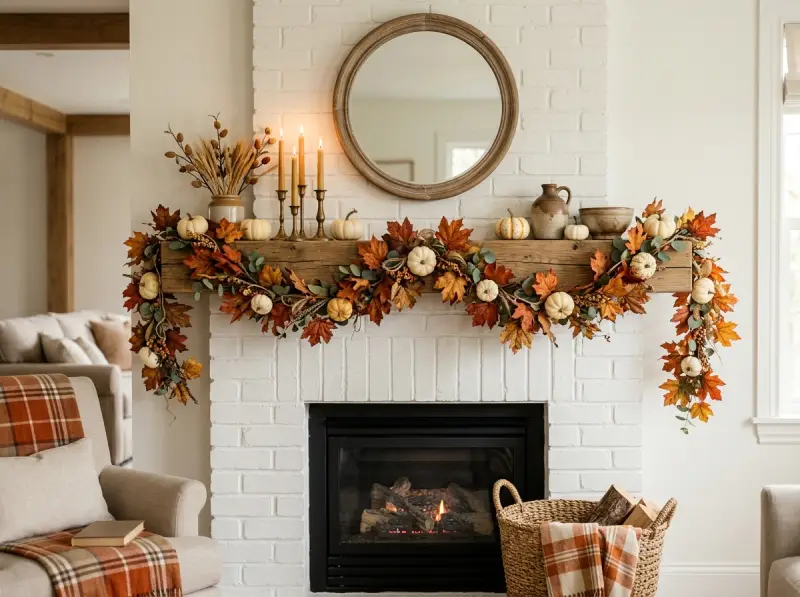
A traditional leaf garland is one of the simplest ways to decorate for fall. It brings the rich colors of the season into your living room without requiring complicated crafting techniques.
Materials: Faux maple leaves, floral wire or twine, scissors, and an optional greenery base.
How to make it:
- Measure your mantel and cut the garland base to the desired length.
- Arrange the leaves in small groups of three to five.
- Attach each group to the base with floral wire, alternating red, orange, yellow, and brown.
- Fluff the leaves so they point in slightly different directions.
- Add a few darker leaves near the ends to create visual depth.
For a 60-inch mantel, begin with a garland approximately 6–7 feet long. If the leaves look too evenly spaced, tuck a few closer together to create fuller sections.
Styling tip: Pair the finished garland with cream pumpkins and a simple wooden sign. This design works especially well in traditional, rustic, and cozy farmhouse interiors.
2. Rustic Pinecone and Greenery Garland
If you prefer natural textures over bright colors, combine faux greenery with pinecones and small branches.
Materials: Faux eucalyptus or evergreen garland, pinecones, floral wire, twine, and optional dried leaves.
How to make it:
- Spread the greenery base across a work surface.
- Attach pinecones at intervals of approximately 6–10 inches.
- Add a few dried leaves or faux berries between the pinecones.
- Turn the pinecones in different directions to prevent the arrangement from looking repetitive.
- Secure loose branches and check that every accent is firmly attached.
Use approximately six to ten medium pinecones for a 6-foot garland, adjusting the number according to their size and the fullness of the greenery.
This project suits wood mantels, neutral walls, and interiors with natural finishes. For a softer appearance, add a narrow linen ribbon instead of a large burlap bow.
If collecting pinecones outdoors, make sure they are clean and completely dry before bringing them inside.
3. Neutral Farmhouse Garland with Cream Pumpkins
Neutral fall decorating creates a calm, understated look that works well in modern farmhouse and contemporary homes.
Materials: Faux eucalyptus, cream or white mini pumpkins, beige ribbon, floral wire, and optional wooden beads.
How to make it:
- Start with a green or muted eucalyptus garland.
- Attach cream pumpkins along the base, leaving space between them.
- Add small loops of beige linen ribbon near the ends.
- Incorporate a few wooden beads or dried seed pods for texture.
- Step back and remove any accents that make the arrangement feel crowded.
Choose pumpkins approximately 2-4 inches wide so they do not overpower the greenery. If the pumpkins are heavy, support them with separate hooks or position them on the mantel rather than suspending them from the garland.
Styling tip: Repeat the cream color in two or three nearby objects, such as ceramic vases or candlesticks. Repetition helps the mantel feel coordinated without making every item identical.
4. DIY Burlap and Autumn Ribbon Garland
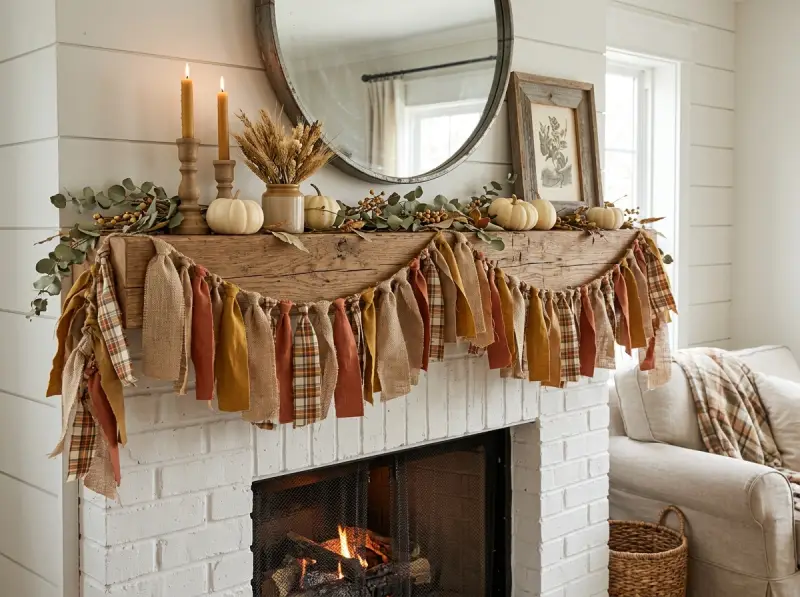
Ribbon is an affordable way to add movement and color without purchasing many decorative pieces.
Materials: Burlap ribbon, rust or mustard ribbon, twine, scissors, and a greenery base if desired.
How to make it:
- Cut ribbon into strips approximately 10-14 inches long.
- Tie each strip around the twine or greenery base.
- Alternate burlap with rust, mustard, or muted plaid ribbon.
- Spread the knots apart so the garland does not become too bulky.
- Trim the ends diagonally or into a simple V shape.
For a 6-foot garland, start with about 12-18 ribbon strips and add more if you want a fuller effect.
This design is particularly useful for renters or decorators who want a lightweight garland that is easy to hang. It also works well when paired with plain greenery, wooden beads, or a few small pumpkins.
Avoid placing loose burlap or ribbon near an open flame or a hot fireplace surface.
5. Eucalyptus and Dried Flower Garland
For a more delicate, elegant arrangement, combine muted greenery with dried flowers or realistic faux stems.
Materials: Eucalyptus garland, dried flowers or faux stems, floral wire, and optional neutral ribbon.
How to make it:
- Arrange the eucalyptus so the leaves face different directions.
- Divide the flowers into small clusters.
- Secure each cluster to the base with floral wire.
- Distribute the clusters unevenly to create a natural rhythm.
- Add a small amount of ribbon if the design needs extra softness.
Muted pink, cream, tan, and burgundy flowers work well with eucalyptus. Keep the flowers concentrated in a few areas rather than covering every inch of the garland.
Real dried flowers can shed or become brittle over time, so faux flowers may be more practical in a frequently used living room.
This arrangement looks beautiful against a light wall, especially when paired with ceramic vases and simple candleholders.
6. Mini Pumpkin and Berry Garland
For a cheerful, colorful mantel, combine small pumpkins with berry stems and green leaves.
Materials: Faux pumpkins, faux berry picks, flexible greenery, floral wire, and scissors.
How to make it:
- Lay the greenery base flat and identify the main focal points.
- Add berry stems in small clusters.
- Attach lightweight mini pumpkins along the garland, spacing them approximately 8-12 inches apart.
- Fill empty sections with extra leaves.
- Check that the color is balanced from left to right.
Use orange pumpkins for a classic fall look, or mix orange with ivory for a softer palette. Small pumpkins are usually easier to incorporate than large ones, which may weigh down the greenery.
For a mantel approximately 60 inches wide, three to five mini pumpkins can provide enough seasonal detail without making the display look overcrowded.
7. Elegant Gold and Greenery Garland
A gold-accented garland can make a fall mantel feel polished without looking overly formal.
Materials: Faux greenery, gold-painted faux leaves or decorative picks, floral wire, and optional cream ribbon.
How to make it:
- Begin with a full green garland.
- Add gold accents in small groups.
- Keep most of the greenery visible so the metallic details stand out.
- Include a few cream or beige elements to soften the contrast.
- Position the finished garland in a gentle curve across the mantel.
If you paint your own decorative leaves, work in a well-ventilated area and let the paint cure completely before bringing them indoors. Use craft products appropriate for the material you are painting.
The key to this look is restraint. A handful of gold accents can create a refined effect, while too many may compete with nearby mirrors, artwork, or decorative objects.
8. Rustic Twine and Wooden Bead Garland
A twine garland with wooden beads provides a simple, textural alternative to traditional leafy arrangements.
Materials: Jute twine, large wooden beads, scissors, and optional small faux leaves or felt pumpkins.
How to make it:
- Cut twine to the length needed for your mantel, allowing extra length for the ends.
- Thread wooden beads onto the twine, spacing them evenly.
- Tie secure knots at the ends to prevent the beads from slipping off.
- Add a few small seasonal accents if desired.
- Drape the garland loosely across the mantel.
Choose beads approximately 0.5-1 inch in diameter for a balanced appearance. Smaller beads create a delicate effect, while larger beads give the garland a more substantial look.
Because this style is relatively simple, it works well with more detailed decorations nearby, such as a leaf arrangement or a row of mini pumpkins.
Keep loose beads away from young children and pets.
9. Felt Leaf Garland for a Cozy Handmade Look
Felt leaves add color and softness without the shedding associated with some natural materials.
Materials: Fall-colored felt, scissors, a pencil, twine, needle and thread or craft glue.
How to make it:
- Draw several simple leaf shapes on paper and use them as templates.
- Cut leaves from orange, rust, mustard, burgundy, and brown felt.
- Attach the leaves to twine using thread or a small amount of suitable craft glue.
- Alternate colors and slightly overlap the leaves.
- Hang the garland with a gentle curve.
For a 6-foot garland, approximately 20-30 medium felt leaves should provide a good starting point, depending on their size and spacing.
This is an especially good option for households that prefer reusable, lightweight decorations. You can also make the leaves in neutral colors for a more modern look.
10. Foraged Branch and Dried Leaf Garland
A natural garland can bring a woodland-inspired feeling into your home.
Materials: Clean, fallen branches, dry leaves, twine, floral wire, and optional faux berries.
How to make it:
- Collect small fallen branches from a permitted area and inspect them for insects, mold, or damage.
- Allow all materials to dry thoroughly.
- Arrange the branches into a loose, balanced shape.
- Attach them to twine with floral wire.
- Add a few dried leaves or berries, keeping the arrangement light.
Avoid collecting protected plants or taking material from places where removal is prohibited. If natural leaves crumble easily, replace them with faux leaves or use the branches alone.
Because natural materials vary in size and shape, this project looks best when you embrace slight imperfections rather than trying to make every section identical.
Which Fall Garland Should You Choose?
| Garland style | Approximate DIY cost | Best for |
|---|---|---|
| Autumn leaves | $8-$20 | Traditional fall color |
| Pinecones and greenery | $8-$25 | Rustic interiors |
| Neutral farmhouse | $12-$30 | Calm, modern styling |
| Burlap and ribbon | $5-$18 | Low-cost decorating |
| Eucalyptus and flowers | $12-$30 | Elegant, soft colors |
| Pumpkins and berries | $10-$25 | Festive seasonal displays |
| Gold and greenery | $10-$25 | Refined, polished decor |
| Twine and wooden beads | $5-$18 | Minimalist and rustic rooms |
| Felt leaves | $5-$15 | Family-friendly crafting |
| Foraged branches | $3-$15 | Natural, woodland-inspired decor |
Costs vary depending on whether you use supplies you already own, buy individual stems, or purchase a ready-made garland base.
3. How to Style Your fall garland ideas with pumpkins, Candles, and Natural Textures
Making a garland is only part of the process. The way you arrange it with the objects around it determines whether the mantel feels balanced, cozy, and professionally styled.
Start with a Clear Focal Point
Choose one main feature for your mantel. It might be a mirror, a piece of artwork, a framed autumn print, or a decorative wreath.
Place the focal point first, then arrange the garland and accessories around it. If the focal point is large or visually busy, keep the garland relatively simple. If the wall above the mantel is plain, a fuller garland can provide more interest.
For many mantels, the garland looks best when it sits along the front edge or slightly behind the main decorations. Keep enough space to display accessories without hiding them.
Arrange Pumpkins in Groups
Rather than lining up identical pumpkins at equal intervals, group them in odd numbers, such as three or five. Vary their heights, shapes, and colors to create a more natural display.
For example, place three cream pumpkins on one side and a smaller group of orange pumpkins on the other. A few books, a wooden riser, or a low decorative tray can add height without requiring additional seasonal purchases.
Keep heavier pumpkins directly on the mantel instead of hanging them from delicate greenery.
Add Candles Carefully
Candles introduce warmth and height, especially when used with greenery and natural textures. However, real flames should never be placed close to a garland made from leaves, fabric, dried flowers, or other combustible materials.
For a safer decorative effect, use battery-operated candles. Choose warm-white lights for a gentle glow and place them in stable holders where they cannot fall or be knocked over.
If your fireplace is in use, keep all decorations well clear of the firebox, hot surfaces, and any area where sparks or heat can reach them. Follow the fireplace manufacturer’s clearance requirements. Never assume that a garland is safe merely because it is artificial or labeled flame-resistant.
Mix Natural Textures
A beautiful fall mantel usually combines several textures rather than relying on color alone.
Try pairing:
- Soft eucalyptus leaves with rough pinecones.
- Smooth ceramic pumpkins with woven baskets.
- Linen ribbon with natural wood.
- Dried flowers with simple glass vases.
- Faux berries with matte decorative pumpkins.
Two or three different textures may be enough for a small mantel. A large mantel can accommodate more variety, but leave some open space so the decorations do not compete with one another.
Use Height and Negative Space
A balanced mantel often includes objects of different heights. Tall candlesticks or vases can frame the central focal point, while smaller pumpkins and decorative pieces fill the lower areas.
Avoid making both ends of the mantel identical unless you deliberately want a symmetrical style. A tall vase on one side can be balanced by a shorter group of pumpkins and a small framed picture on the other.
Step back several feet to check the overall arrangement. If one area feels heavy, remove an object or move a few accents elsewhere.
A simple styling formula: one focal point, one garland, two or three accessory groupings, and a small amount of empty space. This approach makes even inexpensive decorations feel considered and cohesive.
4. How to Hang, Secure, and Maintain Your simple autumn decorating ideas for a Beautiful, Safe, and Long-Lasting Display
Once your garland is ready, secure it properly so it stays attractive throughout the season. The right hanging method depends on the mantel material, the weight of the garland, and whether you are allowed to make holes.
Measure Before Hanging
Measure the mantel and decide how far the garland should extend at each end. Lay it out on the floor first and adjust the branches, leaves, or ribbon before attaching it.
For a 60-inch mantel, a 6-7-foot garland generally provides enough material for a shallow drape. A longer garland can create more pronounced hanging ends, but check that it will not interfere with doors, walkways, or objects placed below.
Choose the Right Hanging Method
| Hanging method | Best use | Important consideration |
|---|---|---|
| Removable adhesive hooks | Lightweight garlands on suitable surfaces | Follow the product’s weight limits and surface instructions |
| Small screw-in hooks | Permanent installations where drilling is permitted | Use appropriate hardware for the mantel material |
| Decorative mantel clips | Some flat or compatible mantel edges | Check fit and avoid scratching the finish |
| Floral wire | Securing decorations to the garland base | Cover sharp ends and keep wire away from children |
| Twine ties | Attaching greenery to suitable anchor points | Knots must be secure without crushing branches |
Always check the condition and weight rating of hooks before use. Adhesive products may not work well on dusty, rough, damp, or freshly painted surfaces.
If you are renting, choose a hanging method permitted by your lease and the manufacturer’s instructions. Test removable products in an inconspicuous area when appropriate.
Hang the Garland in Three Steps
Step 1: Secure the center. Attach the center of the garland first. This helps distribute the weight and makes it easier to create a balanced curve.
Step 2: Attach the ends. Secure both ends, adjusting the amount of drape until the garland looks even. Add intermediate support points if the garland is long or heavy.
Step 3: Fluff and inspect. Spread out leaves and branches, conceal visible ties where possible, and make sure decorative accents cannot slide off. Gently test the arrangement to confirm that the attachment points hold.
Do not suspend heavy pumpkins or large decorative objects from a garland that is designed only for lightweight greenery.
Keep Your Garland Away from Heat
Fireplace safety is especially important when decorating a mantel.
- Keep garlands, dried flowers, ribbon, and paper decorations away from open flames, sparks, and hot surfaces.
- Follow the clearance requirements in your fireplace manual and local fire-safety guidance.
- Never drape decorations inside the firebox or across vents.
- Do not use real candles directly beside or underneath a combustible garland.
- Use battery-operated candles when you want the appearance of candlelight without an exposed flame.
- If you notice heat, scorching, discoloration, or a burning smell, stop using the fireplace and move the decorations only when it is safe to do so.
A mantel that looks beautiful should also remain practical and safe for everyday use.
Clean and Maintain Your Garland
Artificial garlands can collect dust, particularly when they remain on display for several weeks.
Use a soft brush or a gentle vacuum attachment on a low setting, provided the material can tolerate it. Check the manufacturer’s care instructions before using water or cleaning products.
Natural leaves and dried flowers require more care. Keep them away from moisture, excessive sunlight, and areas with strong air currents. Replace brittle or shedding pieces when necessary.
Check the hooks and ties periodically, especially after moving decorations or cleaning the mantel. If the garland begins to sag, redistribute its weight and add support rather than simply tightening one end.
Store It Properly After Fall
When the season ends, remove the garland gently and separate any fragile accents that could break during storage.
For reusable artificial greenery:
- Remove loose dust and debris.
- Detach delicate pumpkins, flowers, and ribbon if needed.
- Store the garland in a clean, dry container.
- Avoid crushing the branches under heavy objects.
- Label the container so the decorations are easy to find next year.
A sturdy storage box or appropriately sized container can help preserve the shape of the garland. Keep it away from damp areas and extreme heat.
With careful handling, many artificial materials can be reused for several seasons, making a DIY garland an economical decorating investment.
Conclusion
Creating a beautiful fall mantel doesn’t have to be expensive or complicated. With these Easy DIY Fall Garland Ideas for Your Mantel, you can transform your living room using affordable materials, seasonal colors, and simple decorations.
Choose a style that matches your home, reuse materials whenever possible, and arrange your garland with a few pumpkins and natural accents. Remember to secure your decorations properly and keep them away from fireplace heat and open flames.
With a little creativity, you can enjoy a cozy, welcoming mantel throughout the fall season without overspending.
FAQs about Easy DIY Fall Garland Ideas: 10 Budget-Friendly Projects
1. What is the easiest fall garland to make for a mantel?
A faux autumn leaf garland is easy to make. Attach artificial leaves to a greenery base with floral wire, then add pumpkins or ribbon for extra charm. It takes less than an hour.
2. How can I make a fall mantel look expensive on a budget?
Use a limited color palette, mix textures, and combine faux greenery, neutral pumpkins, and wooden accents. Reuse existing decorations to save money and create a cohesive look.
3. How long should a fall garland be for a fireplace mantel?
For a 60-inch mantel, choose a 6-7-foot garland. Adjust the length for your desired draping, and measure your mantel before hanging it.
4. Can I use real leaves for a easy DIY fall garland ideas?
Yes, real leaves create a natural look but may dry, curl, or crumble. Faux leaves last longer and can be reused, while real leaves are ideal for temporary displays.
5. How do I keep a fall garland from falling off the mantel?
Use suitable hooks or clips to secure the garland at the center and ends. Add extra supports if needed, and avoid attaching heavy decorations to lightweight greenery.
6. Is it safe to put a garland over a working fireplace?
Keep garlands away from flames, sparks, and hot surfaces. Follow your fireplace’s safety guidelines, and use battery-operated candles for a safer decorative option.
7. When should I decorate my mantel for fall?
Start decorating in late summer or early fall. Use versatile greenery and neutral accents, then add colorful pumpkins or leaves as autumn progresses.