Organic Modern Kitchens: Sleek Cabinetry Meets Natural Stone and Wood
Kitchen design trends may come and go, but some styles have a timeless quality that instantly feels both sophisticated and welcoming. One of the most exciting interior trends today is the rise of Organic Modern Kitchens: Blending Sleek Cabinetry with Natural Stone and Wood. This design approach beautifully combines clean contemporary lines with the warmth and texture of nature, creating spaces that feel luxurious yet incredibly livable.
Unlike ultra-minimal kitchens that can sometimes feel cold or industrial, organic modern kitchen design introduces balance through earthy materials, calming color palettes, and natural elements. The result is a kitchen that looks elegant while remaining comfortable and inviting for everyday life.
Homeowners are increasingly drawn to interiors that encourage slower living and a stronger connection to nature. Organic modern kitchens answer this desire perfectly. They celebrate craftsmanship, natural textures, and intentional simplicity while still embracing modern functionality and streamlined aesthetics.
Whether you are planning a complete renovation or simply refreshing your current space, incorporating sleek cabinetry, rich wood finishes, and stunning natural stone can completely transform the heart of your home. From white oak cabinets and travertine countertops to warm neutral palettes and layered textures, there are countless ways to create a kitchen that feels timeless and effortlessly stylish.
This guide explores everything you need to know about designing an organic modern kitchen that perfectly balances contemporary elegance with nature-inspired warmth.
Table of Contents
1- organic modern kitchen ideas: Blending Sleek Cabinetry with Natural Stone and Wood
The beauty of organic modern kitchen ideas lies in their ability to merge two seemingly opposite concepts. On one hand, modern design embraces simplicity, clean lines, and minimal ornamentation. On the other, organic interiors celebrate imperfection, texture, and natural materials. When these elements come together, they create kitchens that feel fresh, balanced, and timeless.
At the heart of this style is intentional simplicity. Rather than filling the kitchen with decorative excess, every material and design decision serves a purpose. Cabinets become sleek architectural features, stone surfaces act as statement pieces, and wood introduces warmth and character.
One of the reasons this style has become so popular is its versatility. Organic modern kitchens can adapt to various home styles, including contemporary homes, Scandinavian interiors, Japandi spaces, rustic-modern residences, and luxury urban apartments. The timeless appeal also comes from the use of natural materials that age beautifully. Wood develops a rich patina over time, while stone surfaces gain character and depth through everyday use.
Minimal hardware, integrated appliances, and simple silhouettes allow the natural beauty of materials to become the focal point. Instead of relying on bold colors or temporary trends, organic modern kitchens achieve visual interest through texture and craftsmanship.
Large windows, natural lighting, and organic materials help create a calming atmosphere that feels deeply connected to nature. Ultimately, embracing organic modern kitchens means creating a space that feels serene, elegant, and welcoming while celebrating both beauty and functionality.
Another defining characteristic of Organic Modern Kitchens is their emphasis on creating a sensory experience. These spaces are designed not only to look beautiful but also to feel comfortable and inviting. Soft natural light reflecting on stone surfaces, the warmth of wood grain, and the subtle texture of handmade materials all contribute to an environment that feels calming and restorative.
This design philosophy also encourages a stronger connection between indoor and outdoor living. Many organic modern kitchens incorporate large windows, sliding glass doors, or views of gardens and natural landscapes. By visually connecting the kitchen to nature, homeowners can create spaces that feel brighter, more open, and emotionally uplifting.
Functionality remains equally important within this style. Storage solutions are often carefully integrated to maintain uncluttered surfaces and preserve the minimalist aesthetic. Hidden appliances, built-in shelving, and streamlined layouts ensure that every element contributes to both practicality and visual harmony.
Another reason for the growing popularity of Organic Modern Kitchens is their timeless quality. Unlike trend-driven interiors that quickly become outdated, organic modern spaces rely on classic materials and balanced design principles. Their understated elegance allows them to remain stylish for many years while adapting easily to changing decorative preferences.
Ultimately, organic modern kitchens represent a lifestyle centered on simplicity, authenticity, and intentional living. They encourage homeowners to prioritize quality materials, meaningful design choices, and environments that promote comfort, connection, and everyday well-being.
2- Why Organic Modern Kitchens Are Becoming the Ultimate Home Decor Trend
The growing popularity of Organic Modern Kitchens reflects a major shift in how homeowners approach interior design. Modern lifestyles have created a strong desire for homes that feel peaceful, restorative, and authentic. After years of highly polished and sometimes sterile interiors dominating design trends, homeowners are increasingly seeking warmth, comfort, and natural beauty.
One of the biggest reasons behind the success of organic modern kitchens is their emotional appeal. Natural materials immediately make spaces feel more welcoming and relaxing. Wood cabinetry introduces warmth, while stone surfaces create texture and depth.
The style also reflects a broader cultural movement toward wellness and mindful living. People increasingly want their homes to support mental well-being, and nature-inspired interiors have been shown to promote feelings of calm and comfort.
Another reason for the trend’s popularity is its flexibility. Unlike highly themed styles, organic modern kitchens can evolve over time. Accessories, lighting, and decorative accents can be updated without compromising the overall design, making this style an excellent long-term investment.
Another reason for the trend’s popularity is its flexibility. Unlike highly themed styles, Organic Modern Kitchens can evolve over time. Accessories, lighting, and decorative accents can be updated without compromising the overall design, making this style an excellent long-term investment.
This adaptability is particularly appealing to homeowners who prefer timeless interiors over rapidly changing trends. Neutral color palettes and natural materials provide a versatile foundation that can easily accommodate new design influences while maintaining a cohesive appearance.
Organic modern kitchens also support a more intentional approach to decorating. Instead of constantly replacing furniture and finishes, homeowners can gradually introduce meaningful pieces such as handmade ceramics, artisan lighting, or vintage accessories that add personality and character to the space.
Another factor contributing to their enduring appeal is their ability to create emotional comfort. Modern life often feels fast-paced and digitally overwhelming, leading many people to seek interiors that promote relaxation and well-being. The combination of warm wood tones, soft textures, and natural stone surfaces helps create environments that feel peaceful and restorative.
As sustainability becomes increasingly important, many homeowners also appreciate the longevity of Organic Modern Kitchens. Durable materials, timeless aesthetics, and high-quality craftsmanship encourage thoughtful design decisions that remain beautiful and functional for many years.
3- Choosing Sleek Cabinetry and Warm Wood Finishes for organic modern kitchen decor
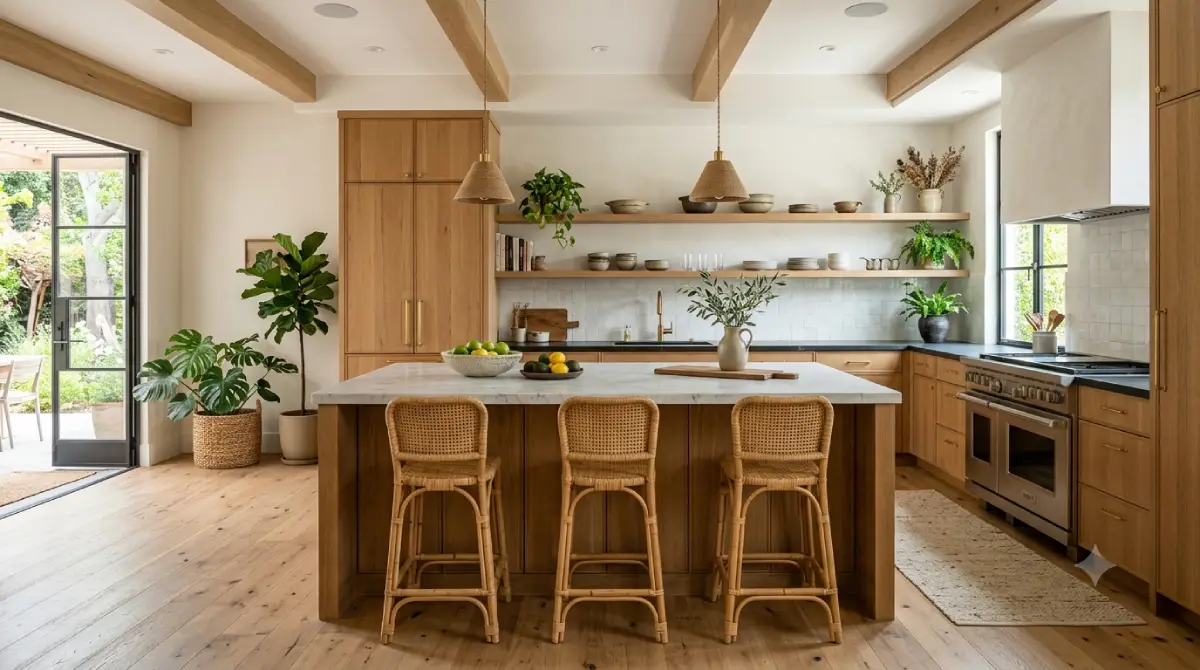
Cabinetry serves as the foundation of organic modern kitchen decor, making material selection especially important. The ideal cabinetry style is clean, simple, and understated. Flat-panel cabinets are particularly popular because they emphasize modern simplicity while allowing natural materials to shine.
White oak remains one of the most desirable choices due to its subtle grain and warm undertones. Walnut offers a richer and more dramatic appearance, while ash wood and natural maple provide additional warmth and character.
Warm wood tones prevent modern kitchens from feeling cold or sterile. Even in predominantly neutral spaces, wood introduces life and authenticity. Mixing finishes can create additional visual interest, such as pairing wood lower cabinets with painted upper cabinetry.
Open shelving is another defining feature of organic modern kitchens. Wooden shelves provide opportunities to display handmade ceramics, glassware, and decorative objects while maintaining an airy atmosphere.
In addition to selecting the right wood species, the finish of the cabinetry also plays a significant role in defining the atmosphere of Organic Modern Kitchens. Matte and low-sheen finishes are generally preferred because they highlight the natural beauty of the wood grain while creating a softer and more relaxed appearance. Highly glossy surfaces are typically avoided, as they can diminish the organic and understated aesthetic.
Another important consideration is the use of integrated design elements. Handleless cabinets, concealed storage, and built-in appliances contribute to the clean architectural look that characterizes organic modern interiors. These streamlined details allow natural materials and textures to become the primary focal points of the kitchen.
Layering different wood tones can also create a sophisticated and curated appearance. For example, light oak cabinetry paired with darker walnut accents introduces subtle contrast while maintaining warmth and harmony. This balanced approach prevents the space from feeling overly uniform and adds visual depth.
Lighting further enhances the beauty of wood finishes. Natural daylight emphasizes grain patterns and tonal variations, while warm ambient lighting creates an inviting atmosphere during the evening. Pendant lights and under-cabinet lighting can highlight the richness of natural materials and reinforce the cozy, nature-inspired aesthetic.
Ultimately, cabinetry in Organic Modern Kitchens should feel timeless rather than trend-driven. By prioritizing quality craftsmanship, warm wood finishes, and thoughtful detailing, homeowners can create kitchens that remain elegant, functional, and visually appealing for many years.
4- Incorporating Natural Stone Elements Into Organic Modern Kitchens
Natural stone is one of the defining features of Organic Modern Kitchens. Its unique veining, organic textures, and timeless appeal make it an essential material within this design style.
Travertine has become especially popular because its soft coloration beautifully complements warm wood cabinetry and neutral palettes. Marble remains another luxurious option, particularly varieties featuring warmer beige and gray undertones. Quartzite offers exceptional durability, while soapstone creates a darker and moodier aesthetic.
Stone can be incorporated through countertops, backsplashes, waterfall islands, and even shelving details. The beauty of natural stone lies in its imperfections, as every slab contains unique patterns that make each kitchen feel one-of-a-kind.
Textured finishes such as honed and leathered stone are becoming increasingly popular because they create a softer and more organic appearance than highly polished surfaces.
Another reason natural stone plays such an important role in Organic Modern Kitchens is its ability to introduce visual depth and authenticity. Unlike manufactured materials, natural stone contains subtle variations in color, veining, and texture that create a sense of individuality and craftsmanship. These imperfections add character and ensure that every kitchen feels unique.
The combination of stone and wood is particularly effective because it creates a harmonious balance between warmth and refinement. While wood contributes softness and comfort, stone introduces a sense of permanence and understated luxury. Together, these materials create interiors that feel sophisticated yet highly inviting.
Large kitchen islands have become one of the most popular ways to showcase natural stone. A dramatic waterfall island made from travertine, marble, or quartzite can instantly become the centerpiece of the space. The natural patterns within the stone create visual interest without the need for excessive decoration.
Natural stone also supports the growing preference for timeless and sustainable design choices. High-quality stone surfaces are exceptionally durable and can remain beautiful for decades with proper care. Rather than following short-lived trends, many homeowners are investing in materials that age gracefully and continue to develop character over time.
Lighting further enhances the beauty of stone surfaces in Organic Modern Kitchens. Sunlight highlights subtle variations in texture and color throughout the day, creating changing shadows and depth that make the kitchen feel more dynamic and connected to nature.
Ultimately, incorporating natural stone into organic modern interiors goes beyond aesthetics alone. It introduces craftsmanship, durability, and a strong connection to natural materials, helping create kitchens that feel elegant, balanced, and timeless.
5- Styling Colors, Textures, and Decor for Organic Modern Kitchens
The color palettes used in Organic Modern Kitchens are intentionally calming and nature-inspired. Warm whites, creamy beiges, earthy taupes, soft grays, and muted greens create serene environments that allow natural materials to stand out.
Texture plays an equally important role. Layering wood grain, stone veining, linen textiles, handmade pottery, and woven materials prevents minimalist spaces from feeling flat or sterile.
Decor should remain simple and intentional. Handcrafted ceramics, wooden cutting boards, glass vessels, and natural greenery are excellent choices. Fresh branches, olive trees, and potted herbs further strengthen the connection to nature.
Lighting fixtures featuring linen shades, natural fibers, aged brass, or sculptural forms complement the organic aesthetic beautifully while reinforcing the calm and sophisticated atmosphere.
6- Creating a Calm and Luxurious Space With Organic Modern Kitchens
At their core, Organic Modern Kitchens are designed to create environments that support comfort, relaxation, and everyday well-being. The kitchen should become more than a functional space; it should feel like a sanctuary where people genuinely enjoy spending time.
Creating this atmosphere begins with thoughtful planning. Prioritizing natural light, maintaining uncluttered surfaces, and incorporating hidden storage solutions help reinforce the minimalist aesthetic.
Adding soft elements such as linen curtains, upholstered seating, and textured runners further enhances warmth and comfort. Natural scents, seasonal flowers, and fresh herbs contribute to a stronger sensory connection with nature.
Personal touches such as favorite ceramics, collected objects, and meaningful accessories ensure that the space feels authentic and lived-in. By thoughtfully layering natural materials and maintaining a balance between simplicity and warmth, organic modern kitchen decor become timeless spaces that encourage gathering, creativity, and everyday enjoyment.
Conclusion
The enduring appeal of Organic Modern Kitchens: Blending Sleek Cabinetry with Natural Stone and Wood lies in its ability to create spaces that are both elegant and welcoming.
By combining clean contemporary lines with rich natural materials, homeowners can design kitchens that feel timeless, luxurious, and deeply connected to nature.
From sleek cabinetry and warm wood finishes to stunning stone surfaces and calming neutral palettes, every element contributes to an atmosphere of effortless sophistication.
Perhaps most importantly, organic modern kitchen design encourages intentional living.
It celebrates quality over excess, craftsmanship over trends, and comfort over perfection.
Whether you are planning a complete renovation or making small updates, embracing this style can transform your kitchen into a beautiful retreat that remains stylish for years to come.
The result is a organic modern kitchen ideas that not only looks extraordinary but also feels warm, peaceful, and perfectly suited for modern living.
FAQs – Organic Modern Kitchens: Sleek Cabinetry Meets Natural Stone and Wood
What are Organic Modern Kitchens?
Organic Modern Kitchens combine modern minimalist design with natural materials such as wood, stone, linen, and earthy color palettes to create warm and timeless interiors.
What colors work best in organic modern kitchen ideas?
Warm whites, beige, taupe, soft gray, muted green, clay tones, and natural wood shades work beautifully in organic modern kitchen designs.
Which materials are commonly used in Organic Modern Kitchens?
Popular materials include white oak, walnut, travertine, marble, quartzite, linen, handmade ceramics, and brushed brass accents.
Are organic modern kitchen decor still in style?
Yes. Organic Modern Kitchens remain one of the most popular interior design trends because they offer a timeless balance of elegance, comfort, and connection to nature.
How can I make my kitchen look more organic modern?
Use natural materials, keep decor minimal, incorporate warm lighting, add greenery, and choose simple cabinetry with soft, neutral colors.
Do Organic Modern Kitchens work in small spaces?
Absolutely. Their uncluttered layouts, light color palettes, and emphasis on natural light make smaller kitchens feel larger and more inviting.