Travertine Coffee Table Styling for Stunning Living Rooms
Travertine coffee table styling designs have become one of the defining features of today’s most inspiring living rooms. Once reserved for luxury homes and boutique hotels, these timeless cream stone pieces are now a favorite among homeowners, interior designers, and home decor enthusiasts who want to bring warmth, texture, and understated elegance into their spaces. Their soft neutral tones, unique natural veining, and sculptural appeal create a sophisticated focal point without overwhelming the room.
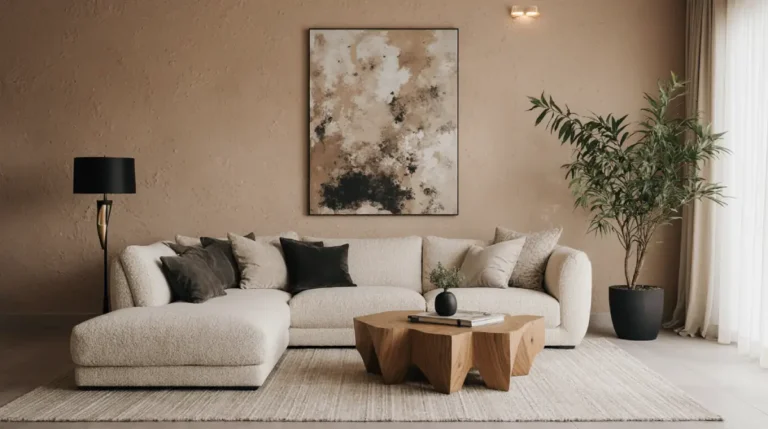
Unlike trend-driven furniture that quickly feels outdated, a travertine coffee table offers lasting appeal. It blends effortlessly with popular styles such as Organic Modern, Japandi, Scandinavian, Mediterranean, Transitional, and Contemporary interiors. Whether paired with a cozy linen sofa or a sleek modular sectional, this natural stone instantly elevates the room while maintaining a relaxed and inviting atmosphere.
However, styling travertine successfully requires more than simply placing it in the center of your seating area. The wrong color palette, oversized accessories, or poor furniture proportions can make even an expensive table feel disconnected from the rest of the room. Great design comes from understanding balance, texture, scale, and functionality not just following trends.
In this guide, you’ll learn how to choose the right travertine coffee table ideas for your space, style it like an interior designer, pair it with complementary furniture and colors, care for its natural surface, and avoid the decorating mistakes that often diminish its beauty. Whether you’re decorating your first apartment or refreshing a luxury living room, these practical ideas will help you create a space that feels cohesive, elegant, and welcoming.
Table of Contents
Why Choose a travertine coffee table styling ?
A coffee table is more than a convenient surface for drinks and books. It anchors your seating arrangement, influences the room’s proportions, and often becomes the first piece guests notice. Choosing the right material is just as important as selecting the right shape or size, and this is where travertine stands apart from many other options.
Unlike painted wood or manufactured finishes, travertine coffee table ideas is a genuine natural stone formed over thousands of years. Every slab has unique textures, subtle mineral patterns, and warm cream tones, meaning no two tables are exactly alike. This individuality gives your living room a custom, curated feel that mass-produced furniture rarely achieves.
Why Interior Designers Love Travertine
Timeless Instead of Trendy
One of the biggest advantages of travertine is its longevity in design. While certain furniture finishes come and go, natural stone has remained a staple in high-end interiors for decades.
Travertine feels current because it aligns perfectly with today’s preference for organic materials, yet it also complements classic homes that prioritize timeless elegance. Investing in natural stone means your coffee table is far less likely to look dated as decorating trends evolve.
Best for:
- Organic Modern interiors
- Japandi homes
- Contemporary spaces
- Mediterranean-inspired rooms
- Transitional living rooms
Less suitable for:
- Industrial interiors dominated by dark metals
- Rustic farmhouse spaces with heavily distressed finishes
- Highly ornate traditional rooms featuring rich cherry or mahogany furniture
That doesn’t mean travertine cannot work in these styles, but it usually requires thoughtful styling to maintain visual harmony.
It Creates a Natural Focal Point
Many homeowners assume the sofa should be the star of the living room. In reality, experienced designers often allow the coffee table to become the visual anchor because it sits at the center of the conversation area.
Travertine naturally attracts attention through its texture rather than bright colors or decorative embellishments. This understated beauty makes it an excellent focal point for neutral interiors.
Instead of competing with artwork, lighting, or architectural features, it ties the room together.
Designer Tip
If your living room already includes statement lighting or bold artwork, choose a simple travertine table with clean lines. Allow the stone’s natural texture to provide visual interest without introducing unnecessary complexity.
Warm Neutrals Work Almost Everywhere
Cream-colored stone is remarkably versatile.
Unlike bright white marble, which can sometimes feel formal or cold, travertine introduces warmth that makes a room feel relaxed and lived-in.
It pairs beautifully with:
- White upholstery
- Ivory textiles
- Beige sofas
- Taupe accents
- Greige walls
- Warm oak furniture
- Walnut wood
- Matte black metal
- Antique brass
- Soft olive green
- Terracotta accessories
Because these colors already dominate many modern interiors, a travertine coffee table integrates naturally instead of looking like an afterthought.
Travertine vs. Other Coffee Table Materials
Choosing the right material often depends on your lifestyle, decorating goals, and maintenance preferences.
| Material | Best For | Advantages | Drawbacks |
|---|---|---|---|
| Travertine | Organic, timeless interiors | Warm texture, unique patterns, luxurious appearance | Requires occasional sealing and mindful care |
| Marble | Elegant, formal spaces | Dramatic veining, luxurious look | More prone to visible etching and often higher cost |
| Wood | Cozy, casual homes | Warm, versatile, easy to repair | Can scratch, dent, or warp over time |
| Glass | Small spaces | Creates an open, airy feel | Shows fingerprints and dust easily |
| Concrete | Modern and industrial interiors | Durable, sculptural appearance | Can feel visually heavy and cool |
| Metal | Contemporary spaces | Sleek and durable | May lack the warmth many living rooms need |
For most homeowners seeking a balance of warmth, durability, and timeless appeal, travertine offers one of the most versatile options.
A Designer Look Without Overdecorating
One reason professionally designed living rooms feel polished is that designers rely on quality materials rather than excessive accessories.
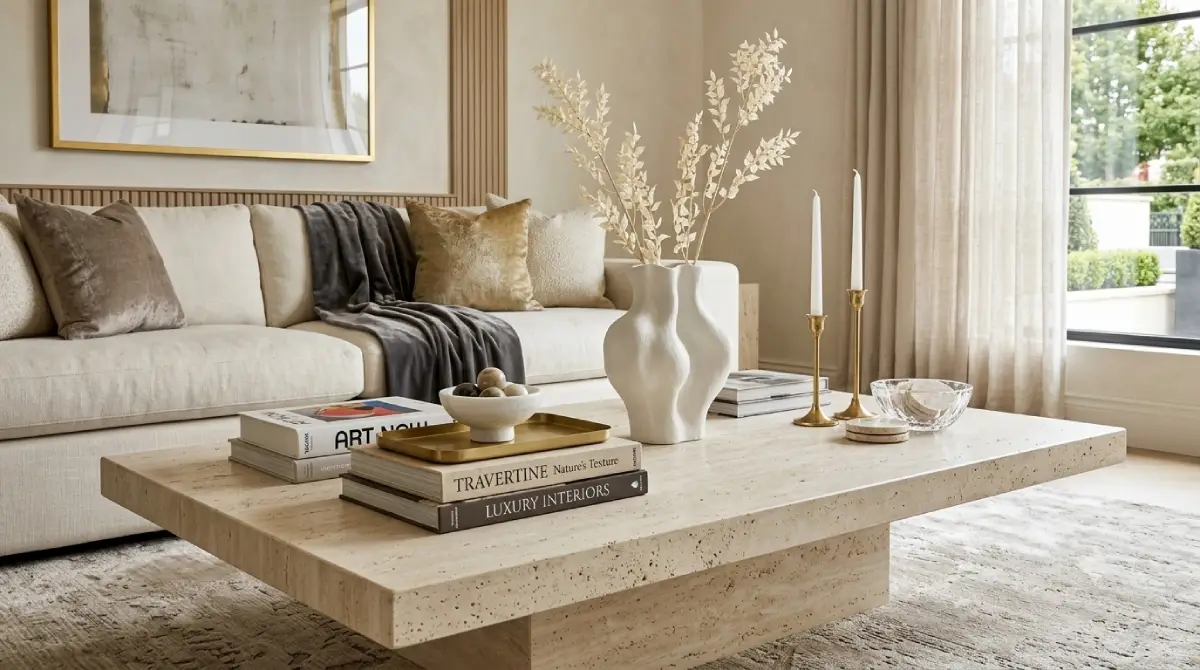
Travertine already has depth and character, so it doesn’t require elaborate styling. In many cases, a few carefully selected objects create more impact than filling every inch of the tabletop.
A simple arrangement might include:
- A stack of two or three coffee table books
- A handcrafted ceramic vase
- A decorative tray
- A scented candle
- A small branch of greenery
The stone itself remains the hero, while the accessories enhance rather than conceal its beauty.
Common Mistake
Covering most of the surface with oversized decor defeats the purpose of choosing a beautiful natural stone. Leave at least half of the tabletop visible so its texture and natural movement can be appreciated.
Practical Benefits Beyond Appearance
Travertine is not only attractive but also functional when chosen thoughtfully.
A well-crafted table offers:
- Excellent stability due to its substantial weight
- Long-term durability with proper maintenance
- Resistance to everyday wear when sealed
- A surface that won’t fade like painted finishes
- Timeless appeal that can move with you through different homes and design styles
Its weight also makes it a practical choice for families with active children or pets, as it is less likely to shift or tip during everyday use. However, the edges should still be considered families with toddlers may prefer rounded or softly curved designs for added safety.
Is a Travertine Coffee Table Right for Your Lifestyle?
Before investing, think about how your living room functions each day.
A travertine coffee table is an excellent choice if you:
- Prefer timeless over trendy furniture.
- Enjoy neutral, layered interiors.
- Appreciate natural materials.
- Want a statement piece that doesn’t rely on bold colors.
- Plan to keep your furniture for many years.
It may not be the best fit if you:
- Want a completely maintenance-free surface.
- Frequently place hot cookware or acidic foods directly on the table.
- Need lightweight furniture that can be moved often.
- Prefer bold, colorful statement furniture over subtle natural textures.
Understanding your lifestyle is just as important as understanding your design style. The most beautiful furniture is the furniture that supports the way you actually live.
Expert Insight: Invest in the Foundation First
One principle professional designers consistently follow is to invest in foundational furniture before spending heavily on accessories. A travertine coffee table serves as one of those foundational pieces. Its natural beauty, timeless character, and ability to complement evolving decor mean you can refresh your living room over the years with new textiles, lighting, artwork, and accessories while keeping the same centerpiece.
Rather than chasing short-lived trends, a thoughtfully chosen travertine coffee table creates a living room that feels refined today and remains relevant for years to come.
Styling a Travertine Coffee Table
A beautifully designed living room rarely happens by accident. The most inviting spaces feel balanced because every piece has a purpose, and the coffee table often plays the starring role. While a travertine coffee table is naturally eye-catching, thoughtful styling transforms it from a functional surface into the centerpiece that ties the entire room together.
The goal isn’t to fill every inch with decorative objects. Instead, it’s to create a composition that feels effortless, reflects your personality, and complements the natural beauty of the stone. As interior designers often say, “The table should look lived in, not staged.” That means choosing accessories that add texture, height, and warmth while allowing the travertine itself to remain visible.
This section will show you exactly how to style a travertine coffee table using professional techniques that work in real homes not just magazine photos.
Start with the Right Foundation
Before decorating, make sure your coffee table is the correct size for your seating arrangement.
A table that is too large makes the room feel crowded, while one that’s too small looks disconnected from the sofa.
Designer Size Guidelines
| Furniture Element | Recommended Measurement |
|---|---|
| Coffee table length | About two-thirds of the sofa length |
| Height | Equal to or 1- 2 inches lower than the sofa seat |
| Distance from sofa | 14-18 inches |
| Walkway clearance | At least 30-36 inches |
Why it works: These proportions create a layout that is comfortable to use while maintaining visual balance.
When to adjust: In compact apartments, slightly reducing the table size can improve circulation without sacrificing style.
Follow the Designer Styling Formula
Professional designers often rely on a simple layering formula that creates visual interest without clutter.
The 5-Element Formula
- A decorative tray
- Coffee table books
- A vase or greenery
- A sculptural object
- A candle or small decorative accent
Each item serves a different purpose. The tray organizes smaller objects, books add height, greenery introduces life, and a sculptural piece creates a focal point.
Why it works: Varying heights, shapes, and textures keeps the arrangement dynamic while allowing the eye to move naturally across the tabletop.
When not to use every element: If your table is under 30 inches wide, reduce the number of accessories. A crowded surface can make a small room feel even smaller.
Let the Stone Remain the Star
One of the biggest advantages of travertine is its natural texture. Covering the entire surface with decor hides what makes the table special.
A good rule is to leave 40–60% of the tabletop visible.
This allows the cream tones, subtle veining, and organic texture to become part of the design.
Designer Secret
Luxury interiors often look expensive because they feature fewer, higher-quality accessories rather than many inexpensive decorations. Thoughtful restraint creates a sense of sophistication.
Style According to the Table Shape
Different table shapes require different styling approaches.
Round Travertine Coffee Tables
Round tables naturally encourage conversation and soften rooms with angular furniture.
The best arrangement is usually a triangular composition.
Place:
- A stack of books
- A medium-height vase
- A candle or decorative bowl
Avoid lining objects in a straight row, as it fights against the table’s circular shape.
Rectangular Travertine Coffee Tables
Long tables benefit from dividing the surface into three visual zones.
For example:
- One end for books
- Center for a tray
- Opposite end for a vase or sculpture
This prevents one side from feeling heavier than the other.
Square Travertine Coffee Tables
Square tables work well with grouped arrangements.
Instead of one large centerpiece, create several connected clusters.
This approach keeps the surface interesting from every seating position.
Choose Accessories That Complement Natural Stone
Travertine already provides visual texture, so the best accessories add contrast without competing.
Best Decorative Materials
| Material | Why It Works |
|---|---|
| Ceramic | Soft matte finish complements stone |
| Linen | Adds warmth and subtle texture |
| Glass | Reflects light without adding heaviness |
| Oak | Reinforces natural materials |
| Walnut | Adds richness and contrast |
| Brass | Introduces warmth and elegance |
| Matte black metal | Creates modern definition |
| Woven baskets | Bring organic texture |
Avoid highly reflective chrome accessories if your goal is a warm, organic living room. They can feel too cool against travertine’s earthy character.
Incorporate Greenery for a Fresh Look
Plants instantly soften stone furniture.
A single branch of olive, eucalyptus, or magnolia creates movement while reinforcing the organic feel of travertine.
If your living room receives limited natural light, high-quality faux stems can provide the same visual effect with minimal maintenance.
Designer Tip
Choose arrangements with loose, natural shapes rather than tightly packed artificial bouquets. Simplicity feels more authentic.
Refresh the Styling with the Seasons
Instead of replacing furniture, update your accessories throughout the year.
Spring
- White flowers
- Light linen accents
- Soft green foliage
Summer
- Coral-inspired decor
- Coastal textures
- Light woven trays
Autumn
- Amber glass
- Dried grasses
- Warm wood accents
Winter
- Stone candle holders
- Evergreen branches
- Textured wool elements
Seasonal styling keeps the room feeling fresh while allowing the travertine table to remain the constant centerpiece.
Avoid These Common Styling Mistakes
Even beautiful furniture can lose its impact if styled incorrectly.
Mistake 1: Too Many Small Objects
Tiny decorations scattered across the table create visual noise.
Instead, group similar items together.
Mistake 2: Ignoring Height Variation
Accessories that are all the same height make the arrangement feel flat.
Combine low, medium, and taller pieces for a more dynamic composition.
Mistake 3: Matching Everything Perfectly
A room filled with identical cream objects lacks depth.
Introduce contrast with wood, greenery, black accents, or warm metals.
Mistake 4: Oversized Decor
Large sculptures or oversized vases can overwhelm the tabletop.
Leave enough open space to appreciate the stone.
Mistake 5: Decorating Without Function
Remember that a coffee table is meant to be used.
Leave room for drinks, books, or a laptop when needed.
Beautiful styling should support everyday living, not interfere with it.
Style for Different Interior Design Styles
Organic Modern
Combine travertine with oak, boucle seating, linen curtains, ceramic vases, and sculptural lighting.
Best for: Homeowners seeking a calm, timeless atmosphere.
Japandi
Keep accessories minimal.
Use neutral ceramics, natural wood, and a restrained color palette.
Why it works: Japandi emphasizes craftsmanship and simplicity, allowing the stone to become the visual focus.
Scandinavian
Pair the table with light woods, white walls, soft textiles, and understated decor.
Introduce greenery to prevent the space from feeling too minimal.
Mediterranean
Layer warm terracotta, olive branches, textured pottery, and woven baskets.
These earthy elements complement travertine’s natural tones beautifully.
Contemporary
Add bold black accents, sculptural lighting, and clean-lined furniture while keeping accessories carefully edited.
The contrast highlights the softness of the stone without sacrificing a modern aesthetic.
Create Balance Through Texture
One of the secrets to successful travertine coffee table styling is balancing hard and soft materials.
Think of your living room as a mix of textures rather than colors alone.
A balanced combination might include:
- Smooth travertine
- Boucle armchairs
- Linen sofa
- Wool area rug
- Walnut side table
- Ceramic vase
- Glass candle holder
The contrast between these materials creates depth and keeps the room from feeling one-dimensional.
Shopping Advice: Budget vs. Luxury Styling
You don’t need designer accessories to achieve a designer look.
| Budget | Mid-Range | Luxury |
|---|---|---|
| Ceramic vase, thrifted books, woven tray | Handmade pottery, premium candles, artisan bowl | Designer sculptures, collectible books, natural stone accessories |
The key is choosing fewer, better-coordinated pieces rather than filling the table with inexpensive decor.
Expert Insight: Edit Before You Add
A common misconception is that every empty space must be filled. In reality, experienced designers spend just as much time removing accessories as they do adding them.
After styling your travertine coffee table, step back and ask yourself:
- Does each item have a purpose?
- Can the stone still be appreciated?
- Is there enough room for everyday use?
- Does the arrangement feel balanced from every angle?
If the answer to any of these questions is “no,” remove one accessory and reassess. Often, the simplest arrangement is the most elegant.
A well-styled travertine coffee table doesn’t demand attention through excess it earns it through thoughtful composition, natural materials, and purposeful restraint. When you let the beauty of the stone shine while layering just enough texture and personality, your living room feels effortlessly sophisticated and welcoming.
Best Colors & Furniture Pairings
Choosing the right travertine coffee table ideas is only the first step. To create a living room that feels professionally designed, every surrounding element from the sofa and rug to the lighting and accessories should work together as one cohesive composition.
One of the greatest strengths of travertine is its versatility. Its warm cream and beige undertones allow it to complement a wide variety of colors, furniture materials, and decorating styles. However, versatility doesn’t mean every combination will produce the same result. The most successful interiors are built around intentional contrast, balanced proportions, and layered textures.
As a designer, I often recommend treating the travertine coffee table as the “bridge” between larger furniture pieces. It connects the seating area, soft furnishings, and architectural elements while introducing natural texture that prevents neutral rooms from feeling flat.
This section will help you confidently pair colors, furniture, rugs, lighting, and decorative accents so your living room feels balanced, inviting, and timeless.
Build Your Color Palette Around Warm Neutrals
Travertine naturally features warm undertones, making it ideal for creating calm, sophisticated interiors.
Instead of fighting those warm tones with overly cool colors, embrace them through a layered neutral palette.
Designer-Approved Color Combinations
| Main Color | Accent Colors | Best Interior Style |
|---|---|---|
| Cream | Beige, ivory, oak | Organic Modern |
| Greige | Walnut, black, linen | Contemporary |
| Warm white | Olive green, brass | Japandi |
| Taupe | Terracotta, natural wood | Mediterranean |
| Soft sand | Charcoal, leather | Transitional |
Why it works
Layering warm neutrals creates depth without relying on bold colors. The room feels relaxed, cohesive, and visually timeless.
When to use
These palettes work especially well in homes with abundant natural light or open-concept layouts where consistency between rooms is important.
When not to use
If your design style is bold maximalism with saturated jewel tones, a cream travertine table may not become the natural focal point you’re looking for.
Choosing the Right Sofa Color
The sofa and coffee table should complement one another rather than compete for attention.
White Sofa
A white sofa paired with travertine creates a clean, airy atmosphere.
Best for:
- Coastal interiors
- Organic Modern homes
- Scandinavian spaces
Designer Tip:
Introduce texture through boucle or linen upholstery so the room doesn’t feel sterile.
Beige Sofa
This combination produces one of the warmest and most welcoming living rooms.
Why it works:
The subtle contrast allows the natural stone texture to stand out while maintaining a harmonious palette.
Add walnut furniture or black accents to keep the room from feeling overly monochromatic.
Greige Sofa
Greige bridges warm and cool tones beautifully.
It works particularly well in contemporary interiors where black lighting, matte finishes, and sculptural furniture are also present.
Olive Green Sofa
Olive green introduces a natural, earthy contrast.
The warmth of travertine softens the richness of green, creating a sophisticated palette inspired by Mediterranean landscapes.
Camel Leather Sofa
Leather adds richness and character while complementing the organic quality of natural stone.
This pairing works exceptionally well in:
- Modern rustic homes
- Transitional interiors
- Luxury apartments
Sofa Pairing Guide
| Sofa Material | Compatibility | Designer Rating |
|---|---|---|
| Linen | Excellent | ★★★★★ |
| Boucle | Excellent | ★★★★★ |
| Leather | Excellent | ★★★★★ |
| Velvet | Good | ★★★★☆ |
| Microfiber | Moderate | ★★★☆☆ |
| Heavy patterned fabric | Limited | ★★☆☆☆ |
Heavy patterns often compete with travertine’s natural movement, making the room feel visually busy.
Pairing Wood Furniture with Travertine
Natural wood enhances the warmth of stone better than almost any other material.
Light Oak
Creates a calm Scandinavian or Japandi atmosphere.
Best for smaller rooms because lighter woods visually expand the space.
Walnut
Walnut adds depth and luxury.
Its darker tone contrasts beautifully with cream stone without overwhelming the room.
Perfect for:
- Luxury living rooms
- Mid-century modern influences
- Transitional homes
Ash Wood
Ash offers subtle grain with a modern appearance.
It works well when you want texture without strong color variation.
Designer Secret
Avoid using several different wood tones in one room.
Instead, choose one dominant wood finish and repeat it throughout side tables, shelving, media consoles, and decorative accessories.
Consistency creates visual harmony.
Choosing the Perfect Area Rug
A rug frames the seating arrangement and highlights the coffee table.
The right rug makes the travertine appear more luxurious, while the wrong one can diminish its impact.
Best Rug Choices
- Wool rugs
- Flat-weave rugs
- Natural jute
- Hand-knotted wool
- Low-pile neutral rugs
Rug Colors That Work Beautifully
- Ivory
- Sand
- Warm gray
- Beige
- Taupe
- Olive accents
- Soft charcoal
Rug Size Guide
| Seating Arrangement | Recommended Rug Size |
|---|---|
| Apartment sofa | 5′ × 8′ |
| Standard living room | 8′ × 10′ |
| Large sectional | 9′ × 12′ |
| Open-concept space | 10′ × 14′ |
Designer Tip
At least the front legs of every major seating piece should rest on the rug. This visually connects the furniture into one cohesive conversation area.
Lighting That Makes Travertine Glow
Lighting has a dramatic effect on how natural stone appears.
Warm lighting enhances travertine’s creamy tones, while cool lighting can make it appear dull or gray.
Best Lighting Choices
- Linen lampshades
- Paper lantern pendants
- Sculptural floor lamps
- Warm LED lighting (around 2700K–3000K)
- Brass table lamps
These options create soft shadows that emphasize the stone’s natural texture.
Avoid
- Harsh cool-white LEDs
- Overly bright recessed lighting without layered ambient light
- Blue-toned bulbs
A living room should feel warm and inviting, not like a retail showroom.
Coffee Table Shape and Furniture Layout
The shape of your coffee table should respond to the room—not simply personal preference.
Round Tables
Best with:
- Sectional sofas
- Curved seating
- Compact living rooms
Why it works:
Rounded edges improve traffic flow and soften angular furniture.
Rectangular Tables
Ideal for:
- Three-seat sofas
- Symmetrical layouts
- Larger living rooms
They provide more usable surface area while reinforcing structured layouts.
Square Tables
Perfect for:
- Large seating groups
- Four-chair arrangements
- Spacious conversation areas
They create balanced proportions when furniture surrounds the table evenly.
Pairing Accent Chairs
Accent chairs help complete the seating arrangement while reinforcing your design style.
Excellent Choices
- Boucle chairs
- Leather sling chairs
- Oak-framed lounge chairs
- Woven rattan chairs
- Upholstered swivel chairs
Less Successful Choices
Oversized recliners with bulky proportions can visually overpower the elegant simplicity of travertine.
Decorative Metals That Complement Travertine
Metal finishes influence the room’s overall mood.
Best Choices
- Antique brass
- Brushed brass
- Matte black
- Bronze
These finishes add warmth and sophistication.
Use Sparingly
- Chrome
- Highly polished nickel
These cooler metals can clash with travertine’s earthy warmth if overused.
Designing for Small Living Rooms
A travertine coffee table can work beautifully in compact spaces when chosen thoughtfully.
Designer Recommendations
- Choose a round table to improve movement.
- Select lighter upholstery.
- Use mirrors to reflect natural light.
- Limit decorative accessories.
- Keep surrounding furniture visually light with exposed legs.
Common Mistake
Buying an oversized coffee table simply because it looks impressive in a showroom.
In smaller rooms, scale matters more than individual furniture pieces.
Designing for Large Living Rooms
Larger spaces require stronger visual anchors.
A substantial travertine coffee table prevents the seating area from feeling disconnected.
Designer ideas include:
- Pairing two matching tables instead of one oversized piece.
- Layering large rugs beneath the seating group.
- Using oversized artwork to balance the room vertically.
- Adding sculptural floor lamps to frame the seating area.
The goal is to create intimacy within a generous floor plan.
Budget, Mid-Range, and Luxury Pairing Ideas
| Budget | Mid-Range | Luxury |
|---|---|---|
| Linen-look sofa, jute rug, ceramic lamp | Solid oak furniture, wool rug, brass lighting | Designer sofa, hand-knotted rug, artisan lighting, custom cabinetry |
A luxurious living room isn’t defined solely by price. Thoughtful coordination, quality materials, and balanced proportions often make a greater impression than expensive furniture alone.
Common Pairing Mistakes
Even high-quality furniture can feel disjointed when key design principles are overlooked.
Avoid these frequent mistakes:
Too Many Competing Materials
Combining travertine with glossy marble, mirrored furniture, chrome finishes, and high-shine surfaces creates visual conflict.
Instead, allow one natural material to take the lead.
Ignoring Scale
A large sectional paired with a tiny coffee table feels awkward.
Likewise, a massive stone table can overwhelm a loveseat.
Always consider the relationship between each furniture piece.
Using Only One Texture
A room filled exclusively with smooth surfaces lacks warmth.
Balance stone with:
- Linen
- Wool
- Wood
- Boucle
- Woven fibers
- Ceramics
Texture creates comfort and visual depth.
Forgetting Negative Space
Not every corner needs furniture.
Leaving breathing room around your travertine coffee table allows it to become the natural focal point instead of getting lost among surrounding pieces.
Expert Insight: Design Around the Lifestyle, Not the Table
The most successful living rooms don’t start with accessories they start with understanding how the space is used every day.
If your home hosts frequent gatherings, prioritize durable fabrics, generous seating, and a travertine table with enough surface area for entertaining. If you prefer quiet evenings with a book, create a more intimate arrangement with comfortable lounge chairs, warm lighting, and a curated tabletop display.
A travertine coffee table should support the way you live while elevating the overall design. When the surrounding colors, furniture, lighting, and textures are chosen with intention, the result is a living room that feels both elegant and effortlessly comfortable.
Buying, Care & Common Mistakes
A travertine coffee table is more than a decorative accent it’s an investment in the overall look and functionality of your living room. Unlike trendy furniture that may be replaced after a few years, a well-crafted travertine table can remain beautiful for decades when chosen wisely and cared for properly.
However, not all travertine coffee tables are created equal. Differences in stone quality, construction, finish, craftsmanship, and size can significantly affect both appearance and durability. Before making a purchase, it’s important to understand what separates a high-quality piece from one that may disappoint over time.
This section will help you shop with confidence, protect your investment, and avoid the most common mistakes homeowners make before and after bringing a travertine coffee table home.
How to Choose the Right Travertine Coffee Table
Choosing the right table starts with understanding your living room not simply selecting the most attractive design online.
Professional designers evaluate three factors first:
- Room size
- Furniture layout
- Daily lifestyle
When these elements work together, the coffee table feels like a natural part of the room instead of an afterthought.
Step 1: Choose the Correct Size
A beautiful coffee table can still feel wrong if it’s out of proportion.
Coffee Table Size Guide
| Sofa Size | Recommended Coffee Table Length | Best Shape |
|---|---|---|
| Loveseat (60–72″) | 30-36″ | Round or Oval |
| Standard Sofa (78–90″) | 42-54″ | Rectangle or Oval |
| Large Sofa (90–108″) | 54-60″ | Rectangle |
| Sectional | 36–48″ Round or 48-60″ Rectangle | Round or Square |
Why This Matters
A table that’s too small looks disconnected.
A table that’s too large interrupts movement and makes the seating area feel crowded.
Designer Rule
Aim for a coffee table that’s approximately two-thirds the length of your sofa.
Step 2: Select the Best Shape
Different layouts benefit from different table shapes.
Round
Best for:
- Small living rooms
- Apartments
- Sectionals
- Homes with children
Rounded edges improve traffic flow and soften the room.
Rectangle
Best for:
- Traditional sofas
- Long seating arrangements
- Open-concept spaces
Provides the most usable surface area.
Square
Best for:
- Large seating groups
- Spacious living rooms
- Symmetrical furniture layouts
Creates visual balance from every direction.
Oval
An excellent compromise between round and rectangular.
It provides generous surface space while maintaining soft edges.
Step 3: Choose the Right Finish
Travertine is available in several finishes.
Each creates a different mood.
| Finish | Appearance | Best For |
|---|---|---|
| Honed | Smooth, matte | Organic Modern, Japandi |
| Filled & Honed | Smooth with minimal pits | Family homes |
| Polished | Slight sheen | Luxury contemporary interiors |
| Brushed | Textured | Mediterranean and rustic-inspired spaces |
Designer Recommendation
For most homes, a honed finish is the best choice.
It minimizes glare, feels contemporary, and highlights the stone’s natural beauty.
Budget vs. Mid-Range vs. Luxury
Price isn’t the only indicator of quality.
Construction, craftsmanship, and stone selection matter just as much.
| Budget | Mid-Range | Luxury |
|---|---|---|
| Manufactured travertine veneer, simple base | Solid travertine top with quality craftsmanship | Premium solid travertine, artisan craftsmanship, custom design |
| Best for first homes | Best balance of quality and value | Long-term investment pieces |
Budget Recommendation
Ideal if you’re furnishing your first apartment or refreshing a room without a major renovation.
Look for:
- Stable construction
- Thick-looking top
- Neutral finish
- Positive customer reviews
Avoid extremely lightweight tables marketed as “stone look.”
Mid-Range Recommendation
The sweet spot for most homeowners.
You’ll usually receive:
- Better stone quality
- Improved craftsmanship
- More durable finishes
- Longer lifespan
For many families, this represents the best overall value.
Luxury Recommendation
Luxury tables emphasize craftsmanship rather than decoration.
Look for:
- Thick solid stone
- Precision edges
- Sculptural bases
- Beautiful natural veining
- Exceptional finish quality
These tables become heirloom-quality furniture.
Shopping Checklist
Before purchasing, ask yourself:
✓ Does the size fit my room?
✓ Is the finish appropriate for my lifestyle?
✓ Does it coordinate with my existing furniture?
✓ Will I enjoy this design in five or ten years?
✓ Is the table practical for everyday use?
If the answer is “no” to any of these questions, continue shopping.
How to Care for a travertine coffee table ideas
Travertine has a reputation for being difficult to maintain.
In reality, proper care is simple once you understand the basics.
The goal isn’t to constantly clean the stone.
The goal is to protect it from unnecessary damage.
Daily Cleaning
Use:
- Soft microfiber cloth
- Warm water
- pH-neutral stone cleaner
Avoid abrasive scrubbing pads.
They can dull the finish over time.
Weekly Maintenance
Remove dust from:
- Table edges
- Decorative accessories
- Under trays
- Decorative bowls
Dust particles may seem harmless, but they can become mildly abrasive when rubbed across the surface.
Long-Term Care
Depending on the finish and manufacturer recommendations, travertine may benefit from periodic sealing.
A quality stone sealer helps reduce the absorption of spills and makes routine cleaning easier.
Always follow the care instructions provided by the manufacturer, as different finishes can have different maintenance requirements.
What Should Never Touch Travertine?
Certain household products can damage natural stone.
Avoid placing these directly on the surface:
- Lemon juice
- Vinegar
- Wine spills left overnight
- Coffee stains left for hours
- Harsh bleach
- Ammonia cleaners
- Abrasive powders
These acidic substances may etch or discolor the stone.
Always Use Coasters
Although travertine is durable, drinks should never sit directly on the stone.
Designer homes almost always include attractive coasters.
They’re functional and decorative.
Choose:
- Leather
- Cork
- Natural stone
- Ceramic
They blend beautifully with organic interiors.
Common Buying Mistakes
Even experienced homeowners make mistakes.
Learning from them can save both money and frustration.
Mistake 1: Buying Only for Appearance
A gorgeous table means little if it’s too large for the room.
Always measure first.
Mistake 2: Ignoring Weight
Travertine is heavy.
Before delivery, confirm:
- Door widths
- Stair access
- Elevator dimensions
- Floor protection during installation
Planning ahead prevents costly surprises.
Mistake 3: Choosing Trend Over Lifestyle
Some homeowners buy sculptural tables that leave little usable surface.
Ask yourself:
Will I actually use this table every day?
Beautiful furniture should also be functional.
Mistake 4: Forgetting Maintenance
Natural stone requires thoughtful care.
If you know you prefer furniture that needs virtually no attention, another material may better suit your lifestyle.
Choosing the right furniture means being honest about how you live.
Mistake 5: Matching Every Piece
Buying every furniture item in cream stone creates a room that lacks contrast.
Instead, balance travertine with:
- Wood
- Upholstery
- Textiles
- Metal accents
- Greenery
Variety makes interiors feel layered and inviting.
Common Decorating Mistakes
Even after buying the perfect table, styling decisions can reduce its impact.
Using Tiny Rugs
A small rug makes the coffee table appear disconnected.
Choose a rug that anchors the entire seating arrangement.
Oversized Sectionals
Massive sofas can visually overwhelm smaller travertine tables.
Furniture should always feel proportionate.
Cold Lighting
Blue-toned bulbs flatten the warm character of travertine.
Warm ambient lighting allows the stone’s texture and color variation to shine.
Too Much Decor
A travertine coffee table doesn’t need dozens of accessories.
Leave open space.
The stone is already part of the design.
Ignoring Daily Function
If every inch of the tabletop is covered with decor, there is no room for practical use.
The most beautiful living rooms balance aesthetics with everyday comfort.
Signs of a High-Quality cream stone coffee table
When shopping in-store or online, look for these details.
| Feature | Why It Matters |
|---|---|
| Consistent craftsmanship | Indicates attention to detail |
| Thick stone profile | Creates a premium appearance |
| Smooth edge finishing | Improves durability and comfort |
| Stable base | Prevents wobbling |
| Natural color variation | Confirms authentic stone character |
| High-quality joinery | Extends the table’s lifespan |
Remember that natural variation is a hallmark of genuine travertine. Minor differences in color, veining, and texture are signs of authenticity, not defects.
Is Travertine Worth the Investment?
For many homeowners, the answer is yes.
Unlike furniture that follows short-lived trends, travertine remains relevant across a wide range of interior styles.
As your taste evolves, the same table can be paired with different sofas, rugs, artwork, or lighting without feeling outdated.
Its versatility makes it one of the few furniture investments that can adapt to multiple redesigns over the years.
Expert Designer Advice
Professional designers often recommend investing in foundational furniture before spending heavily on decorative accessories.
A quality travertine coffee table serves as one of those foundational pieces because it anchors the room, introduces natural texture, and complements a wide range of materials and color palettes.
If your budget is limited, choose a well-made travertine coffee table first. You can gradually upgrade pillows, lighting, artwork, and decorative accents over time. This approach creates a more refined living room than buying numerous inexpensive accessories while compromising on the furniture that defines the space.
A thoughtfully selected travertine coffee table isn’t just another purchase it’s a long-term design investment that continues to elevate your living room year after year.
Designer Tips & Living Room Ideas
A beautifully styled travertine coffee table is only one piece of the puzzle. The most memorable living rooms are designed as complete experiences where every element from the furniture layout to the lighting and accessories works together in harmony. Professional designers don’t rely on expensive furniture alone. They create balance through thoughtful planning, layered textures, proper proportions, and purposeful styling.
Whether you’re decorating a compact apartment or a spacious open-concept home, the following designer strategies will help you create a living room that feels elegant, functional, and timeless.
Design the Room Around Conversation
One of the most common decorating mistakes is arranging furniture around the television instead of around the people using the space.
Your travertine coffee table should sit at the center of a comfortable conversation area.
Ideal Furniture Layout
| Room Size | Recommended Layout | Coffee Table Placement |
|---|---|---|
| Small Apartment | Sofa + Accent Chair | Centered with 14–18 inches of clearance |
| Medium Living Room | Sofa + Two Chairs | Centered within the seating arrangement |
| Large Living Room | Sectional + Two Accent Chairs | Anchoring the entire conversation zone |
| Open-Concept Space | Sectional + Swivel Chairs + Ottoman | Positioned to visually define the seating area |
Designer Tip
If your living room feels disconnected, pull furniture slightly away from the walls. A floating furniture arrangement often creates a more intimate and luxurious atmosphere.
Style Small Living Rooms Like a Designer
A small living room doesn’t require smaller design ideas it requires smarter ones.
Choose a Round Table
Round travertine coffee tables improve traffic flow because they eliminate sharp corners.
This makes the room feel more open while creating a softer overall appearance.
Keep the Color Palette Light
Use warm neutrals throughout the room.
Excellent combinations include:
- Cream
- Ivory
- Sand
- Light oak
- Warm white
- Soft greige
These colors reflect light and make compact spaces feel larger.
Use Vertical Space
Instead of adding more furniture, decorate upward.
Consider:
- Tall floor lamps
- Large artwork
- Vertical shelving
- Full-length curtains
Drawing the eye upward creates the illusion of higher ceilings.
Limit Accessories
Less is more in small rooms.
Instead of filling every surface with decorative objects, choose a few larger accessories that make a statement.
A sculptural vase often creates more impact than six small ornaments.
Design Spacious Living Rooms with Confidence
Large living rooms offer more flexibility, but they also require thoughtful planning.
Without enough visual weight, the seating area can feel empty.
Use Larger Coffee Tables
A substantial travertine coffee table anchors expansive seating arrangements.
Avoid choosing a small table simply because it’s beautiful.
Scale matters just as much as style.
Layer Multiple Textures
Luxury interiors often combine:
- Travertine
- Walnut
- Boucle
- Linen
- Wool
- Brass
- Glass
- Ceramics
Each material contributes something unique without overwhelming the space.
Divide Open Spaces into Zones
If your living room shares space with a dining room or kitchen, define the seating area with:
- A large area rug
- Accent lighting
- Console table
- Indoor plants
These visual boundaries help each area feel intentional.
Create an Organic Modern Living Room
Organic Modern remains one of the most popular styles for travertine furniture.
Key Elements
- Cream stone
- Oak furniture
- Linen upholstery
- Sculptural lighting
- Handmade ceramics
- Soft neutral textiles
- Natural greenery
Why it works:
The combination feels luxurious without becoming overly formal.
Design a Japandi-Inspired Space
Japandi combines Scandinavian simplicity with Japanese craftsmanship.
Choose
- Minimal accessories
- Neutral colors
- Natural wood
- Handmade pottery
- Soft lighting
- Clean lines
Avoid excessive decoration.
Every piece should have both beauty and purpose.
Mediterranean Elegance
Travertine naturally complements Mediterranean interiors.
Pair it with:
- Terracotta
- Olive branches
- Rustic pottery
- Warm wood
- Linen curtains
- Natural woven baskets
The result feels relaxed, sun-filled, and timeless.
Contemporary Luxury
For a modern aesthetic, combine travertine with:
- Matte black accents
- Sculptural furniture
- Oversized artwork
- Brass lighting
- Minimal styling
Keep decorative accessories carefully edited so the room feels sophisticated rather than crowded.
Designer Secrets That Make Every Living Room Look More Expensive
Professional designers often rely on subtle techniques that homeowners overlook.
Secret #1: Mix Materials
A room filled entirely with one material feels flat.
Combine stone with:
- Wood
- Fabric
- Glass
- Metal
- Woven fibers
Contrast creates depth.
Secret #2: Layer Lighting
Never rely on one ceiling fixture.
Instead combine:
- Ceiling lighting
- Floor lamps
- Table lamps
- Accent lighting
- Candles
Layered lighting makes every room feel warmer and more inviting.
Secret #3: Decorate in Odd Numbers
Groups of three or five accessories generally appear more balanced than even-numbered arrangements.
Examples include:
- Three candles
- Three books
- Three ceramic vessels
The arrangement feels natural and visually appealing.
Secret #4: Add Life with Greenery
Every professionally designed living room includes something organic.
Excellent choices include:
- Olive branches
- Eucalyptus
- Rubber plants
- Fiddle leaf figs
- Fresh flowers
Natural elements soften the clean lines of stone furniture.
Secret #5: Repeat Colors
If your coffee table includes warm cream tones, repeat those tones elsewhere.
For example:
- Throw pillows
- Artwork
- Area rug
- Decorative pottery
Repeating colors creates cohesion throughout the room.
Quick Room Styling Checklist
Before considering your living room complete, ask yourself:
| Question | Yes/No |
|---|---|
| Is the coffee table proportional to the sofa? | □ |
| Does the room include multiple textures? | □ |
| Are accessories grouped instead of scattered? | □ |
| Is at least half of the travertine surface visible? | □ |
| Does the lighting create a warm atmosphere? | □ |
| Are furniture colors coordinated? | □ |
| Is there enough open space for everyday use? | □ |
If you can confidently answer “Yes” to each question, your living room is likely to feel balanced, comfortable, and professionally styled.
Linen, boucle, leather, and textured neutral sofas create the most harmonious pairings because they complement the stone’s natural warmth and texture.
Conclusion
A travertine coffee table ideas is far more than a stylish piece of furniture it’s the foundation of a beautifully designed living room. Its natural warmth, subtle texture, and timeless appeal make it one of the most versatile choices for homeowners who want a space that feels elegant today and remains relevant for years to come.
The secret to successful travertine coffee table styling isn’t filling the surface with accessories or following every new trend. It’s about creating balance through thoughtful proportions, complementary colors, layered textures, and practical design decisions that support the way you live.
Whether your style leans toward Organic Modern, Japandi, Scandinavian, Mediterranean, or Contemporary, a well-chosen cream stone coffee table can adapt effortlessly. Pair it with comfortable seating, warm lighting, natural materials, and carefully curated decor, and it will become the focal point that brings your entire living room together.
Above all, remember that great interior design is personal. Use these expert guidelines as a foundation, then add meaningful details that reflect your lifestyle and taste. The most memorable living rooms aren’t simply beautiful they’re comfortable, functional, and designed to be enjoyed every day.
Frequently Asked Questions
Are travertine coffee tables styling durable?
Yes. Travertine is a durable natural stone that performs well in everyday living rooms when properly cared for. Using coasters, cleaning spills promptly, and following the manufacturer’s care recommendations will help preserve its appearance for years.
Is travertine better than marble for a coffee table?
Neither material is universally better they simply create different looks. Travertine offers warmer, softer tones that suit Organic Modern, Japandi, and Mediterranean interiors, while marble provides bolder veining and a more formal aesthetic.
Does a travertine coffee table ideas need sealing?
Some travertine finishes benefit from periodic sealing to help reduce the absorption of spills. Always follow the manufacturer’s maintenance instructions for your specific table and finish.
What colors pair best with travertine?
Cream, ivory, beige, greige, taupe, warm white, olive green, walnut brown, black accents, and antique brass all complement travertine beautifully.
Can a cream stone coffee table work in a small living room?
Absolutely. A round or oval design paired with light-colored furniture and minimal accessories can make even a compact room feel open and inviting.
How should I decorate a travertine coffee table?
A simple arrangement often works best. Combine a decorative tray, two or three coffee table books, a ceramic vase with greenery, and a candle while leaving plenty of the stone surface visible.
Is travertine still in style?
Yes. Travertine continues to be one of the most popular materials in contemporary interior design because of its timeless appearance, versatility, and compatibility with a wide range of decorating styles.
Can I mix travertine with wood furniture?
Yes. Light oak creates a bright, airy atmosphere, while walnut introduces richness and contrast. Both pair exceptionally well with travertine.
Is a travertine coffee table worth the investment?
For homeowners looking for a timeless focal point that complements evolving design trends, a quality travertine coffee table is often a worthwhile long-term investment.