Arched Doorway Ideas: The Soft Minimalism Trend for Modern Homes
Arched doorway ideas are becoming one of the defining interior design trends of 2026, proving that sometimes the simplest architectural changes make the biggest impact. As homeowners move away from rigid, boxy interiors, curved architectural details are making a strong comeback, bringing warmth, softness, and timeless elegance into modern homes.
This shift is part of a broader movement known as Curved Architectural Doorways: The Soft Minimalism Trend Replacing Sharp Angles. Instead of relying on harsh lines and perfectly square openings, designers are embracing graceful curves that create a calmer, more inviting atmosphere. Inspired by Mediterranean villas, Spanish Colonial architecture, and contemporary Organic Modern design, arched doorways blend historical charm with today’s minimalist aesthetic.
Unlike decorative trends that come and go, curved architectural elements have stood the test of time. From ancient Roman buildings to luxurious European estates, arches have long symbolized beauty, craftsmanship, and sophistication. Today’s interpretation removes unnecessary ornamentation while preserving the elegance that makes arches so memorable.
One reason arched doorway design have become so popular is their ability to improve the overall flow of a home. Rather than dividing spaces with abrupt transitions, curved openings guide the eye naturally from one room to another. This creates interiors that feel larger, brighter, and more connected qualities that many homeowners value in modern open-plan living.
Another advantage is versatility. Whether your home features Scandinavian simplicity, Japandi warmth, Mediterranean character, Organic Modern textures, or Contemporary Minimalism, an arched doorway fits effortlessly into the design. It serves as both a functional architectural feature and a sculptural statement that enhances the entire home.
Beyond aesthetics, curved architecture also supports today’s growing focus on wellness-centered interiors. Research has shown that rounded forms often feel more relaxing than sharp edges because they mimic the organic shapes found in nature. Combined with natural materials like oak, limestone, lime plaster, linen, and clay finishes, arches create spaces that encourage comfort and calm.
If you’re planning a renovation or searching for fresh arched doorway ideas, this guide will show you how to incorporate curved architectural details into your home with confidence. From design inspiration and material selection to styling tips and practical advice, you’ll discover why Curved Architectural Doorways: The Soft Minimalism Trend Replacing Sharp Angles is more than a passing trend it’s a timeless design investment.
Table of Contents
1- Why Curved Architectural Doorways: The Soft Minimalism Trend Replacing Sharp Angles Is Transforming Modern Interiors
For years, modern interiors were dominated by straight lines, crisp corners, and geometric precision. While these spaces often looked clean and organized, they could also feel cold and impersonal. Today, homeowners are embracing a softer approach to design, and Curved Architectural Doorways: The Soft Minimalism Trend Replacing Sharp Angles has emerged as one of the most influential movements in contemporary interiors.
At its core, soft minimalism is about creating calm environments through thoughtful simplicity rather than stark emptiness. Curved doorways perfectly embody this philosophy. Instead of acting as mere openings between rooms, they become architectural features that add character without visual clutter.
One of the biggest reasons this trend has gained momentum is its ability to improve spatial flow. Traditional rectangular doorways create abrupt transitions, while arches establish a gentle visual rhythm that encourages movement throughout the home. Whether connecting a living room to a dining area or leading into a kitchen, curved openings make spaces feel naturally connected without removing their individual identity.
A Timeless Design That Never Goes Out of Style
Unlike many interior trends that fade within a few years, arches have remained relevant for centuries. Ancient Roman architecture, Moorish palaces, Mediterranean villas, and Spanish Colonial homes all relied on curved openings to create elegant transitions between spaces.
Modern designers have reinterpreted this classic feature for today’s homes by simplifying its appearance. Decorative moldings have been replaced with smooth plaster finishes, clean curves, and minimalist detailing that suit contemporary interiors while preserving the timeless appeal of traditional architecture.
Because of this heritage, arched doorway ideas feel both fresh and familiar. They add architectural value without appearing trendy, making them an excellent long-term investment for homeowners.
Why Curves Feel More Comfortable Than Corners
The growing popularity of Curved Architectural Doorways: The Soft Minimalism Trend Replacing Sharp Angles isn’t based solely on appearance. Psychology also plays a role.
Humans naturally respond positively to curved forms because they resemble shapes found in nature. Rolling hills, flowing rivers, smooth stones, leaves, and tree branches all feature gentle curves rather than rigid angles. Bringing similar forms into interior architecture creates spaces that feel calmer and more welcoming.
This subtle emotional response explains why many luxury hotels, wellness retreats, and boutique resorts have adopted curved architectural elements in recent years. They create environments where guests immediately feel relaxed.
A Perfect Match for Open-Concept Living
Open floor plans remain popular, but homeowners increasingly want ways to define spaces without sacrificing openness. Curved doorways provide the ideal solution.
Instead of building walls or installing heavy doors, an arch frames each room while preserving natural light and uninterrupted sightlines. This creates distinct living zones that still feel visually connected.
For example, an arched opening between a kitchen and dining room subtly separates the two spaces while maintaining conversation and light flow. Similarly, an arch leading into a reading nook creates intimacy without making the area feel enclosed.
Better Light Distribution
One often-overlooked advantage of arched doorway ideas is the way they interact with light.
Natural light flows more gracefully through curved openings, creating softer shadows and reducing the harsh contrasts commonly produced by square doorways. This effect becomes even more striking when paired with textured plaster walls, warm neutral paint colors, or natural stone surfaces.
During sunrise and sunset, the changing light emphasizes the curve itself, transforming a simple doorway into a beautiful architectural feature.
Social Media’s Influence
Platforms like Pinterest and Instagram have introduced millions of homeowners to interiors featuring elegant arches, textured plaster walls, and earthy color palettes.
Designers regularly showcase stunning examples where curved openings become the focal point of the home. These images inspire homeowners to rethink ordinary architectural elements and consider arches as practical upgrades rather than luxury features reserved for custom homes.
Increased Home Value
Architectural upgrades generally provide more lasting value than decorative trends, and arches are no exception.
Unlike wallpaper or furniture that may require replacement after several years, a professionally built curved doorway becomes a permanent part of the home’s architecture. It enhances visual appeal, distinguishes the property from neighboring homes, and appeals to buyers looking for unique design features.
For homeowners planning future resale, incorporating arched doorway ideas can make the property stand out in a competitive market.
A Trend That Supports Natural Living
Perhaps the biggest reason Curved Architectural Doorways: The Soft Minimalism Trend Replacing Sharp Angles continues to grow is its connection to nature-inspired living.
Today’s homeowners increasingly favor interiors filled with natural materials, sustainable finishes, handmade craftsmanship, and calming color palettes. Curved architecture complements this lifestyle perfectly.
When paired with oak flooring, lime plaster walls, linen curtains, travertine stone, woven baskets, and indoor greenery, arches create interiors that feel balanced, grounded, and effortlessly elegant.
Rather than following short-lived design fads, they represent a return to timeless architecture that celebrates beauty through simplicity.
2- 21 arched doorway design to Transform Your Modern Home
1. Create a Grand Living Room Entrance
One of the easiest ways to make your home feel more luxurious is by replacing a standard rectangular opening with a beautifully proportioned arch between your living room and dining room. This timeless architectural feature instantly creates a sense of elegance while maintaining an open, airy layout. Unlike bulky walls or traditional doors, an arched opening gently separates spaces without interrupting the flow of natural light or conversation.
Interior designers often use this approach to make living rooms feel larger and more inviting. The soft curve naturally guides your eyes toward the next room, creating depth that rectangular openings simply cannot achieve. Even in smaller homes, this subtle architectural upgrade makes the floor plan feel more spacious.
For an Organic Modern look, pair the arch with lime plaster walls, wide-plank white oak flooring, and a curved boucle sofa. Add a large round coffee table and soft linen curtains to reinforce the rounded shapes throughout the room. Warm lighting from wall sconces or a statement pendant further highlights the graceful curve of the doorway during the evening.
If your living room already features a fireplace, position the arch so it frames this focal point when viewed from the dining room. This simple design technique creates an elegant visual connection between spaces and makes your home’s layout feel professionally designed.
Designer Tip: Keep the arch wide rather than narrow. A generous opening feels more luxurious and allows natural light to move freely between connected spaces.
2. Frame Your Kitchen with a Soft Arch
The kitchen is one of the busiest rooms in any home, yet it often lacks architectural character. Installing a curved doorway between the kitchen and adjoining living space instantly softens the room while adding a custom-built appearance.
One reason this design works so well is that kitchens naturally contain many straight lines. Cabinets, countertops, islands, and appliances all introduce rigid geometry. An elegant arch balances these elements by introducing a softer shape that makes the space feel warmer and more welcoming.
Choose natural materials to enhance the overall effect. White oak cabinets, travertine backsplashes, handmade ceramic tiles, brushed brass hardware, and textured plaster walls create an inviting atmosphere that complements curved architecture perfectly.
Open shelving also works beautifully near an arched entrance. Display handmade pottery, wooden cutting boards, glass jars, and woven baskets to emphasize the organic aesthetic without creating clutter.
Lighting is another important consideration. Pendant lights positioned just beyond the arch naturally draw attention toward the kitchen while emphasizing the curve itself. During the day, natural sunlight flowing through the opening creates soft shadows that highlight the plaster texture around the doorway.
A kitchen arch also improves functionality by subtly defining the cooking area while preserving the openness many homeowners prefer today.
Designer Tip: Paint both sides of the arch the same warm neutral color to create a seamless transition between rooms.
3. Design a Luxury Walk-In Pantry Entrance
Walk-in pantries are becoming increasingly popular, especially in custom homes. Instead of hiding this functional space behind a standard door, frame the entrance with an elegant plaster arch.
Although a pantry serves a practical purpose, thoughtful architectural details make it feel like an intentional extension of the kitchen rather than a storage closet.
Inside the pantry, continue the design language with natural oak shelving, woven storage baskets, glass containers, and stone countertops. Keeping everyday essentials organized behind an attractive arched opening creates a boutique-inspired appearance that’s both beautiful and functional.
Warm LED strip lighting beneath shelves further elevates the space while making ingredients easy to locate.
If your pantry includes open shelving, coordinate storage containers in matching materials such as glass, ceramic, or wood. This simple strategy creates a clean, uncluttered appearance that complements the minimalist architecture.
Even smaller pantries benefit from curved entrances because the gentle opening makes the space feel less confined.
Designer Tip: Avoid decorative trim around pantry arches. Clean plaster finishes produce a more contemporary and timeless appearance.
4. Add an Arched Hallway for Timeless Character
Hallways often become forgotten spaces during renovations, but they’re one of the best places to introduce curved architecture.
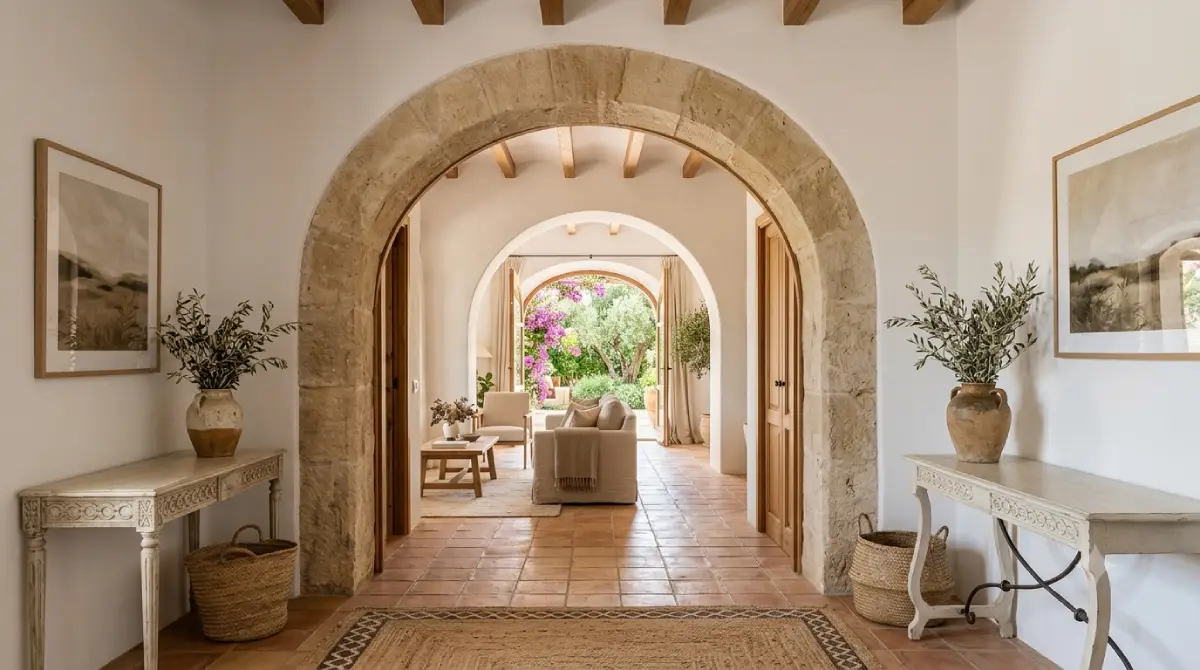
Replacing one or more rectangular openings with arches immediately transforms an ordinary corridor into a striking architectural feature. Repeating multiple arches along a hallway creates rhythm and depth, encouraging your eyes to move naturally through the home.
This approach has been used in Mediterranean villas and European estates for centuries, yet it feels equally beautiful in modern homes.
To maximize the effect, keep the hallway simple. Smooth plaster walls, wide-plank hardwood flooring, oversized artwork, and discreet wall sconces allow the architecture to remain the star of the design.
A long hallway with repeated arches also photographs exceptionally well, making it one of the most popular features shared on Pinterest and Instagram.
Natural light further enhances the experience. Whenever possible, position windows or skylights at the end of the hallway to illuminate each curve throughout the day.
Designer Tip: Maintain consistent arch proportions throughout the hallway for a cohesive architectural look.
5. Create a Spa-Like Bathroom Entrance
Bathrooms no longer serve purely functional purposes. Many homeowners now design them as personal wellness retreats, and an arched doorway is one of the simplest ways to elevate the experience.
Instead of entering through a plain rectangular opening, a graceful arch immediately establishes a sense of relaxation.
Combine this architectural feature with:
- Travertine flooring
- Lime plaster walls
- Floating oak vanities
- Brushed brass fixtures
- Freestanding bathtubs
- Natural stone sinks
Together, these materials create a calming environment inspired by luxury spas.
If space allows, consider using another smaller arch to frame the shower entrance. This layered approach reinforces the soft minimalist aesthetic while creating a memorable focal point.
Warm lighting is essential. Choose wall sconces with frosted glass or concealed LED lighting to create a soft glow that complements the natural textures.
Designer Tip: Avoid glossy finishes. Matte stone and plaster surfaces better reflect the understated elegance of curved architecture.
6. Design a Hotel-Inspired Bedroom Suite
Luxury hotels often rely on architectural details rather than excessive decoration to create memorable guest experiences.
You can achieve a similar feeling at home by incorporating an arched opening leading from the bedroom into a dressing room or ensuite bathroom.
The curve naturally separates spaces while maintaining visual continuity, making the bedroom feel larger and more sophisticated.
Continue the calming atmosphere with warm neutral colors, textured bedding, linen curtains, and soft wool rugs. Rounded bedside tables and sculptural lighting reinforce the organic shapes introduced by the doorway.
Minimal styling works best. A few carefully selected decorative pieces such as handmade ceramics, oversized artwork, or an olive tree create interest without distracting from the architecture.
Designer Tip: Install dimmable lighting to transition the bedroom from bright mornings to relaxing evenings.
7. Highlight a Home Library or Reading Nook
If you enjoy quiet spaces, consider framing your reading area with an elegant arch.
Unlike a full wall or traditional door, a curved opening gently defines the space while maintaining openness.
Built-in oak bookshelves, comfortable armchairs, soft lighting, and textured rugs transform the area into a cozy retreat.
Natural light is particularly important here. Position the reading chair near a window whenever possible and supplement it with an adjustable floor lamp for evening reading.
Accessories should remain minimal. A small side table, ceramic vase, and woven basket are often all that’s needed to create a peaceful atmosphere.
Whether your library occupies an entire room or a small corner of the home, a graceful arch gives the space a distinctive architectural identity that feels timeless and inviting.
Designer Tip: Paint the inside curve of the arch the same color as the surrounding walls to create a seamless, sculptural appearance.
8. Define a Home Office Without Closing It Off
As remote work becomes a permanent part of modern life, homeowners are investing more time and money into creating productive yet beautiful workspaces. One of the best arched doorway ideas is using a curved opening to separate a home office from the rest of the house without making it feel isolated.
Unlike a traditional door that can make the room feel closed off, an arch creates a gentle transition between spaces while allowing natural light to travel freely. This makes the office feel connected to the home while still providing a dedicated work environment.
Choose furniture that complements the soft architecture. A solid oak desk, upholstered office chair, floating shelves, and a neutral area rug create a workspace that feels both functional and stylish. Add a few decorative pieces, such as handmade pottery, framed artwork, or a potted olive tree, to bring personality without creating distractions.
Lighting is equally important. Position the desk near a window to maximize daylight, then add a warm desk lamp and wall sconces for evening work. This layered lighting approach creates a comfortable atmosphere throughout the day.
Designer Tip: If your office is visible from the living room, repeat similar colors and materials so the two spaces feel cohesive rather than disconnected.
9. Add Mediterranean Charm to the Entryway
Your home’s entryway creates the first impression for every guest, making it the perfect place to showcase curved architecture.
Replacing a standard front hallway opening with an elegant plaster arch instantly creates a warm and welcoming atmosphere. Inspired by Mediterranean homes, this design feels timeless rather than trendy.
Pair the doorway with natural materials such as travertine flooring, textured plaster walls, reclaimed wood furniture, and woven baskets. A large round mirror placed opposite the arch reflects natural light while reinforcing the home’s curved design language.
To complete the look, add a wooden bench with linen cushions, a ceramic planter, and a simple pendant light made from natural fibers. These elements create an inviting entrance that immediately communicates warmth and sophistication.
The beauty of this design lies in its simplicity. Instead of overwhelming guests with excessive decoration, the architecture becomes the main feature.
Designer Tip: Choose a durable stone or porcelain floor in warm neutral tones to ensure the entryway remains both beautiful and practical.
10. Create a Stunning Dining Room Entrance
Dining rooms should feel intimate while remaining connected to the rest of the home. A beautifully designed arch achieves this balance perfectly.
Instead of installing bulky doors or leaving a completely open passage, a curved doorway frames the dining area and subtly defines the space.
Position the dining table so it’s visible through the arch from the living room. This creates a stunning focal point and encourages visual flow throughout the home.
Materials play an important role here. A solid wood dining table, upholstered dining chairs, linen curtains, and a sculptural chandelier complement curved architecture beautifully.
For a more luxurious appearance, use lime plaster or Venetian plaster on the walls surrounding the doorway. These textured finishes catch natural light and emphasize the elegant curve.
Fresh flowers, ceramic serving pieces, and candlelight complete the inviting atmosphere without making the room feel cluttered.
Designer Tip: A round dining table echoes the shape of the arch and creates a harmonious overall design.
11. Build an Arched Coffee Bar Nook
Coffee stations have become one of the most desirable features in modern homes, and incorporating an arch makes them feel even more custom designed.
Instead of placing a coffee machine on an ordinary countertop, create a built-in niche framed by a soft arch. This small architectural detail instantly elevates the entire kitchen.
Use floating oak shelves to display ceramic mugs, glass jars filled with coffee beans, and handmade pottery. Add subtle LED strip lighting beneath the shelves to highlight the display.
Choose a stone or quartz countertop that’s easy to clean while maintaining the luxurious appearance of the space.
A curved niche also works beautifully in smaller kitchens because it adds visual interest without occupying additional floor space.
Whether your style is Organic Modern, Scandinavian, or Mediterranean, an arched coffee bar creates a charming focal point that’s both functional and stylish.
Designer Tip: Install electrical outlets inside the niche so appliances remain neatly organized and cords stay hidden.
12. Design an Arched Laundry Room Entrance
Laundry rooms no longer need to feel purely utilitarian. Today’s luxury homes treat them as thoughtfully designed spaces that deserve the same attention as kitchens and bathrooms.
Replacing a standard doorway with an elegant plaster arch immediately softens the room while creating architectural interest.
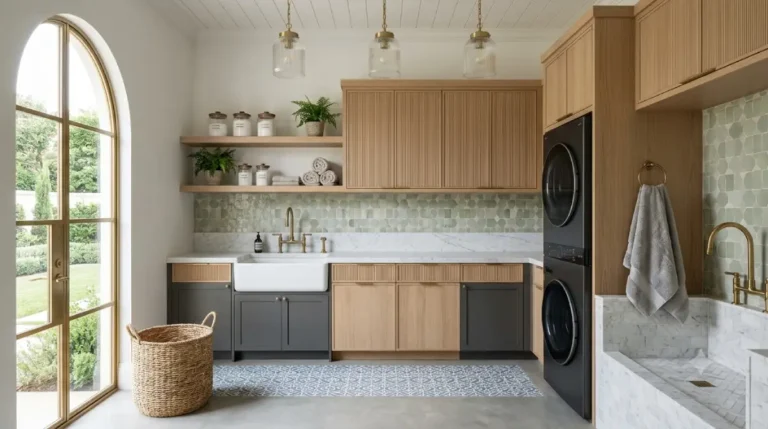
Pair the entrance with white oak cabinets, stone countertops, woven laundry baskets, and matte brass hardware. Open shelving displaying neatly folded towels, glass detergent containers, and ceramic accessories adds warmth without sacrificing organization.
Light-colored plaster walls make smaller laundry rooms feel brighter and more spacious. If possible, incorporate a window to maximize natural light throughout the day.
Adding indoor plants such as a pothos or snake plant introduces greenery while improving the overall atmosphere.
Designer Tip: Use moisture-resistant plaster finishes to ensure long-term durability in high-humidity spaces.
13. Connect Indoor and Outdoor Spaces
One of the most breathtaking arched doorway ideas is using a large curved opening to connect your interior with a patio, courtyard, or garden.
This architectural feature blurs the boundary between indoors and outdoors, creating a resort-inspired atmosphere that encourages year-round entertaining.
Steel-framed glass doors positioned beneath a plaster arch maximize natural light while framing beautiful outdoor views.
Continue similar materials from inside to outside, such as limestone flooring, natural wood furniture, and neutral textiles. This continuity strengthens the connection between both environments.
Outdoor seating surrounded by olive trees, lavender, or ornamental grasses reinforces the organic aesthetic while extending your living space.
Whether you have a small backyard or an expansive garden, a curved opening transforms the transition into a memorable architectural experience.
Designer Tip: Align the doorway with a focal point such as a fountain, fire pit, or mature tree for maximum visual impact.
14. Add Curved Built-In Wall Niches
Once you’ve introduced an arched doorway, consider repeating the same graceful shape through built-in wall niches.
These recessed spaces are perfect for displaying artwork, handmade ceramics, candles, books, or decorative objects while reinforcing the home’s architectural identity.
Unlike traditional shelving, curved niches feel sculptural and custom-built. They work particularly well in living rooms, hallways, bathrooms, and entryways.
Finish the niche with textured plaster or microcement to create depth and highlight the curved form. Small recessed spotlights can be installed above each niche to illuminate decorative objects during the evening.
Keeping the styling minimal ensures the architecture remains the focal point.
Built-in niches also provide practical storage without requiring bulky furniture, making them an excellent solution for smaller homes.
Designer Tip: Repeat the same arch proportions used throughout the home so every architectural detail feels connected.
15. Pair Arches with Lime Plaster Walls
One of the most luxurious ways to showcase arched doorway ideas is by pairing them with lime plaster walls. This centuries-old finish has returned as a favorite in modern interior design because of its rich texture, natural appearance, and ability to reflect light beautifully. Unlike standard painted drywall, lime plaster creates subtle movement across the surface, making walls feel handcrafted and full of character.
When sunlight hits a lime plaster wall, the gentle variations in texture become more noticeable, naturally drawing attention to the elegant curves of an arched doorway. This combination creates a calming atmosphere inspired by Mediterranean villas, boutique hotels, and high-end designer homes.
Warm shades like ivory, creamy white, sand, mushroom, and light beige work exceptionally well with plaster finishes. These colors enhance the soft minimalism trend without overpowering the architecture. Pair the walls with white oak flooring, linen curtains, and handmade ceramic décor to create a warm and inviting interior.
Lime plaster is also breathable and environmentally friendly, making it a popular choice for homeowners looking for sustainable design solutions. Its matte finish helps reduce glare while adding depth that ordinary paint cannot achieve.
To complete the look, decorate the surrounding space with minimal accessories. A large olive tree, sculptural vase, and textured area rug are often all that’s needed to let the beautiful doorway become the room’s focal point.
Designer Tip: Use warm white lighting between 2700K and 3000K to emphasize the depth and movement of lime plaster after sunset.
16. Mix Curved Doorways with Organic Modern Furniture
One of the defining characteristics of Organic Modern design is the balance between clean contemporary furniture and natural materials. Curved architectural doorways fit perfectly into this style because they soften modern interiors while maintaining a minimalist aesthetic.
Instead of filling the room with sharp-edged furniture, introduce rounded forms that echo the graceful curve of the doorway. A curved sofa, oval coffee table, sculptural armchairs, and circular mirrors create visual harmony throughout the space.
Natural materials play an equally important role. White oak furniture, travertine tables, linen upholstery, woven baskets, and handmade pottery reinforce the organic feeling while keeping the overall design simple and elegant.
Layering textures adds warmth without introducing unnecessary clutter. A wool area rug, boucle accent chair, cotton throw blanket, and linen curtains provide comfort while maintaining a neutral palette.
Indoor plants are another essential element. Large fiddle leaf figs, olive trees, and rubber plants soften architectural lines while strengthening the connection between indoor living and nature.
The key is restraint. Instead of decorating every surface, allow the furniture and architecture to complement one another naturally. This approach creates a timeless home that feels peaceful rather than overly styled.
Designer Tip: Repeat rounded shapes throughout the room to create a cohesive design language that supports the curved doorway.
17. Use Warm Earth-Tone Paint Colors
Color plays a significant role in highlighting architectural details, and choosing the right palette can dramatically enhance arched doorway ideas.
Earth-inspired tones remain one of the biggest interior design trends because they create a relaxing atmosphere while complementing natural materials. Unlike cool gray interiors, warm colors feel welcoming and timeless.
Some of the best paint colors include:
- Warm White
- Swiss Coffee
- Cream
- Mushroom
- Soft Taupe
- Greige
- Clay
- Terracotta
- Sage Green
- Olive Green
- Sand Beige
These colors work beautifully with plaster walls, oak flooring, and stone finishes while emphasizing the graceful curves of an arch.
For homeowners who prefer contrast, consider painting the surrounding walls in a warm neutral shade while keeping the arch itself a slightly lighter tone. This subtle variation highlights the architectural feature without creating harsh visual breaks.
Accent colors can be introduced through cushions, artwork, ceramics, and textiles. Terracotta planters, sage green throw pillows, and clay-colored pottery reinforce the earthy palette while maintaining visual balance.
Avoid bright white or cool gray paint whenever possible, as these colors often make interiors feel colder and reduce the warmth associated with soft minimalism.
Designer Tip: Always test paint samples in natural light before making a final decision, as earthy tones change noticeably throughout the day.
18. Illuminate the Arch with Designer Lighting
Lighting can completely transform the appearance of an arched doorway. During the day, natural sunlight emphasizes the graceful curve, but thoughtful artificial lighting allows the architecture to remain a focal point after dark.
Wall sconces positioned on either side of an arch create soft illumination that highlights the plaster texture without producing harsh shadows. Recessed ceiling lights also work well, especially when angled slightly toward the opening.
For contemporary homes, concealed LED strip lighting installed within recessed architectural details creates a subtle glow that feels luxurious and modern.
Pendant lights positioned beyond the doorway naturally draw attention toward the next room while reinforcing the sense of movement throughout the home.
Warm lighting is essential. Bulbs around 2700K–3000K create a cozy atmosphere and complement natural materials such as wood, stone, and plaster.
Layering different light sources including floor lamps, table lamps, and wall sconces produces depth while allowing homeowners to adjust the mood throughout the day.
Architectural lighting doesn’t need to be dramatic. Often, the most elegant interiors rely on gentle illumination that quietly celebrates the beauty of the space.
Designer Tip: Install dimmer switches throughout the home so lighting can easily transition from bright daytime functionality to relaxing evening ambiance.
19. Create an Elegant Children’s Playroom Entrance
Children’s spaces can be playful while still reflecting the overall design of the home. Replacing a standard doorway with a softly curved opening creates a welcoming entrance that feels imaginative without appearing childish.
Inside the playroom, continue the organic aesthetic with natural wood shelving, woven baskets, neutral rugs, and simple furniture that grows with your child over time.
Rather than relying on bright primary colors, choose calming shades such as warm white, sage green, dusty blue, and soft terracotta. These colors encourage creativity while maintaining harmony with the rest of the home.
Rounded furniture edges also improve safety while reinforcing the soft architectural theme.
Books, toys, and art supplies should remain neatly organized using labeled baskets and built-in storage to prevent visual clutter.
An arched doorway subtly signals that the room is a special destination while maintaining an elegant appearance appreciated by adults as well.
Designer Tip: Include low open shelving so children can easily access books and toys independently.
20. Renovate Existing Doorways into Arches
Many homeowners assume arches are only possible during new construction, but existing rectangular openings can often be converted into beautiful curved doorways during a renovation.
A contractor typically modifies the upper portion of the doorway by installing a curved frame before finishing it with drywall or plaster. Once painted, the opening appears as though it has always been part of the home’s architecture.
This renovation works particularly well between living rooms, kitchens, hallways, and dining rooms where improved visual flow creates the greatest impact.
Before beginning construction, consult a qualified contractor to determine whether the wall is load-bearing. Structural walls may require additional engineering or support during the remodeling process.
Although the renovation requires careful planning, the long-term value often justifies the investment. A professionally built arch becomes a permanent architectural feature that distinguishes your home from others.
Designer Tip: If renovating multiple openings, maintain consistent proportions throughout the house to create a cohesive appearance.
21. Combine Multiple Arches Throughout the Home
While a single arch creates an elegant statement, repeating the design throughout the home establishes a unified architectural identity.
For example, an arched entryway can lead into a hallway featuring additional curved openings that connect the living room, dining room, and kitchen. Built-in wall niches, curved mirrors, rounded furniture, and softly shaped lighting continue the theme without becoming repetitive.
Consistency is what makes luxury interiors feel intentional. Instead of treating each room as a separate project, think of the home as one connected design story.
Using the same plaster finish, flooring, color palette, and natural materials throughout multiple rooms creates continuity while allowing each arch to feel like part of a larger vision.
The result is a home that feels thoughtfully designed, effortlessly elegant, and timeless. Whether your style leans toward Mediterranean, Organic Modern, Scandinavian, or Contemporary Minimalism, repeating curved architectural elements creates a welcoming environment that remains beautiful for years to come.
Ultimately, arched doorway ideas are more than a passing design trend. They represent a return to architecture that values craftsmanship, comfort, and natural beauty. By incorporating multiple arches throughout your home, you create spaces that are visually connected, filled with light, and designed to stand the test of time.
Designer Tip: Limit the number of competing architectural styles in your home. Repeating arches, natural textures, and earthy colors creates a balanced design that feels sophisticated instead of overwhelming.
3- How Curved Architectural Doorways: The Soft Minimalism Trend Replacing Sharp Angles Enhances Every Room
The success of Curved Architectural Doorways: The Soft Minimalism Trend Replacing Sharp Angles comes from its incredible versatility. Unlike decorative features that only suit one style or one room, curved doorways improve nearly every area of the home. Their soft lines create continuity, encourage natural movement, and add architectural interest without overwhelming the design.
Living Room
The living room is the ideal place to introduce an arched doorway.
A curved opening between the living room and adjoining spaces creates a welcoming first impression while making the home feel more spacious.
To maximize the effect, pair the arch with:
- Curved sofas
- Round coffee tables
- Natural oak furniture
- Textured rugs
- Limewash walls
- Warm lighting
These elements echo the shape of the doorway and create a cohesive, balanced interior.
Kitchen
Kitchens benefit from arches because they soften one of the busiest areas of the home.
An elegant curved entrance immediately makes the kitchen feel less utilitarian and more connected to surrounding living spaces.
This design works particularly well with:
- White oak cabinets
- Quartz countertops
- Travertine backsplashes
- Brass hardware
- Open shelving
- Handmade ceramic accessories
The result is functional while remaining visually inviting.
Dining Room
A dining room framed by an arch naturally feels more intimate.
Rather than closing the room off completely, the curved opening creates subtle separation while preserving openness.
This arrangement is especially effective when entertaining guests because conversation flows easily between connected spaces.
Bedroom
Bedrooms benefit from architectural softness just as much as living areas.
An arched entrance leading to a dressing room or ensuite bathroom creates a luxurious hotel-inspired atmosphere.
Warm neutral colors, layered bedding, textured fabrics, and soft lighting complete the relaxing environment.
Bathroom
Bathrooms often feature hard materials like tile, glass, and stone.
Adding a curved doorway balances these surfaces by introducing a softer architectural element.
Many luxury designers also use arches to frame:
- Walk-in showers
- Freestanding bathtubs
- Double vanities
- Makeup stations
This subtle detail instantly elevates the entire room.
Home Office
As more people work remotely, home offices deserve thoughtful design.
An arched entrance separates the workspace from the rest of the house without making it feel isolated.
Natural wood furniture, built-in shelving, indoor plants, and warm lighting pair beautifully with curved architecture, creating a workspace that’s productive yet calming.
Entryway
The home’s entrance establishes the first impression.
A graceful arch immediately communicates warmth and sophistication before guests even enter the main living area.
Combine it with:
- Stone flooring
- Wooden benches
- Oversized mirrors
- Woven baskets
- Olive trees
- Statement pendant lighting
These details reinforce the welcoming atmosphere.
Hallways
Hallways often lack personality, making them the perfect place to embrace arched doorway ideas.
Repeating arches throughout a corridor introduces rhythm and visual depth, transforming a simple passage into one of the home’s most memorable architectural features.
Better Natural Light
Curved openings also improve how light moves throughout the house.
Instead of creating harsh shadows, arches diffuse sunlight more naturally, producing softer transitions between rooms.
When combined with textured plaster walls or limewash finishes, changing daylight highlights the graceful curves throughout the day.
Emotional Comfort
Interior design isn’t just about appearance—it also affects how we feel.
Rounded forms are generally perceived as safer and more welcoming than sharp angles. This subtle psychological effect helps explain why homes featuring Curved Architectural Doorways: The Soft Minimalism Trend Replacing Sharp Angles often feel more relaxing than interiors dominated by rigid geometry.
By enhancing flow, maximizing light, and creating a sense of calm, curved architecture proves that thoughtful design can improve everyday living. Whether used in one room or throughout an entire home, arched doorway ideas provide lasting beauty while supporting the comfortable, nature-inspired lifestyle that defines modern soft minimalism.
4- Arched Doorway Ideas with Natural Materials, Earthy Colors, and Organic Textures
Beautiful architecture is only one part of creating a warm and inviting home. To fully embrace Curved Architectural Doorways: The Soft Minimalism Trend Replacing Sharp Angles, it’s important to pair graceful arches with materials and finishes that celebrate nature. This combination is what makes modern interiors feel timeless instead of trendy.
One of the defining characteristics of soft minimalism is the use of natural materials. Instead of glossy surfaces and overly polished finishes, designers are choosing textures that feel authentic and handcrafted. Wood, stone, clay, lime plaster, linen, and woven fibers work together to create interiors that are elegant without feeling formal.
Let Natural Wood Take Center Stage
Wood instantly adds warmth to a home, making it one of the best companions for arched doorway ideas.
White oak is a favorite for contemporary interiors because of its subtle grain and light tone. Walnut introduces richness and contrast, while reclaimed wood adds rustic charm and sustainability.
Consider incorporating wood through:
- Hardwood flooring
- Ceiling beams
- Floating shelves
- Built-in cabinetry
- Window frames
- Accent furniture
Keeping wood finishes natural rather than heavily stained enhances the organic look and allows the beauty of the material to shine.
Add Texture with Lime Plaster Walls
Lime plaster has become one of the most requested wall finishes in luxury interiors and for good reason.
Unlike flat paint, plaster creates soft movement and depth that changes throughout the day as natural light shifts. When paired with curved architectural details, the result feels refined and effortlessly elegant.
Cream, warm white, mushroom, and soft beige are excellent plaster colors that highlight the graceful lines of an arch.
Choose Earth-Inspired Color Palettes
The colors surrounding an arch can dramatically influence how it feels.
Nature-inspired shades complement curved architecture while creating a relaxing atmosphere.
Some of the most popular choices include:
- Warm white
- Cream
- Sand
- Taupe
- Mushroom
- Clay
- Terracotta
- Sage green
- Olive
- Dusty brown
These colors work together to create depth without overwhelming the space.
Incorporate Natural Stone
Stone introduces timeless sophistication.
Travertine flooring, limestone fireplaces, marble countertops, and natural slate all complement Curved Architectural Doorways: The Soft Minimalism Trend Replacing Sharp Angles beautifully.
Rather than competing with the architecture, these materials reinforce its understated elegance.
Layer Organic Textures
Minimalist homes sometimes feel cold because they rely on smooth, uniform surfaces.
Soft minimalism solves this problem by introducing layers of texture.
Combine materials such as:
- Linen curtains
- Wool throws
- Bouclé chairs
- Jute rugs
- Handmade ceramics
- Woven baskets
- Rattan lighting
The combination creates visual interest while maintaining a clean, uncluttered appearance.
Decorate with Living Greenery
Plants are an essential part of Organic Modern interiors.
Large indoor plants soften architectural lines and strengthen the connection between indoor and outdoor living.
Some of the best choices include:
- Olive trees
- Rubber plants
- Fiddle leaf figs
- Monstera
- Bird of Paradise
- Snake plants
Positioning greenery beside an arched doorway naturally frames the opening and draws attention to its graceful silhouette.
Keep Accessories Intentional
Luxury interiors rarely rely on excessive decoration.
Instead of filling every shelf, select a few meaningful pieces that complement the architecture.
Examples include:
- Handmade pottery
- Stone sculptures
- Vintage books
- Ceramic bowls
- Wooden trays
- Neutral artwork
The goal is to create visual balance while allowing the doorway itself to remain one of the room’s defining features.
Ultimately, the success of arched doorway ideas comes from thoughtful combinations. When curves meet natural materials, earthy colors, and rich textures, the result is a home that feels calm, welcoming, and timeless.
5- Interior arched doorway ideas: The Soft Minimalism Trend Replacing Sharp Angles for Any Home
One of the reasons homeowners love Curved Architectural Doorways: The Soft Minimalism Trend Replacing Sharp Angles is that it works in almost every architectural style. Whether your home is modern, traditional, coastal, farmhouse, Mediterranean, or Scandinavian, a well-designed arch can elevate the entire interior.
The secret isn’t adding more decoration it’s creating harmony.
Repeat Curves Throughout the Room
A curved doorway looks most natural when similar shapes appear elsewhere.
Instead of filling the room with square furniture, introduce rounded elements like:
- Oval mirrors
- Circular coffee tables
- Curved sofas
- Rounded armchairs
- Arch-shaped bookcases
- Sculptural floor lamps
Repeating these forms creates visual consistency that feels professionally designed.
Keep the Color Palette Cohesive
Too many contrasting colors distract from beautiful architecture.
Instead, choose three or four complementary shades and repeat them throughout the room.
For example:
- Warm white walls
- Oak furniture
- Sage green accents
- Terracotta accessories
This limited palette creates depth while maintaining the peaceful atmosphere associated with soft minimalism.
Let Light Highlight the Architecture
Lighting can dramatically change how an arch is perceived.
During the day, maximize natural light by using sheer curtains or leaving windows uncovered where privacy allows.
In the evening, layer different light sources.
A successful lighting plan includes:
- Recessed ceiling lights
- Wall sconces
- Table lamps
- Floor lamps
- Warm LED bulbs (2700K–3000K)
This combination creates soft shadows that emphasize the graceful curves.
Don’t Block the View
One common decorating mistake is placing bulky furniture directly in front of an arched opening.
Instead, allow clear sightlines so the doorway remains visible from multiple areas of the home.
This simple adjustment makes the architecture feel more intentional and improves overall flow.
Mix Old and New
Soft minimalism doesn’t mean every item must be modern.
Some of the most beautiful interiors combine contemporary furniture with vintage pieces.
Try mixing:
- Antique pottery
- Modern sofas
- Vintage wooden stools
- Contemporary lighting
- Handmade ceramics
- Classic woven baskets
The contrast creates personality without clutter.
Create Visual Balance
Every room should have a focal point.
If the arch is the main architectural feature, avoid competing with it using oversized artwork or dramatic wallpaper.
Instead, let the doorway command attention while supporting it with subtle décor.
Think Beyond Doorways
Curves don’t have to stop at entrances.
Continue the theme with:
- Arched wall niches
- Rounded fireplaces
- Curved shelving
- Barrel ceilings
- Soft-edged kitchen islands
These details reinforce the home’s overall design language.
Add Layers of Comfort
A luxurious home isn’t just beautiful it feels comfortable.
Layer soft textures throughout the room using:
- Linen pillows
- Wool blankets
- Cotton throws
- Plush area rugs
- Bouclé seating
These additions balance the simplicity of the architecture and make the space feel lived in.
By styling thoughtfully, arched doorway ideas become more than an architectural trend they become the foundation of a home that feels elegant, inviting, and timeless.
Conclusion
It’s easy to understand why Curved Architectural Doorways: The Soft Minimalism Trend Replacing Sharp Angles has become one of the defining design movements of 2026. More than a passing trend, curved architecture represents a shift toward homes that feel warmer, calmer, and more connected to nature.
From improving the flow between rooms to creating timeless focal points, arched doorway ideas offer an elegant solution for homeowners who want to elevate their interiors without relying on excessive decoration. Combined with natural materials, earthy colors, handcrafted textures, and thoughtful lighting, these graceful architectural features transform everyday spaces into welcoming retreats.
Whether you’re remodeling a single doorway or designing an entire home, investing in interior arched doorway ideas details is a timeless decision that blends beauty, functionality, and lasting value. As soft minimalism continues to shape the future of interior design, arched doorways remain one of the simplest yet most impactful ways to create a home that feels sophisticated, inviting, and effortlessly stylish.
FAQs about Arched Doorway Ideas: The Soft Minimalism Trend for Modern Homes
Are arched doorways still in style in 2026?
Absolutely. Arched doorway ideas continue to be one of the strongest interior design trends because they combine timeless architecture with the warmth and simplicity of soft minimalism.
Can you add an arch to an existing doorway?
Yes. In many homes, contractors can convert a standard rectangular doorway into an arch by modifying the framing and finishing it with drywall or plaster. The complexity depends on whether the wall is load-bearing.
What interior style works best with curved doorways?
Curved architectural doorways pair beautifully with Organic Modern, Mediterranean, Scandinavian, Japandi, Contemporary, Coastal, and Transitional interiors.
What colors look best with arched doorways?
Warm neutrals such as ivory, beige, taupe, mushroom, clay, terracotta, and sage green are excellent choices because they emphasize the softness of the curves.
Do interior arched doorway ideas increase home value?
While no feature guarantees a specific increase in value, unique architectural details like professionally designed arches can enhance a home’s visual appeal and make it more memorable to potential buyers.